Ireland got same ECB message as eurozone
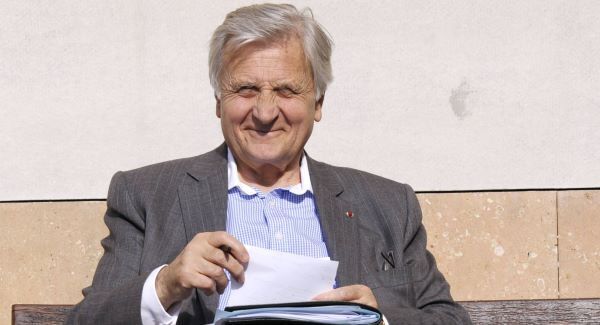
Speaking at the European Parliament’s economics committee yesterday, Trichet said eurozone members were ready to hang Ireland and other troubled economies out to dry and leave it to the IMF to come up with a bailout and conditions for a rescue at the start of the crisis.
He claimed Ireland was “probably right” in being the first country in the world to give a blanket guarantee to bank investors.
He said some eurozone leaders had interpreted the ‘no bailout clause’ literally and that it took some time for them to agree to devise a rescue plan and engage the IMF.
“I was extremely worried at the beginning as I saw a temptation in a number of democracies [that] they should not help, in any respect, countries in difficulties as this was the job of the IMF alone,” Trichet said, adding that the interpretation of the no bailout principle was “don’t count on us”.
He said the government was responsible for the decision not to burn bondholders, and believed this was the correct move at the time.
“The message from the [ECB] to Dublin was the same to Belgium, Germany, France, when we were at the heat of the crisis,” Trichet told the economics committee, which is investigating the actions of the troika over the bailout.
He denied saying in the past that the government’s blanket bank guarantee was the wrong decision, and told Dublin MEP Gay Mitchell that the government was probably right to stand behind the banks when they were being attacked and when “the credibility of Ireland was put in question by the markets”.
The ECB has denied that it ordered the government to protect speculators and bondholders in the Irish banks. The government, on the other hand, insisted its hands were tied by the ECB.
Trichet, who retired as ECB head in 2011, told MEPs yesterday that while some blamed the system or individual countries for the crisis in 2008, the ECB knew it needed a wider, more systemic approach.
“The Irish government assumed their own responsibility and were the first in the world to guarantee its banks against this systemic risk,” he said.
Many could not understand how this decision could be taken, “but in Ireland this was a general political decision”, he said, adding that the same decision was taken by most developed countries including the US, Britain, and Germany, following the collapse of Lehman Brothers, as it would have been difficult to get invest-ors to invest otherwise.
The bank debts were extremely high in Ireland in relation to GDP, but practically every country was vulnerable to collapse, Trichet said. “We could not allow them to collapse. But we are in a different phase and to understand you have to think back.”
He said he did not believe that bondholders were treated any worse in Germany, France, or the UK than they were in Ireland.
“It was extremely difficult in Ireland because of the enormity of the exposure. I never stated that the Irish government made a mistake extending this guarantee to Irish banks — you have to understand the circumstances — it was a very justifiable decision given the circumstances they faced,” Trichet said.
He claimed to have warned finance ministers and prime ministers for years that there was trouble coming down in the line, especially for Greece, Ireland, and Portugal, because wage costs were rising so spectacularly.
The problems in Ireland were compounded by the housing bubble, he added.
The committee members visits Dublin tomorrow to talk to Finance Minister Michael Noonan and others. A report on how democratically accountable the troika was for the bailout is due to be produced next month.

CONNECT WITH US TODAY



Be the first to know the latest news and updates