Water exists on Mars but not to our tastes
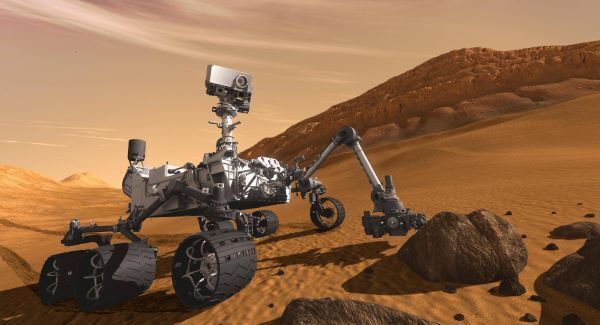
Water, water everywhere — thought not quite fit to drink.

Water exists on Mars  but not to our tastes

A Nasa team has found evidence of abundant water on Mars, albeit not freeflowing. Still, the find is enough for science fiction fans and space aficiandos to wonder if the dream of living on Mars has come a small step closer.

A study published in Science yesterday suggests that as much as 2% of the Red Planet’s soil is water by weight — meaning future astronauts or settlers could potentially extract two pints of water per cubic foot.

The Curiosity rover, along with its predecessors Spirit and Opportunity, had previously found evidence that Mars had a wet past, including ancient but long dry rivers. There is a lot of water present in ice at the planet’s poles, but now scientists have found that it is all over the planet, but bonded in the soil to other elements.

“For me, that was a big ‘wow’ moment,” Leshin told space.com. “I was really happy when we saw that there’s easily accessible water here in the dirt beneath your feet. And it’s probably true anywhere you go on Mars.”

One of the key findings was that the soil had been blown from all over the planet, which means that water is present more or less everywhere.

The scientists found the soil acted like a sponge, with water clinging to the other bits and pieces.

It can be extracted by heating the soil; the rover heated it to 835C to separate out everything in the sample. It then identified the gases, which included oxygen and carbon dioxide.

However, it won’t be plain drinking for astronauts. The team also found evidence of perchlorates, which are toxic compounds that could damage any explorers’ thyroids.

Curiosity landed in Aug 2012 on a mission to scour the Martian surface for life, either current or previous. However, those efforts suffered of a setback recently when tests for methane — considered a key indicator of life as we know it, and which had previously been detected in observations from Earth and orbit — came up negative.

The gas, which lasts about 300 years in Earth’s atmosphere, could be expected to stick around for 200 years on Mars. But Curiosity’s findings, compiled over eight months, indicate that the methane may have virtually disappeared in a matter of years, Reuters reported.

Based on the previous observations, scientists had expected to find about six times more methane in the atmosphere than the negligible amounts Curiosity found.

Curiosity is approaching an eroded hill called Mount Sharp, which is in what scientists think was a water-rich area billions of years ago. Because of the wind action, various layers of rock have become exposed, and analysing the sediments could reveal more or the Red Planet’s secrets.

More in this section

Cookie Policy Privacy Policy Brand Safety FAQ Help Contact Us Terms and Conditions

© Examiner Echo Group Limited