‘Accidentaleconomist’ gets key Greek role
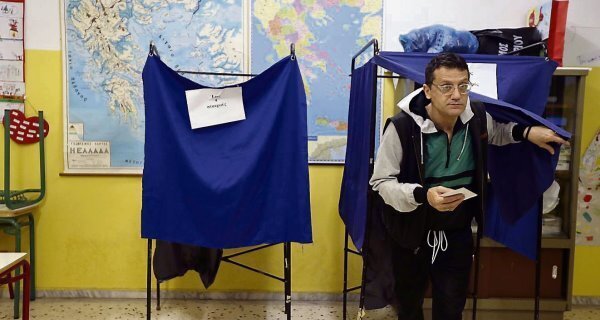
A scourge of austerity policies who calls himself an “accidental economist” has become Greece’s finance minister and the key negotiator with its creditors.
In characteristically purple prose, Yanis Varoufakis, 53, celebrated the victory of Alexis Tsipras’s far-left Syriza in Greek elections by paraphrasing Welsh poet Dylan Thomas.
“Greek democracy today chose to stop going gently into the night. Greek democracy resolved to rage against the dying of the light,” the bi-national Greek-Australian wrote on his blog.
The radical academic, who studied in Britain and has also taught in Australia, Greece and the US, vowed in pre-election interviews to destroy Greek oligarchs, end what he called the humanitarian crisis in Greece and renegotiate the country’s debt mountain.
“We are going to destroy the basis upon which they have built for decade after decade a system, a network that viciously sucks the energy and the economic power from everybody else in society,” he told Channel 4 television.
His appointment highlights a swift change in tone brought by 40-year-old Tsipras and he contrasts with grizzled Brussels veterans such as Germany’s Wolfgang Schaeuble or EU Commission president Jean-Claude Juncker.
He will succeed two centrist technocrats who implemented austerity measures demanded by the “troika” of the European Commission, European Central Bank and IMF.
Comparing himself to “an atheist theologian ensconced in a Middle Ages monastery”, he has attacked conventional economic theory that favours budget rigour and market-friendly structural reforms as a response to the crisis.
The recipe amounted to “a cynical transfer of banking losses onto the shoulders of the weakest taxpayers”, he said in a blog post this month announcing his candidacy for parliament. Tsipras was sworn in as Greece’s new prime minister, becoming the youngest man to hold the post in 150 years.
A prolific blogger and regular media commentator with a vivid turn of phrase, he described international bailouts of struggling euro zone states as “fiscal waterboarding” that risked converting Europe into “a form of Victorian workhouse”.
While he believes it was a mistake for Greece to join the euro in 2001, he says it is too late to leave now but Europe must change its approach to the crisis or risk sinking into a deadly spiral of deflation and stagnation.
Mr Tsipras’s anti-bailout Syriza party gained the backing needed to form a government earlier by creating a surprise alliance with a small right-wing nationalist party. Syriza won 36.3% of the vote in Sunday’s early general elections, but fell two seats short of the necessary majority in the 300-seat parliament to form a government on its own.

CONNECT WITH US TODAY



Be the first to know the latest news and updates