We need to stop pretending and look intellectual disability in the eye
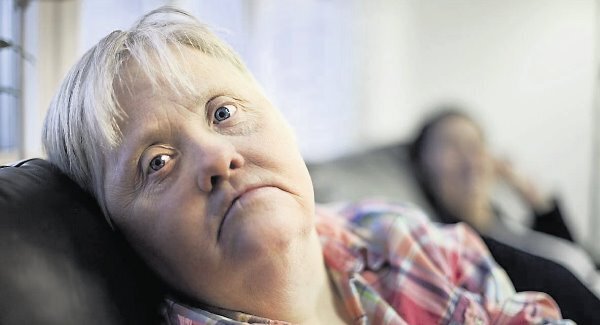

I love Tom, my ASD baby. We all do . But I can’t be fit and healthy forever. If I could be, there wouldn’t be any question about Tom’s long-term care. I love him and I love having him around. We make plans about the places we’re going to travel together, with Tom favouring India because he loves curry powder.
Problem is, I’m going to get old and die. I hope I won’t die soon, but who’s to tell? What’s sure is that at some point in the next 30 years I am going to become unable to be my son’s main carer. He would still be quite young relative to the inmates of Áras Attracta in Swinford, Co. Mayo, but I was on the old side having him.
Intellectually disabled children become intellectually disabled adults and many of them will never live independently. Next Tuesday night we are all going to say we’re horrified and outraged and appalled by an RTÉ Primetime undercover investigation which is going to show intellectually disabled people being slapped, kicked and force-fed.
I am probably not going to be able to look. If I do look I am going to want to smash the telly and grab the perpetrator by the throat. Because it will be my Tommy who’s being kicked. That won’t be true but the victim will be someone else’s Tommy.
Then there will be the hours of talking to Joe and and banner headlines and it will all be about something we know already. The families of intellectually disabled people get old and they get tired. If intellectually disabled people can’t live independently where are they going to go?
Isn’t there a warehouse somewhere? Why yes, there are “congregated settings” in which more than 10 intellectually disabled adults are housed together and probably receive good care most of the time. But clearly, when you throw under-paid, under-resourced care-workers at a job which most of us don’t want to do you will get abuse.
Áras Attracta has been under the microscope for a while now. There is an on-going Garda investigation into the sudden death of 72-year-old Francis Loughney in 2012. Following complaints, the Health Information and Quality Authority (HIQUA) made an unannounced inspection this summer and made some comments which would put the heart cross-ways in the family of any disabled person. At mealtimes some residents were observed being offered spoons of food before they had swallowed the previous one.
“Are you ready?” the resident would be asked as they tried to swallow their food.
I wouldn’t have done such a thing to my babies, let alone to an adult. But it is interesting that it echoes a distressing meal-time scene in the Primetime investigation into creches last year.
Same issue, really. A job we don’t want to do. A problem we want solved. Throw under-paid, under-resourced workers at it and shut the door. Then send in a Primetime camera and go ooh and aah.
We don’t need the Primetime camera to tell us there is abuse of intellectually disabled adults in care homes. Nine care workers have been temporarily suspended by Áras Attracta, pending an investigation but it’s not really about the care workers. No more than the Magdalene laundries were about the nuns.
It’s about us. It’s about our total inability to face up, as a society, to intellectual disability. And while most families try to cope it is worth recording the shocking fact that the HSE’s 2011 report into “congregated settings” showed a third of inmates had had no family contact for six months or more.
The current way to cover up intellectual disability is political correctness which almost pretends that it doesn’t exist. I am sick to death of media stories about brave disabled children who are just the same as us underneath and the magic wands which are going to turn them into adults with no disability. The only Down’s Syndrome teens in which anyone takes an interest in are the few who do the Junior Certificate. We can’t cope with the image of the grey-haired man which Down’s Syndrome who will never achieve by any of our measurements.
Who doesn’t even vote. So that’s him off the agenda. Enda Kenny has been jumping up and down about Áras Attracta but his was the Government who cruelly cut the respite grant for disabled people by a quarter two years ago and will not hear of restoring it. Despite the fact that the HSE’s 2011 policy document, “Time to move on from congregated settings”, says: “There is clear evidence that providing respite is a key element in supporting families to remain in their communities and avoid admissions to residential settings.”
It is Government policy to move all intellectually disabled adults out of institutional settings but the process has hardly started. Of the nearly 4,000 intellectually disabled adults currently in congregated settings, only 100 will have moved out by year’s end. Inclusion Ireland reckons that at this rate it will take 20 years to close them.
“The community” can mean many things: sharing a house with a small number of others; living alone, independently; staying with your family. What’s important, as far as the HSE’s 2011 document goes, is that disabled adults should be “able to exercise meaningful choice, equal to that of other citizens when choosing where and with whom they will live.”
Sorry, but this is poppycock. Yes there are many intellectually disabled adults who can choose to live lives which are very “ordinary”, to use the report’s word. Others can’t because they are too disabled. Inclusion Ireland’s Paddy Connolly agrees that the policy is better worked out for less disabled adults and Inclusion Ireland is currently focussing on a new policy for severe or profound cases, the very cases who tend to end up in “congregated settings”, 55% of whom are incontinent and 54% of whom have “challenging behaviour”, code for defiance and violence.
While the research quoted shows overall benefits to disabled adults of moving out of these settings “into the community”, some show “challenging behaviour” getting worse and another showed more sedation being used in these settings. Paddy Connolly is adamant that no-one is incapable of living “in the community” with the right supports. He wants an end to warehouses such as Áras Attracta.
But he agrees there is no reason to be confident that those “right supports” will ever be in place. And he does not make clear to me how severely disabled adults might be enabled to live “in the community”. I am worried that closing residential provision will mean making elderly mothers and fathers, as carers, the next victims of our inability to look intellectual disability in the eye.
And I still have no answer to the question – who will care for Tom when I am gone?

CONNECT WITH US TODAY



Be the first to know the latest news and updates