COMMENT: Penalty points report highlights need for reform
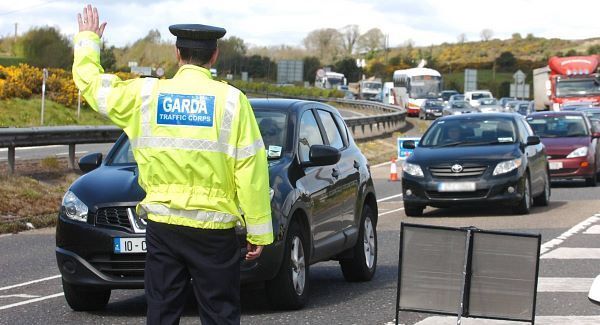

Nobody said it would be easy. Reforming the nod and wink culture of getting a ticket “squared” by a garda is as old as the hills.
In recent decades, it has largely been acknowledged that the nod and the wink were costing lives in terms of carnage on the roads.
The penalty points system was supposed to address that, and to some extent, it did. What has emerged in the last two years is that for some, the nod and the wink would persist, irrespective of how the world outside their bubble changed.
The report into the operation of the penalty points – or Fixed Charge Notice (FCN) system – is a major step towards reform. Unlike other internatl reports, this one, done by the force’s Professional Standards Unit (PSU) pulled no punches.
What has emerged is a picture that illustrates how some considered themselves above the law. Of 667 cases of cancelled points examined, nearly half were problematic.
A total of 117 are to be further investigated, 97 involved technical breaches of policy, and 76 were down to lenient decision making.
This report, like the whole issue around penalty points, came about as a result of allegations made by Sergeant Maurice McCabe. Of the allegations that he produced this time, around 90% are understood to be among those deemed to require further investigation, which have been forwarded to the Garda Síochána Ombudsman Commission.
The response is a series of recommendations that will make it really difficult for any serving garda to “square” a FCN for either themselves, colleagues, family or friends. Finally, over two years on from when the matter first surfaced, it looks like it might be safe for members of the public to have confidence in the system again.
The minister for Justice, Frances Fitzgerald, is taking no chances. She has appointed retired circuit court judge Matthew Deery as Independent Overseer of the system. There will be further tightening of the system, and a special unit is to be set up to ensure that there will be less administration cock ups which used to allow thousands escape sanction.
The most notable outcome of this report is that it has been deemed necessary to appoint a judicial figure to ensure that members of the police do not abuse a system in order to facilitate each other or favoured civilians.
That is a shocking indictment on what has gone before. Nearly two years ago, on publication of the report compiled by assistant commissioner John O’Mahoney, we were told that there was nothing to see, that everybody should move on. Now, finally, there is acknowledgement that the system was rotten.
Millions have been lost in revenue that was supposed to accrue to the state in fines. Repeat offenders have managed to evade any form of sanction. Inevitably, the roads are not as safe as would be the case if the system had been operated in a fair and proper manner.
Many of the recommendations in this report were also in earlier reports, by O’Mahoney, the Comptroller and Auditor General and the Garda Inspectorate. Yet in appointing an independent overseer, and tightening the system even more, there seems to be an acknowledgement that fidelity to the badge, or the implementation of discipline was not of a standard to ensure that all members would adhere to the law.
Anybody who felt that the force was not in need for reform need only look at the narrative of the penalty points matter over the last two years.
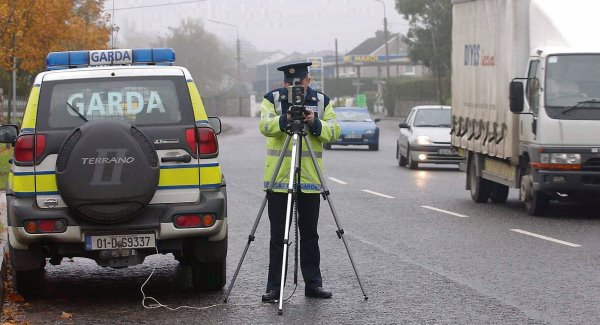
In December 2013, a female garda was detected speeding at 113 km/hour in a 100km/h zone. She applied for a cancellation on the basis that she was in a rush home as she had received a call that her mother had had an accident and was injured. The fixed charge notice was cancelled under the reason “Discretionary – Medical Emergency’. There was no supporting documentation relating to any alleged medical emergency. Under a garda directive, any cancellation in a case like this should have been done by the district officer in the area where it occurred. This was not the done here. The garda in question had a previous cancellation in April 2012, but the PSU were unable to locate the file from that incident.
In May 2013, a fixed charge notice was issued in relation to a motorist speeding at 73km/h in a 50km/h location. The notice was cancelled by the District Officer responsible for where the offence occurred. The reason given on Pulse for the cancellation was “Data Entry/IT/Garda Errors. This referred to an opinion that the wrong name was given for the townland where the detection occurred.
The district officer sent a direction to the traffic unit to amend the location for further checkpoints and to ensure that the error not be repeated. Yet, it emerged in the report that on two separate occasions the detecting member had brought 17 different summons before the courts for other persons in receipt of Fixed charge notices for this location. Eight of the summonses resulted in fines being issued.
Pulse entries for these cases did not show “townland incorrect”, in contrast to the example of the motorist caught in 2013. It might be expected that the townland would be incorrect for all, or for none.
In August, 2013, a motorist received a fixed charge notice for speeding at 64km/h in a 50km/ h zone. He stated that he was returning home to respond to an alarm activaction. He wrote with his request for cancellation, which was forwarded to the district officer in the jurisdiction it was detected. The detecting officer was consulted about the proposed cancellation and he raised no objection. The notice was cancelled under the reason “Discretionary – Other”.
It emerged in the PSU investigation that this motorist had received three previous cancellations. In total, he had received twelve notices since 2006. He paid for four of these, four others resulted in summons to the district court, which were never served. Of the three others which were cancelled, two were done so without any reason being given and the third was on “compassionate grounds.”
In July 2013, a garda superintendent – since retired – stated that she was travelling on official duty when she was issued with a fixed charge notice for a speeding offence (110km/h in a 100km/h zone). The file does not specify any reason as to why the senior garda was speeding. The notice was cancelled with the reason – “Discretionary – Other”.
The superintendent had five previous cancellations between June 2010 and July 2013. Three of these were cancelled under the reason “Discretionary – Other” and no reason for recorded for the other two cancellations. No documentation in relation to any of the cancellations was included in the file. The cancellation of the notice in the case at issue was done by a district officer, when according to policy is should have been a divisional officer.
In February 2013, an off-duty member of An Garda Síochána received a FCN for speeding at 80 km/h in a 50km/h zone. The notice was cancelled by the district officer in the area where the detection occurred. The reason given was “Data Entry/IT/ Garda Errors.” The letter requesting the cancellation stated that she believed the townland entered was incorrect, but she did not identify herself as a member of the force.
The investigation found that the member is a colleague and works directly with the senior officer who cancelled the notice. She had one previous cancellation. A report on the matter, dating from October 2014, some eighteen months after the detection, stated that the cancelling officer was on annual leave at the time of the cancellation.
Yet, Pulse records show that the same senior officer was the cancelling authority at the time. Other cases from the same town land were proceeded with on the basis that there was no problem with the spelling of the location.
NEWS: Garda Commissioner: Penalty points system 'stronger' since reforms
NEWS: Report: Around 100 penalty point cancellations need further investigation


CONNECT WITH US TODAY



Be the first to know the latest news and updates