Special Report (Wrongful Convictions): Collective action vital for change
Our 7m members worldwide mobilise to pressure governments who insist on imprisoning those who dare to disagree with them or who persist in ‘show trials’ with no due process, which is a human right.
Raif Badawi is one such prisoner of conscience. He is in jail in Saudi Arabia after having been flogged 50 times in a public square in Jeddah. Raif’s sentence is to receive 1,000 lashes in public and to remain in prison for 10 years. His crime? Raif set up a blog called Free Saudi Liberals to open up discussion of the political direction of his home country.

He has been convicted of “insulting Islam through electronic channels”, a conviction and sentence recently upheld by the Saudi Supreme Court. For us, it is clear that Raif is being flogged and incarcerated solely for exercising his right to freedom of expression. Since the moment of his conviction, our global movement has been campaigning for his release.
Another such prisoner recently released is Nabeel Rajab in Bahrain. Nabeel, president of the Bahrain Centre of Human Rights and noted internationally as a human rights defender, was convicted earlier this year for a tweet that was deemed insulting to the authorities.
Thankfully, Nabeel was released this July after a concerted global campaign. Nabeel spoke to us via video link in Amnesty’s recent international council meeting in Dublin.
He could not come in person as he is still subject to a travel ban, but his words will keep us going in the dark days. Those days when dealing with the gravest of human rights abuses, when hearing horrific stories of torture and abuse no doubt takes its toll. Nabeel told all of us: “You are more influential than you know; keep talking, keep tweeting.”

Tweeting was precisely the method that helped secure the release of Moses Atakugba from a Nigerian prison. Moses was only 16 when he was arrested for allegedly stealing three mobile phones. He was badly beaten and shot in the hand. He was hung by his limbs for hours in the police station and tortured into confessing his involvement in a robbery.
This young man was then sentenced to death after eight years of waiting for a verdict. Amnesty International mobilised on Moses’ behalf and the Governor of the Delta region pardoned Moses on May 25 this year after he was the subject of a massive Twitter campaign.
Moses has vowed to become a human rights defender, saying to Amnesty International members in a message: “I want to assure them that this great effort they have shown to me will not be in vain. I promise to be a human rights activist — to fight for others.”
I had the privilege of meeting María Teresa Rivera in El Salvador last year. María Teresa was a young garment factory worker and single mother living in a town just outside San Salvador. In November 2011, her life was shattered when she miscarried a pregnancy she was not even aware of. Upon arrival at hospital, she was reported to the police by a member of staff on suspicion of trying to abort her pregnancy. She was taken from hospital straight to custody and ultimately charged with “aggravated homicide”. María Teresa became another victim of El Salvador’s total ban on abortion and was sentenced to 40 years in prison.
She is not the only victim of El Salvador’s cruel laws. She is one of 17 women in a similar situation, known as ‘Las 17’. One of that group, ‘Guadalupe’, was released in January while serving a 30-year sentence for having a miscarriage when she was only 18. María Teresa and the rest of the group await their day of freedom.
We must not ignore such human rights violations simply because we don’t know these women and men personally. Instead we must take such injustice personally and use our outrage to force change. Freedom and justice in all of these cases can only be won if ordinary people like you and I work to secure it. That might seem hard to believe but the truth is in such cases it’s only the collective action of ordinary people around the world that can make a difference. Nabeel told us that, María Teresa told me that, Moses, and Raif’s wife told us that too. We are the ones outside the prison walls and we have the power to act.
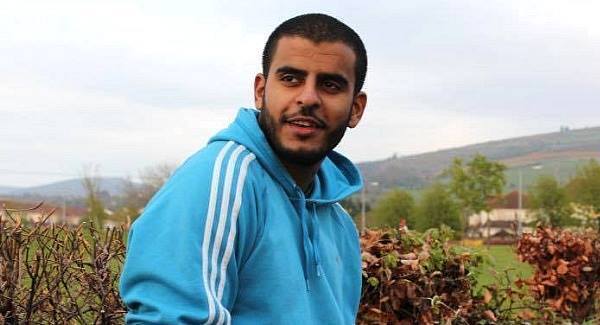
Our own Ibrahim Halawa knows the blow of the prison guard’s hands; he knows what it is like to wait indefinitely for justice in a system that seems to willfully ignore the rule of law and human rights. Today is the second anniversary of his arrest in Cairo for taking part in a protest. Amnesty International researchers who were on the ground have clear evidence that Ibrahim did not carry out the crimes he is accused of. This innocent Irishman waits in an Egyptian jail for the day of his hoped-for release. He has a place waiting for him in his former secondary school to repeat his Leaving Certificate. As students around the country celebrated their results this week, they could spare a thought for their compatriot Ibrahim, 19, whose fervent hope is to return home to his family in Ireland.

If you would like to work to help free Raif, María Teresa, Ibrahim, and the many others unlawfully and unfairly detained, please go to www.amnesty.ie. Add your voice to the thousands who take injustice personally and create a momentum that leads to freedom.

CONNECT WITH US TODAY



Be the first to know the latest news and updates