ROBIN WILLIAMS: Funnyman who couldn’t shake off his demons
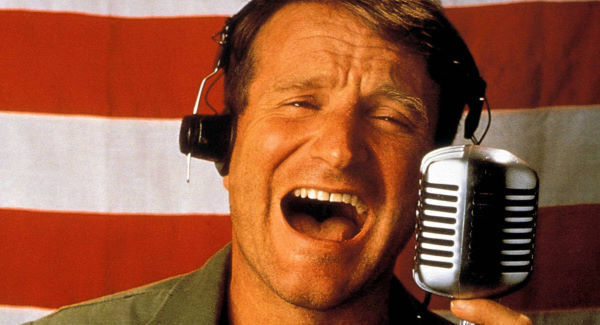
The death of comedian and actor Robin Williams was a shock to many, but came after years of openly discussing his problems in interviews, and having recently checked into rehab, writes Hilary Lewis

ROBIN WILLIAMS: Funnyman who couldn’t shake off his demons

ROBIN WILLIAMS’S unexpected death brought to an end the comedian’s long battle with cocaine and alcohol addiction and depression.

In a 2010 interview with the Guardian’s Decca Aitkenhead, he talked about suffering from anxiety.


The actor, who was promoting World’s Greatest Dad — a film about a father who fakes a suicide note from his dead son — spoke of feeling “alone and afraid” when he started drinking again in 2003 after 20 years sober. “It’s just literally being afraid. And you think, oh, this will ease the fear. And it doesn’t,” he said.

Asked what he was afraid of, he replied: “Everything. It’s just a general all-round arggghhh. It’s fearfulness and anxiety.”

Williams also admitted he had been a workaholic: “You have this idea that you’d better keep working otherwise people will forget. And that was dangerous. And then you realise, no, actually if you take a break, people might be more interested in you.”

He said, however, that he felt happier and was “not afraid to be unhappy”, adding: “That’s OK, too.”

Williams checked himself into a renewal centre just a few weeks ago, but his battle with addiction dated back more than 30 years.

He struggled with cocaine and alcohol abuse in the early 1980s, after his rise to fame on Mork and Mindy.

“Cocaine for me was a place to hide. Most people get hyper on coke. It slowed me down,” Williams told People in 1988, the magazine recalled in a 2006 piece about the actor seeking treatment (again) for alcohol addiction. Williams even joked about the dangers of cocaine addiction in his Live at the Met stand-up performance.

He checked himself into rehab for alcohol abuse in 2006.

He later told The New York Times that he hadn’t confronted the underlying issues at the root of his addiction.

“There was still, in the background, this voice, like, ‘Psst’,” he told the newspaper. “So when I relapsed, I went back hard. The one thing I hadn’t dealt with was: how honest do you want to live?”

Once again, it was his son, Zak, who was an integral part of Williams’s decision to get sober. Without going into detail, the younger Williams told The Times of his father’s rehab stint: “There was an ultimatum attached to it. I’m pretty confident that if he continued drinking, he would not be alive today.”

Williams checked himself into Oregon’s Hazelden Springbrook treatment centre in August 2006; after two months, he recalled his battle to get sober in an interview with Diane Sawyer on Good Morning America.

He said it was a “very gradual” descent back into using.

“It’s the same voice thought that... you’re standing at a precipice and you look down, there’s a voice and it’s a little quiet voice that goes, ‘Jump’, ” Williams told Sawyer. “The same voice that goes, ‘Just one’... And the idea of just one for someone who has no tolerance for it, that’s not the possibility.”

Williams told Parade in 2013 of the moment that led him to drink again: “One day, I walked into a store and saw a little bottle of Jack Daniel’s. And then that voice — I call it the ‘lower power’ — goes: ‘Hey. Just a taste. Just one.’ I drank it, and there was that brief moment of ‘Oh, I’m OK!’ But it escalated so quickly. Within a week I was buying so many bottles I sounded like a wind chime walking down the street. I knew it was really bad one Thanksgiving when I was so drunk they had to take me upstairs.”

As with his cocaine crisis, another star spurred Williams to seek help. This time, it was Mel Gibson, Williams said, whose DUI arrest served as a “wake-up call” for him to get help; Williams joked that Gibson’s public struggle took the spotlight off him.

Williams had recently checked into a centre affiliated with the 12-step programme to help him focus on his ongoing sobriety. At the time, his rep told The Hollywood Reporter: “He has been working hard and now has a break in his schedule, so wants to come back and be the best that he can be. This is his version of a retreat.”

Sadly it appears the anxiety and depression which had plagued him had returned prior to his tragic death.

Facts about depression

“Depression is one of the most tragically misunderstood words in the English language,” writes Stephen Ilardi, associate professor of clinical psychology at the University of Kansas, in a blog post for Psychology Today. “When people refer to depression in everyday conversation, they usually have something far less serious in mind” than what the disorder actually entails. “In fact, the term typically serves as a synonym for mere sadness.”

Here are some facts about depression:

-Although major depression can strike people of any age, the median age at onset is 32.5, according to Washington University School of Medicine in St Louis;

-Depression is more common in women than in men, according to Washington University;

-Men with depression are more likely than depressed women to abuse alcohol and other substances, according to Jill Goldstein, director of research at the Connors Centre for Women’s Health and Gender Biology at Brigham and Women’s Hospital in Boston;

-Depressed men may also try to mask their sadness by turning to other outlets, such as watching TV, playing sports, working excessively, or engaging in risky behaviours, Goldstein said;

-Men’s symptoms of depression may be harder for other people to recognise, and the illness is missed more frequently in men, Goldstein said;

-Men with depression are more likely than women with the condition to take their lives, Goldstein said. Men with depression may go longer without being diagnosed or treated, and so men may develop a more devastating mental health problem;

-Symptoms of depression extend far beyond feeling sad, and may include, loss of interest and pleasure in normal activities, irritability, agitation or restlessness, lower sex drive, decreased concentration, insomnia or excessive sleeping, and chronic fatigue and lethargy, according to Mayo Clinic.

More in this section

Revoiced

Newsletter

Sign up to the best reads of the week from irishexaminer.com selected just for you.

Cookie Policy Privacy Policy Brand Safety FAQ Help Contact Us Terms and Conditions

© Examiner Echo Group Limited