How troops could have been deployed at Irish ATMs during the banking crisis
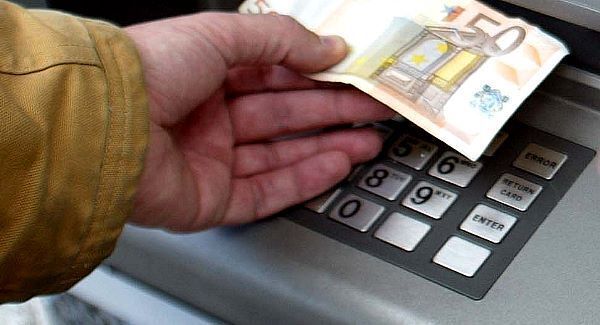
Kevin Cardiff, former secretary general of the Department of Finance and now Ireland’s representative on the European Court of Auditors has verified Taoiseach Enda Kenny’s claims that the Fine Gael/Labour coalition were on the brink of deploying the Army to the streets at the height of the banking crisis, to prevent “unrest around bank machines, cash deliveries, and the like”.
Mr Kenny’s remarks in Madrid were also confirmed by former tánaiste Eamon Gilmore in a recent RTÉ interview with Miriam O’Callaghan.
The fact the Government discussed enforcing fiscal policy at gunpoint requires scrutiny and public debate. For the majority of citizens who have had to endure austerity for the last number of years, it is a provocative revelation and raises an interesting, if somewhat appalling, scenario.
According to the Taoiseach: “The governor of the Central Bank in Ireland said to me, ‘It looks like this weekend... you’ll have to put [the] Army around the banks and around the ATM machines and introduce capital controls like they had in Cyprus’.”
The Irish Defence Forces are unusual in European terms in that they already regularly provide assistance to gardaí in operational duties. In what are termed ‘aid to the civil power operations’ or ATCP ops, Irish soldiers provide fully armed support to gardaí on a daily and annual basis in thousands of security duties.
These include armed cash-in-transit escorts, armed prisoner escorts, armed duties in Portlaoise Prison, armed escorts of commercial explosives, and hundreds of armed bomb disposal operations.

In terms of control over the Defence Forces, Article 13.4.2 of the Constitution vests command of the armed forces to the President of Ireland. Articles 13.5.1 and 13.9 of the Constitution go on to qualify the President’s command so as to ensure the exercise of this command is both within the law — regulated and checked by law — and only under the explicit direction of the government through the Council of Defence.
While the President enjoys ‘de jure’ command of the Defence Forces, de facto command of the armed forces lies firmly in the hands of the defence minister and the Taoiseach of the day.
Legally therefore, as Taoiseach, Mr Kenny would have been within his rights — along with his defence minister, Alan Shatter — during the fiscal crisis to expand the role of the Army to deploy them at banks across the State in order to enforce capital controls.
Politically, however, this would have been a momentous decision.
The main high-street banks in Ireland — including AIB, Bank of Ireland, Permanent TSB, and Ulster Bank — have approximately 650 branches between them nationwide. Most of these outlets have on-street and in-branch ATMs. To provide a permanent armed security presence at these locations would present the Defence Forces with major logistical and command and control challenges.
In an emergency situation, even if the Government, Central Bank, and banking sector agreed to open just 100 branches across the State, the Army would require at least one public order platoon (about 30 troops) per bank branch in order to guarantee security.
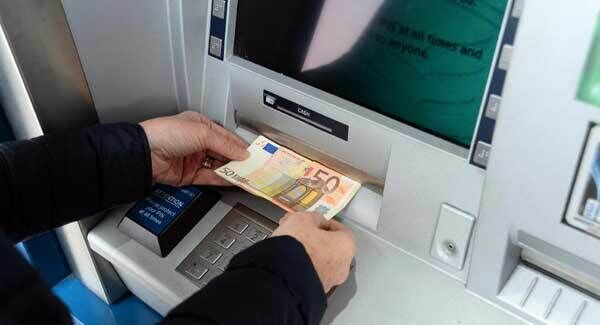
These 3,000 troops would require the support of thousands more troops to provide transport, signals, and logistical support. Based on the operational tempo necessary to provide ongoing security 24/7, it would require a further 6,000 troops on standby to replace and rotate troops to and from banks across the Republic.
This would require the involvement of Defence Forces command and control at the highest levels as it would be a multi-brigade operation. It would involve the chief of staff, the deputy chief of staff (operations), deputy chief of staff (support) along with the national directors of operations, intelligence, and all corps of the Defence Forces.
They in turn would have to liaise closely with their counterparts in An Garda Síochána to ensure cohesion and police primacy in the operation — a key feature of Irish ATCP Ops.
Had such a deployment taken place, it would have been the largest mobilisation of troops since the Emergency. To the ordinary citizen on the street, it would have resembled the imposition of Martial Law in a time of war. The Taoiseach’s remarks in Madrid — which now appear to be true — require further examination and exploration.
To casually mention this in passing to colleagues in Europe betrays a mindset at the highest level of the Government that is paternalistic and cavalier with regard to transparency and accountability. Mr
Kenny owes the public a detailed explanation about the implied use of force to impose capital controls and government policy.
After all, Paddy likes to know.

CONNECT WITH US TODAY



Be the first to know the latest news and updates