Fawning approaches to Kevin Myers do no favours
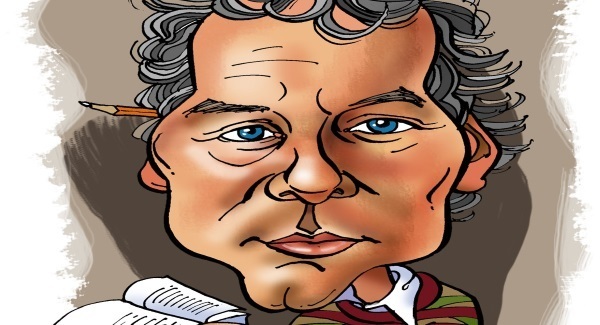
On BBC Radio London on Monday, Vanessa Feltz questioned how something “so blatantly racist” as Kevin Myers’ Sunday Times column could make it to print.
Ms Feltz need only have listened to the fawning interview that RTÉ’s Sean O’Rourke afforded Myers on Tuesday for her answer.

That 18-minute segment encapsulated perfectly the environment in which Myers and other controversy-baiting columnists have thrived.
For 48 hours, Myers’ bile was rightly denounced as racist, anti-semitic, and misogynistic.
Yet come Tuesday, one of the State broadcaster’s most listened-to presenters was telling us he was “brilliant” and made comparisons to Shakespeare.
It was Myers’ “duty”, according to O’Rourke, to occasionally be “unpleasant”.
“It’s a very tough thing and, on a human level, I think people will empathise or sympathise with somebody losing their livelihood,” O’Rourke said of a man who once wrote a piece entitled ‘Africa is giving nothing to anyone — apart from Aids’.
“I met somebody yesterday who said ‘I don’t know what all the fuss about. I mean, would they fire Shakespeare? He wrote the Merchant of Venice.’ ” O’Rourke said.
“I suppose brilliant people often times are very difficult to deal with,” he later said of one former colleague’s criticism of Myers, who once wrote the following: “How many girls — and we’re largely talking about teenagers here — consciously embark upon a career of mothering bastards because it seems a good way of getting money and accommodation from the State?”
While O’Rourke did ask about the misogynistic tone of his work, the equivocation demonstrates how Myers and others of his ilk have gotten away with it for so long.
The mutual appreciation within an industry dominated by a single demographic affords people like Myers the opportunity to spew his hate relatively unchallenged, to vent the kind of offensive nonsense that his peers turn a blind eye to because it doesn’t affect them or their mates.
Let us be clear: This isn’t the first time Myers’ toxic emissions have crossed the line — but it is the first time he did not spout a sweeping generalisation aimed at easy targets and instead made the error of taking on specific and powerful people.
It is for that, and the embarrassment he has caused a UK-owned newspaper, that he was fired.
His rhetoric, and the hateful hyperbole of other columnists such as Katie Hopkins and Ian O’Doherty, have not only been tolerated by the media, but rewarded by platforms and fees for appearing on our biggest TV shows and radio programmes.
Our broadcasting schedules are packed with presenters, mostly male and on the wrong side of 50, who think nothing of inviting provocateurs on air in the hope of whipping up controversy which will, in turn, generate ratings.
That their broadcasts could be genuinely hurtful or needlessly offensive to others doesn’t concern them, that they are denigrating the tone of discourse is mere collateral damage.
What bothers them, however, is the immediacy social media has given to the previously ignored, how Facebook and Twitter has given them a voice and disrupted the once asymmetrical nature of broadcast.
The powers-that-be who cut their journalistic teeth before the advent of the dial-up modem dismiss public opinion expressed through social media as “mobs”, an anonymous homogeneous other that is not representative of the ordinary man or woman.
That these others can now wield influence upsets broadcasters and columnists who aren’t used to having anyone talk back to them.
They cry “censorship” when someone like Myers is rightfully called out.
The media needs a diversity of voices, especially of unpopular opinion.
However, refusing to give a platform to hateful, deliberately provocative comments such as Myers’ anti-semitic caricature is not censorship, it is ensuring that public debate remains respectful and above the level of incitement to hatred.
The soft-soap rehabilitation afforded to Myers by RTÉ is indicative of a wider environmental problem in the media.