Enda owes finest hour to more than one speech writer
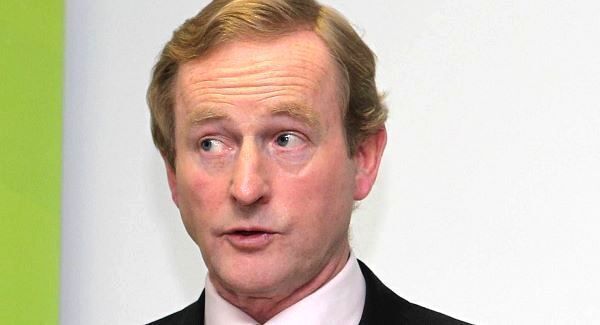
ENDA Kenny’s speech delivering a long-overdue apology to the Magdalene Laundry survivors on Tuesday evening has been hailed by many of his supporters and staff as one of his finest since he took office.
While the Taoiseach can take a large chunk of credit for it himself, well-informed sources said the crafting of the emotional-invoking words was the work of his long time speech writer, Miriam O’Callaghan.
The namesake of the well-known RTÉ presenter, Ms O’Callaghan was also once a journalist and has been with the Taoiseach since he was Fine Gael leader in opposition.
Mr Kenny is said to have written large parts of the speech himself, and set the tone for it.
Like all of his speeches, he laid down the outline of what he wanted to get across in his Dáil address.
He would have also in his own time — possibly at home with his family — composed lines or paragraphs and points that were important to him.
He would then have sat down with three or four advisers, according to people familiar with the process, to devise the speech.
There would be advisers who would “politics-proof” the speech, another who would have an input into the policy requirements of it and then Ms O’Callaghan put it all together.
Also credited with writing the Taoiseach’s historic speech on the Cloyne report, Ms O’Callaghan’s particular skill is believed to be writing in an emotional-invoking style, while other speech-writers are better at more informative and factual speeches.
In this speech, Mr Kenny tapped into the mood of the country and the suffering of the women when he said they carried “the country’s terrible secret”. Addressing the women themselves, he said they were “carrying it in your hearts — here at home, or with you to England and to Canada, America and Australia” but “from this moment on you need carry it no more”. He was using his own sentiment when he read the script that said Ireland was a “cruel, pitiless” place “lacking in the quality of mercy”.
He said the country in the past had “created a particular portrait of itself as a good living, God-fearing nation” but the Magdalene report has shown “this flattering self-portrait to be fictitious”.
Legal and policy experts would have had an input into his delivery of the outline of the fund to help the women. In this section of the speech, Mr Kenny said Judge John Quirk would “make recommendations as to the criteria that should be applied in assessing the help that the government can provide in the areas of payments and other supports, including medical cards, psychological and counselling services and other welfare needs”.
There would also have been a lot of consideration, from all advisers, over the apology itself: “I, as Taoiseach, on behalf of the State, the government and our citizens deeply regret and apologise unreservedly to all those women for the hurt that was done to them, and for any stigma they suffered, as a result of the time they spent in a Magdalen Laundry,” Mr Kenny said.
The examples given by the Taoiseach of stories relayed to him by the survivors he met and from the McAleese report, would have been part of his own input into the speech.
He said: “Here are some of the things I read in the report and they said directly to me:
— The work was so hard, the regime was cruel
— I felt alone, nobody wanted me
— I was locked up, I thought I would never get out...
— I heard a radio sometimes in the distance.
— I never saw my Mam again, she died while I was in there.”
The Taoiseach spoke very personally, when he described how one of the women he met sang “Whispering Hope” to him.
His voice breaking with emotion, he said: “A line from that song stays in my mind — “when the dark midnight is over, watch for the breaking of day”. Let me hope that this day and this debate heralds a new dawn for all those who feared that the dark midnight might never end.”
Sources close to the Taoiseach said he has “always been very good at this sort of speech, he is very strong on the social and moral stuff, the right and wrong issue, making a value judgment”.


CONNECT WITH US TODAY



Be the first to know the latest news and updates