Election promises and pledges set to take hit in coalition talks
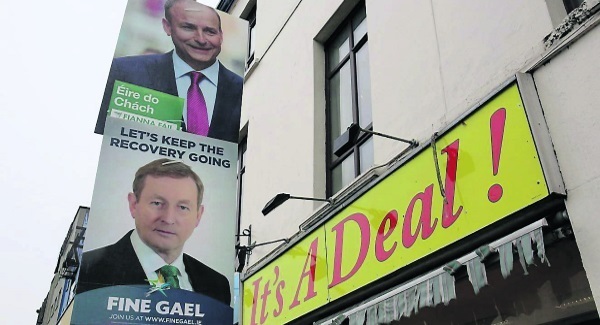
With the horse-trading set to begin in the aftermath of the 2016 election, a number of key promises or commitments could go by the wayside — depending on who gets the keys for government.
Fine Gael, with the largest number of seats, is likely to be in pole position to try and cobble together some negotiations for a government after the first day of the new Dáil next week.
Whoever coalesces with Enda Kenny’s party will have their own demands and there will have to be compromises agreed on social, financial, or infrastructure issues.
It’s somewhat premature to talk about “red-line” issues, but with such a shock outcome from the election for Fine Gael (the party looks set to lose a third of its seats), the strength of Mr Kenny’s hand is weakened.
So what big ticket issues or manifesto promises could get ditched?
The most obvious casualty to emerge from the shock election result will be any concrete commitment for a referendum on repealing the Eighth Amendment.
This was a key platform for Labour during its election campaign, a party that insists the liberalising of the abortion laws in the last Dáil would not have happened without it as junior government partner.
With the party’s meltdown at the polls — its seat numbers have reduced from 19 to as few as seven, with a handful of results still unknown — Labour’s bargaining tools are blunted, compared to its previous influence.
Its drive to have a referendum on liberalising the abortion laws, namely to remove the protection of the life of the unborn from the Constitution, is likely to fall by the wayside.
Labour, now unlikely to muscle in on any programme for government, will have bigger priorities such as regrouping as a party after the drubbing it got from the electorate.
Fine Gael sources last night insisted that Mr Kenny’s promise to set up a citizens’ forum to examine whether constitutional change should proceed on the abortion laws would still stand.
But how far down the list will this liberal issue now fall, given the party’s own fresh priorities such as how to juggle possibly several new coalition partners and keep them in check, when forming a government?
Another priority which may be dropped could be Fine Gael’s commitment to abolish the much-hated Universal Social Charge. It was to the forefront of its manifesto promises.
However, if Fine Gael is to rely on Fianna Fáil in a minority government, the latter would likely insist that elements of the charge remain so cash-starved public services could be properly resourced. Fianna Fáil, after all, proposed a 60:40 spread of tax cuts to spending on services in its manifesto. Furthermore, any power-sharing deal with Fianna Fáil would also likely see conservative elements within Micheál Martin’s party oppose any move to abolish the Eighth Amendment.
Another priority which may be expunged from any wishlist are matters around Irish Water and the flat charges regime, in place until 2018.
Fianna Fáil — in the event of propping up Fine Gael as a minority government — would find it very difficult to renege on its pledge to scrap charges and overhaul the entire Irish Water debacle.
One Fine Gael source told the Irish Examiner, however, that Mr Martin’s party would be expected to “soften” its stance on red-line issues when the public and media eventually begin baying for a government, once the economy starts to stagger under a caretaker administration.
Lastly, any reliance on Independents to form a government could see a loosening of the whip approach used for Dáil votes. The Independent Alliance, which could support either a Fine Gael or Fianna Fáil administration, would require this as part of its charter of principles.
For more election news, analysis and general banter join us HERE


CONNECT WITH US TODAY



Be the first to know the latest news and updates