Clodagh Finn: Doing lots of good work and getting nun of the praise
The systemic physical, emotional, and sexual abuse of children outlined in the findings of the Historical Institutional Abuse inquiry, released yesterday, is truly shocking.
Chairman Anthony Hart said the “denigration and humiliation” of residents in 22 Church, State and charity-run homes in Northern Ireland was widespread.
His description of the suffering endured by the hundreds who gave evidence of what had happened to them as children must never be forgotten.
And, perhaps more importantly, it’s time to call to account the police and the intelligence agencies for their failures in investigating those crimes.
Mr Hart has already said he will be recommending the victims be compensated, though that is hardly enough. Any move to redress the wrongs will probably be delayed, too, because of upcoming elections at Stormont.
At the very least, though, there must be some comfort in being vindicated after a wide-ranging four-year inquiry.
Hart spoke for many when he said: “I thank [the victims] for their courage and determination.” Their voices must be heard loud and clear, right now.
Without, in any way, taking from the horror and lasting pain of what the residents of those institutions experienced, it is not right to tar all religious with the same brush, either.
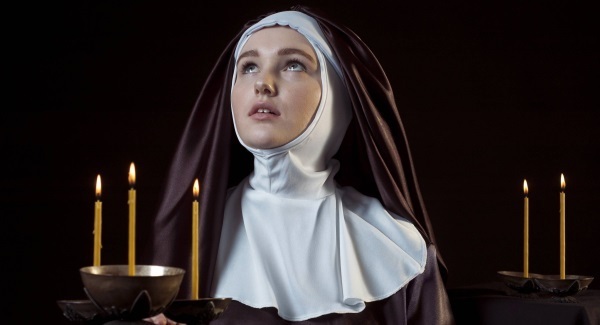
I particularly feel for nuns, whose contribution to education has been completely overshadowed by the wave of scandals, including this one, that have hit the Church.
Even if 90% of primary schools on this side of the Border are still under the patronage of the Catholic Church, the number of nuns teaching in them has dwindled, year after year.
The question, “What is a nun for?” — issued from the mouth of a babe recently — would have been unthinkable up until recently.
Their influence was palpable in the very weave of each school building. The smell of polish on a wooden bannister or a gleaming marble floor still transports me back to the supreme order — and the cleanliness that is next to godliness — of a 1980s convent education.
In truth, I don’t miss those places of rigour and rules, but I have come to appreciate the remarkable women who ran them with unfailing dedication. They did the same in our hospitals which, unlike now, were scrupulously clean.
The unstinting commitment and kindness of the majority is too often overshadowed in the light of scandal. But let’s be clear: The experience of those who suffered at the hands of religious sisters in various institutions must never be minimised, or ignored.
Others spoke of cruelty in the classroom, too, and there were times when the lines between secular instruction and proselytism blurred.
It’s also true to say that a religious vocation didn’t always translate into a teaching vocation.
Ask any convent girl; she’ll have some hair-raising stories, peppered with hilarity and some very cruel nicknames.
Yet, there are still thousands of women in this country working silently and humbly in their ministries.
The same can be said of their contribution to healthcare, youth and social work, not to mention all they have done — and continue to do — to help refugees, prisoners, the homeless, addicts, prostitutes and trauma victims, among many others.
But the contribution of the 6,000-plus religious sisters in Ireland has all but vanished from public view, partly because most of them now dress in civvies. Is it any surprise that a six-year-old might wonder at a wimple?
The last time I saw one feature in a piece of news that went viral was during last summer’s European Championships in France when Irish fans chanted a surprisingly hypnotic version of the ‘Our Father’ to a bemused nun on a train.
The video has just come in at number nine in the top ten most-watched YouTube videos in Ireland last year. Watch it again. It’s good for a giggle and it shows something that was a feature of many a convent girl’s education.
The nun on the train, though completely bewildered by what was taking place around her, stopped, listened, smiled and then held her hands out in a gesture of openness that I had forgotten.
The nuns I knew did that all the time. They were always interested in our welfare and I can’t count the number of times an earnest face, encircled by a veil, came in closer to enquire about our lives outside the convent wall.
We often failed to see them as ordinary people. It often seemed incongruous to bump into them while they were doing something ‘secular’. Many of us lived in mortal dread of being pinned in beside a nun on a long bus or train journey.
There were all those questions: About school, favourite subjects, Sister such-and-such and, heaven forbid, a little query as Gaeilge. If there was one thing worse than sitting beside a chatty nun, it was sitting beside a chatty nun with agrá for the cúpla focail.
To take two examples of the work modern sisters do, consider Sr Stanislaus Kennedy who founded the homeless charity Focus Ireland and The Sanctuary, a meditation centre in Dublin city, and fellow Kerrywoman Sr Consilio, who has helped thousands cope with addiction at her centre, Cuan Mhuire in Athy.
For more examples of “what nuns are for”, pay a visit to the moving exhibition running at the Canadian embassy in Dublin. It shows how the Grey Nuns in Montreal cared for the starving, typhus-striken Irish immigrants fleeing the Famine in 1847.
The city’s residents marched in protest to keep out the hordes of new immigrants, but the Grey Nuns sought, and were granted ,permission to build fever sheds. There, they nursed the 75,000 sick Irish who had been packed in the dank holds of coffin ships to act as ballast. Some 6,000 died.
The exhibition, curated by Professor Christine Kinealy of Ireland’s Great Hunger Institute at Quinnipiac University and Dr Jason King, is due to travel all over the country. It might just help us to recall that the religious did much good too.
CONNECT WITH US TODAY



Be the first to know the latest news and updates