Novak Djokovic timeline - inconsistencies, missing answers and why it matters
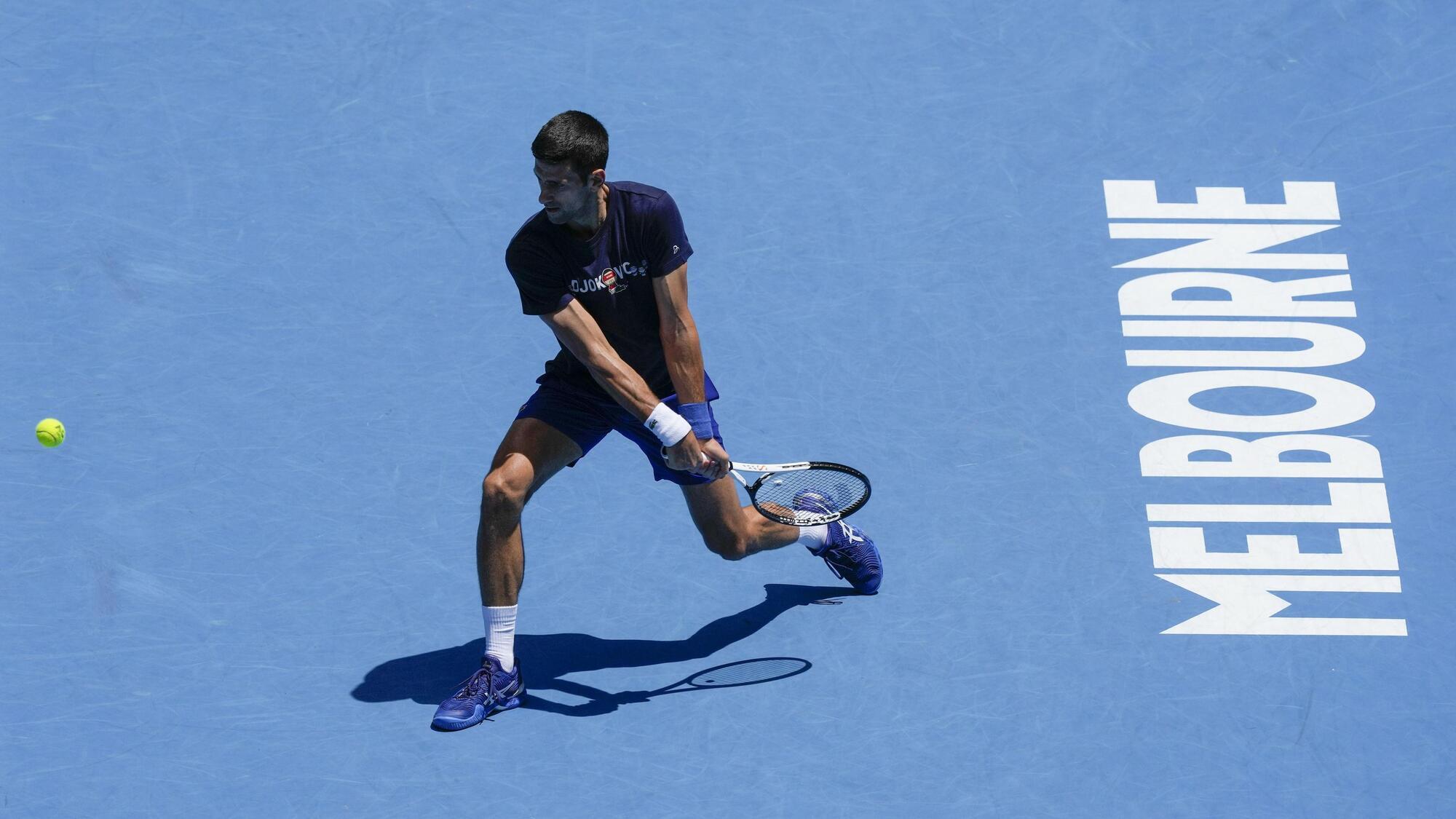
Defending men's champion Serbia's Novak Djokovic practices on Rod Laver Arena ahead of the Australian Open tennis championship in Melbourne, Australia, Wednesday, Jan. 12, 2022. AP Photo/Mark Baker)
Novak Djokovic has released a statement he says will be his last before the Australian government decides whether to re-cancel his visa.
In it, the world No 1 male tennis player blamed his agent for an incorrect declaration about his pre-flight travel and acknowledged an “error of judgment” in knowingly attending an event while Covid-positive.
So what did we learn about the timeline of Djokovic’s diagnosis and movements before his travel to Australia – and what are the questions still unanswered in the visa cancellation saga?
On 1 January, Djokovic’s agent submitted an Australian travel declaration on his behalf, declaring “no” when asked: “Have you travelled or will you travel in the 14 days prior to your flight to Australia?”
Djokovic had obtained an exemption to vaccination requirements from the Tennis Australia chief medical officer, approved by a Victorian government independent review board, stating that he had received a positive PCR test to Covid-19 “recorded on” 16 December.
Djokovic’s affidavit to the federal circuit court challenging his visa cancellation set out this timeline:
18 November – the Australian government granted him a visa.
16 December – he “was tested and diagnosed with Sars-CoV-2”.
22 December – his second PCR test returned a negative result.
1 January – he authorised his agent to submit his travel declaration.
2 January – he received a border travel permit from the Victorian government.
4 January – he flew from Spain to Melbourne via Dubai.
5 January 11.30pm – he arrived in Melbourne.
6 January – his visa was cancelled.
Guardian Australia and others reported that Djokovic appeared at public events in the days after his 16 December test result despite Serbia’s rules requiring 14 days of self-isolation.
Advertisement These included a ceremony for the unveiling of a stamp in his honour in Belgrade, which he posted about on Twitter, and an event at the Tennis Association of Belgrade for an award ceremony on 17 December.
On 18 December, the French newspaper L’Équipe said he took part in an interview and its Champion of Champions awards photoshoot in Belgrade.
Djokovic was pictured on the streets of Belgrade in a social media post dated 25 December, in apparent contradiction of his declaration form that stated he had not travelled in the two weeks before his flight to Australia, which Australian Border Force began to investigate.
In Djokovic’s Instagram statement on Wednesday he set out the following timeline:
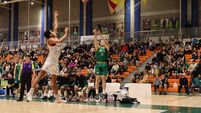
14 December – he attended a basketball game in Belgrade after which it was reported that a number of people tested positive with Covid.
16 December – he took a rapid antigen test which was negative and a PCR test.
17 December – he attended a tennis event in Belgrade to present awards to children, after testing negative again on a rapid test. “I was asymptomatic and felt good, and I had not received the notification of a positive PCR test result until after that event,” Djokovic wrote.
18 December – despite now knowing he had tested positive, he attended his tennis centre in Belgrade to uphold a “long-standing commitment for a L’Equipe interview” because he “felt obliged” to and “didn’t want to let the journalist down”.
“While I went home after the interview to isolate for the required period, on reflection, this was an error of judgment and I accept that I should have rescheduled this commitment,” Djokovic said.
Djokovic’s statement on Wednesday that he did not learn of his positive test result until after the event on 17 December follows his own statement to the court that he was “tested and diagnosed” on 16 December and Tennis Australia’s chief medical officer’s letter that his positive result was “recorded on” 16 December.
Djokovic’s acknowledgment that his agent made an “administrative mistake” in “ticking the incorrect box” on his Australian travel declaration will arm the immigration minister, Alex Hawke, with another potential ground to cancel his visa.
Hawke has the power to cancel the visa if he is satisfied of a ground such as this, or the original ground that an unvaccinated person might pose a risk to public health, and that cancellation is in the public interest.
Djokovic’s statement did not address a Der Spiegel report claiming anomalies in the apparently positive PCR test of 16 December.
On Monday, Der Spiegel claimed that when it scanned the QR code belonging to Djokovic’s PCR test at 1.19pm German time it said: “Test result Negative.” However an hour later, after another scan, it said: “Positive.”
On Tuesday, Der Spiegel said it had found an anomaly in the timestamp for the digital version of Djokovic’s positive test which, it claimed, indicated the result may actually be from 26 December and not 16 December. Spiegel acknowledged the timestamp could also reflect when the result was downloaded.
When asked about Djokovic’s PCR test on Monday, his brother Djordje insisted the entire process was public and “all documents are legal”.
Wednesday’s social media post also didn’t explain why Djokovic didn’t wear a mask when he visited the children while awaiting his PCR test result. He said he took a rapid antigen test before going to the event “and it was negative” – presumably a false negative.
The Instagram statement further didn’t address why he didn’t tell L’Equipe he was positive at the time of the interview and photoshoot.

CONNECT WITH US TODAY



Be the first to know the latest news and updates