Learning from the best in Kenya
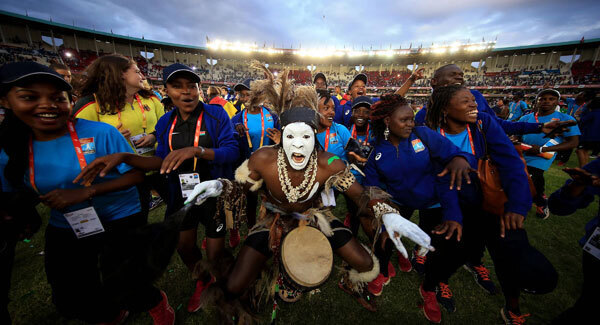
The Kasarani Stadium in Nairobi was the venue, an old-school arena which is usually home to a couple of local soccer clubs but on this particular afternoon the fans had come for a sport closer to Kenyan hearts: athletics.
For the final edition of the IAAF World U18 Championships, the sport’s governing body took a punt to visit Nairobi, which had never before staged a global event of this stature, featuring more than 800 athletes from 130 countries.
The sceptics, of course, were out in force. Many months before a starting gun was fired, federations from the US, UK, Australia — and yes, Ireland — announced they would not participate.
The reasons ranged from it being the final edition — so not worthy of supporting — to the cost, or fears about a perceived threat of terrorism.
I travelled as part of the IAAF’s editorial team, a live-blogging, snap-reporting, self-confessed athletics anorak who would watch two slugs race up a wall if only they would stay in their lanes.
As a student of the sport, though, it was too good an opportunity not to see more of Kenya, the country that is to distance-running what Florence is to painting, even if we’ve discovered in recent years there are plenty of fakes mixed among the masterpieces.
The main goal was to see Iten, the home of champions, a town perched 8,000ft up in the Rift Valley where world-class distance runners are produced with astonishing frequency.
An Irish colleague, Emmet Dunleavy, who brings groups to Kenya as part of his coaching business Perfect Pacing, advised the best place to stay: the High Altitude Training Camp owned by champion distance runner Lornah Kiplagat.
In recent years athletes from around the world had been through its doors, from Mo Farah to Paula Radcliffe, and it wasn’t hard to see why. It was nestled just outside town on the doorstep of endless miles of dusty, ochre trails and for €40 a day — big money in a town where that’s a weekly wage — you get access to a high-tech gym, swimming pool, synthetic running track, en-suite accommodation and three organic, almost annoyingly healthy meals each day.

Confession: for a variety of reasons, most of which fall under the umbrella of couldn’t-be-arsed, I arrived with a not-so-champion level of fitness, a runner in active retirement.
So that first run — jog — was a four-mile festival of wheezing, taken out on the trails that evening by Sligo man Dunleavy, who was building fitness ahead of his tilt at the Berlin Marathon in September. We were joined by two young American runners, John and Trevor, both of whom came to Iten for a summer charity programme.
“I don’t…run that much … anymore” — I spat the words out between precious gulps of air as we shuffled down the roads at what I’d like to believe was eight minutes a mile, but was probably much slower.
Anywhere you ran out of town was downhill, so I cursed Isaac Newton on the way back as each incline loomed like some sadistic joke.
Spend enough days traversing those roads, though, and you soon understand why Kenyans crush their competitors at the majority of big-city marathons.
It’s everywhere, and you see it in the hand-me- down clothes worn by children or the basic, often ramshackle houses packed with people. With hundreds of thousands of dollars on offer for winning a World Marathon Major, it’s no wonder so many smash their bodies in a bid to make it, even with the awareness that only a select few – the winners of the genetic lottery – stand a chance.
The Kalenjin tribe is only about a tenth of Kenya’s population but accounts for the vast majority of their champion distance runners. As outlined by David Epstein in his superb book, The Sports Gene, 32 Kalenjin men broke 2:10 for the marathon in October 2011. One Irishman, John Treacy, has ever done it. Kalenjin have ideal body types for distance running, with especially thin ankles and calves, and in Iten it’s striking to observe the bodies even of non-runners, who look like they could break into five-minute miles at a moment’s notice.
In a town of 5,000, explained Dunleavy, there are about 800 athletes, a community with a shared goal, which creates a hierarchy whereby the weak not only chase but also learn from the strongest runners.
When two-time Olympic champion David Rudisha or marathon world record holder Dennis Kimetto are everyday sights, accessible to train with in a way other sports stars wouldn’t dare indulge, it creates a copycat culture whereby citizens not only aspire to global success – they work towards it.
Of course, there’s also doping, a problem that reared its ugly head in Iten and many other Kenyan towns in recent times as opportunistic pharmacists fulfil a market need for athletes, agents or coaches who decide to cross the line. It’s talked about, but in a way no different to other parts of the world, the impression being that it’s happening in pockets but the majority — however big — still play by the rules.
On the final day I visited St. Patrick’s High School, where Brother Colm O’Connell from Mallow built a succession of champions since his arrival as a missionary in 1976. Say you’re from Ireland to anyone in Iten — and even in Nairobi — and you’re usually met with mention of the great coach’s name, one who is more than respected; he’s revered.
After six days, though, it was back to Nairobi for the U18 Championships, an event not many expected to flourish, and sure enough just a few thousand showed up on the first day. After two days a decision was taken to allow people in for free, and word spread like wild fire through the general public.
By Friday there were over 30,000 people watching, and by Sunday over 60,000 thronged the stands, with an estimated 20,000 waiting outside, unable to get in after the stadium had reached capacity.
In the end, it was a Kenyan 1-2 that set the place alight and left me forever hard of hearing — Jackline Wambui holding off team-mate Lydia Lagat to win the women’s 800m in 2:01.46. The place shuddered when they crossed the line, the Kenyan public heralding another jewel in their ever- expanding crown of champions.
It left you feeling pity for the athletes forced to stay at home — they’d missed a hell of a party — and contempt for those who thought the idea of Kenya hosting a major championship was a bad idea. It wasn’t, the event going off without any major hitches and opening up the possibility of Kenya hosting a senior world championships someday. It may take many years, but in a nation unafraid to dream despite the resources at hand, they’ve learned almost anything is possible.
CONNECT WITH US TODAY



Be the first to know the latest news and updates