Gearoid Towey challenges sporting taboo of mental health
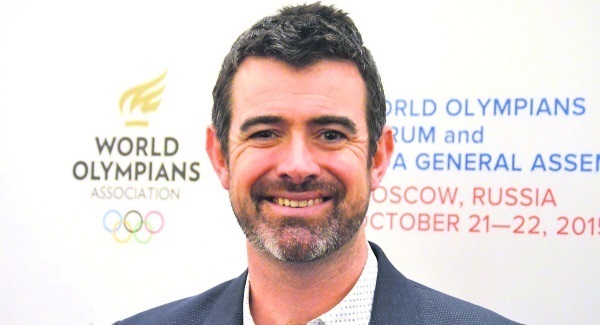
One might forgive Cork-born Towey for resting on his laurels after a phenomenal career in rowing, as an Olympian and former world champion. After retiring from competitive rowing after the Beijing Olympics in 2008, he was looking for other challenges.
He had already tried and failed to cross the Atlantic Ocean with Ciaran Lewis in a 7m rowing boat, and then embarked on a new career as an actor while taking part in extreme adventure races.
The search for an adrenaline rush to match his competitive days continued, and with a degree in Natural Science, he began to explore the way athletes cope with life after sport â or more often than not, fail to cope with it.
As he says: âYou go from the huge highs of taking part in sport to the big lows that follow when you cannot compete any more, for whatever reason.
âIt is hard to tell athletes to be ready for it because they have no idea what it is going to feel like.
âEven if you tell them it is going to be alright, tell them what depression feels like and not to feel bad about, it is a common thing, it is something that happens.â
And that is why he has set up a new venture called Crossing The Line, a counselling service for athletes and elite sportsmen and women. Although he is now based in Australia, where he moved four years ago, Towey sees it as a global issue and is offering a global solution.
He was in Moscow this week to speak at the inaugural World Olympians Forum, where representatives from every nation gathered, in the presence of Vladimir Putin and others, to share ideas on supporting the 100,000 or so former Olympians.
Not all of them are living the high life, or happy in retirement, and Towey is able to offer a solution. He is starting to work with federations and individuals around the world, and is off to South Africa next month on the next leg of what is becoming a world tour.
âItâs a global issue,â he adds. âIf you donât get a little bit depressed after the end of your career there is something wrong with you. Relationships and families are huge in this because a lot of relationships go wrong straight after the big events.
âThe families are waiting for them to come back [from big events] for years and then when they come back they are a totally different person. They are often depressed, and of course there is a difficult culture about opening up about it. It is still a taboo subject.
âThe athletes donât know how to articulate how they feel so instead they bottle it up and let it snowball. And then thatâs it.â
That is where he comes in. âCrossing The Line is an independent non-profit-making support group for those athletes in transition. At its most basic level we have athletes sharing their story of transition with each other.
âAt the moment weâre trying to build a pool of stories, from different athletes and different sports from all over the world.
âWe also have articles from experts in the field, trying to tackle the subjects that no one wants to talk about which exist in sport, such as addiction, injury, depression, sexuality. It is all the kind of stuff thatâs taboo in the sports world. We want it being more out in the open, and the more open it is, the easier we can deal with issues.â
As he found in Moscow, there is a growing demand for his services. âIâve been marketing on my own up until this point but I have a few people now who are coming on board. I have a great board who do a great job of keeping me on track, as well as some people who are very influential in sport.
âThat is great, but the subject itself is so vast and so interesting, and so many people have something that they want to say about it, that I felt the need to create this platform,â he said.
He realises he has just scratched the surface of a massive issue. âItâs huge, itâs almost overwhelmingly big, there are so many layers to it. Iâd just like to start here and see how it goes.â
He is based in Sydney now. âI used to train out there when I was an athlete, then I went out there in 2011 to live, and from there I started working in this space. I had my own events business for a long time, but felt that there was something that needed to be done in this area,â he said.
And the response has been phenomenal. âItâs been amazing. Basically anyone who has a vested interest in the topic or someone whoâs experienced it, sees our website and goes âwow, this is what I need â can I contribute?â so Iâm getting inundated now with athletes who want to tell their story which is fabulous, itâs exactly what I want.
âHopefully itâs going to grow to proportions where I kind of just look after myself, thatâs the plan, at the end of the year Iâm going to have to employ people to help me.
âThis sort of thing hasnât been done before I set it up. The challenge for national federations and teams is the fact that athletes do tend to shut down with their personal issues, for fear of being deselected or whatever it is.
âSo itâs very hard for counsellors employed by the clubs or federations to get through at this level, whereas we can do that because first of all weâre athletes, the whole idea is of athletes supporting athletes, and secondly it is because this is independent, so they know if they speak to one of our counsellors that there arenât going to be any repercussions for them.â
Of course, as sportsman, he still takes a keen interest in his countrymen, even from the other side of the world.
âYes, of course I follow Ireland in everything, so whateverâs on thatâs Irish Iâll follow. It was disappointing to go out of the Rugby World Cup they way we did, but I think they were just sort of running out of steam at the end because of all the work they had to do to try to catch up.
âBut you know the Irish rugby team are a special breed, theyâre fantastic athletes. Iâve met a few of them and theyâve always flown the flag really high for Ireland, and theyâre a really respected bunch of people so all credit to them.â
He was surprised by the criticism of the boys in green, which tends to be less than he and his fellow Olympians usually received for coming back from the Games empty-handed.
âThis time, I noticed in the media at home that there was a bit of a backlash, like âthis isnât good enoughâ, so they do cop a bit of criticism now. But the difference is that theyâre in the public eye all the time, whereas the Olympic team isnât. Most of us are only in the public eye a few times every four years.
âAnd during the Olympics, everyone becomes an âexpertâ, so when you donât come home with medals, people who donât understand the sport tend to go âoh well they didnât get a medal againâ, whereas if they understood the sport a bit more and see how close it is and realised you can come second today but youâll come 10th tomorrow racing the same way, itâs just your opponents that make it so close.â
On the subject of controversy, he is fully aware of the row over Billy Walshâs departure from the Irish boxing scene. âI know Billy, and he is a gem, a great person. He has done so much for Irish boxing. I just donât understand how you can let someone like that go. I would be trying to keep hold onto him with everything I had. And again it is the athletes that are going to suffer in the end. Someone who is basically a national treasure will leave Ireland with a bad taste in his mouth.â
If ever the boxers Walsh has left behind need counselling, they know where to go.
www.crossingthelinesport.com