Gone are the days when golfing authorities can act with impunity

No one doubted Lowry’s pedigree, but this was no ordinary Sunday on no ordinary golf course. It was Shane’s first legitimate opportunity to win a major championship but from the off on Sunday, it was evident the enormity of the occasion had taken him out of his comfort zone. It didn’t help playing partner Andrew Landry was playing so poorly, nor did it help that the golf course was unfair - even if they were pretty much the same conditions Lowry had thrived on over the first three days.
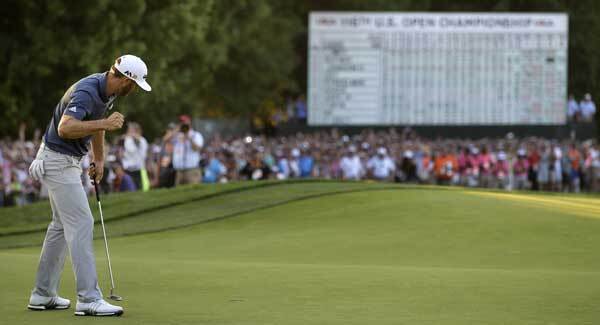
This chastening experience will stand to Lowry if he can reflect on it positively. Didn’t his good friend Rory McIlroy, face something similar in the 2011 Masters? It happens, but if Lowry wants true inspiration right now, then he should look no further than the heroic performance of the eventual winner, Dustin Johnson.
For so long Johnson has been demonised by most of the world’s media for his spectacular major championship collapses, for not realising his true talent — but Sunday’s performance proved once and for all that he is indeed something special.
Johnson had played to his strengths all week by taking advantage of his length and accuracy off the tee box but it was his newly found patience and mental strength, especially in the adversity of those closing nine holes, which he can thank most for elevating him to the status of a major champion. Now he has finally made that breakthorough, the task of winning major championships has got significantly more difficult for the likes of Day, Spieth and McIlroy. They should be worried too, because Johnson’s ability, his sheer athleticism and his new-found confidence could well mean he is now the one who might have the most profound impact on the professional game over the next decade.
On that other issue, one cannot avoid addressing the actions of the USGA, both in terms of their course set up as well as Johnson’s infamous fifth hole ruling.
Right now the industry in the US is hemorrhaging golfing memberships, many of the younger generation deciding to spend their money elsewhere.
Hence it is incumbent on the USGA to use whatever opportunity they have to showcase the US Open and everything good and attractive in the game of golf.
Of course the US Open should be about finding the best player and I would even go along with it being a true test of all the golfers’ arsenal, but the Oakmont test has done little to attract new fans to the game. It was penal. It was tough and for most of the game’s best professionals playing last week, it was both demoralising and humiliating - so you can I can only imagine the turn-off it must have been for the half interested golfer!
In my opinion, the golf authorities from top to bottom must now take a long hard look at their job descriptions and ask themselves are we doing everything we can to promote greater participation in the game of golf?
For example, let’s look at three specific points I wish to address from my observations of last week’s test at Oakmont
Always understand that “honour and integrity” are the founding principles of the game of golf, so that when a player says he did not cause a ball to move and he is supported by his playing partner (and indeed the referee), then be brave enough (after a video review if necessary to satisfy the general public) to accept their view. There is no need to compromise their integrity and there is certainly no need for a ruling body like the USGA to find itself in a position where a “no decision” policy potentially compromises the performance of the players as well as the enjoyment of the spectators. The immediate outburst on Twitter from all of the leading players suggests there is a major disconnect there, so it is imperative they get the players confidence back by getting “their act” together.
If the USGA is looking to find the best all-round player to win their Open Championship, then surely the players have every right to make sure that their interests are always prioritised by an organisation that should be just as professional in all of their actions. That was not the case Sunday.
While acknowledging the putting surfaces were excellent, I thought that some of the pin positions throughout the week were frankly pathetic. Take No 2 Sunday for example, where anything just short of the flag backed up some 40 yards. Golf is meant to be tough and tricky but it is also meant to give you opportunities and in the heat of the moment yesterday, where nervous shots compromise distance control, holes like the short second were nothing more than frustrating.
The speed of the greens also accounts for the Dustin Johnson incident on the 5th hole as it takes little in order for a ball to move. It must be remembered that some of these rules were first created when a tournament putting green ran about 9 or 10 or even slower on the Stimp.
In such circumstances the ball simply would not move unless you involuntarily hit it so I would contend that if the USGA are determined to have putting greens rolling at a frankly ridiculous 14-15 on the Stimp, then they also have to be more current with their rulings on the matter.
Quite apart from the fact that it’s not something an average player can even relate to, it’s boring, as there is no shot variety. Compare that to next month’s Open Championship at Royal Troon’s where the Postage Stamp Par 3 is just 128 yards but requires all the finesse and delicate shot making skills that you would ever require from any professional or amateur golfer.
So, if golf is serious about trying to grow, then it must break away from its petty ideals that are either outdated or illogical. Dustin Johnson saved the USGA’s bacon on Sunday by winning the tournament, despite his penalty debacle, but they would be well advised to pay close attention to the social media outburst which surrounded it.
Gone are the days when the golfing authorities can act with impunity and alone. If only they could understand that’s a good thing, by the way. If only they were listening!