Increased coverage key to promoting women’s sports
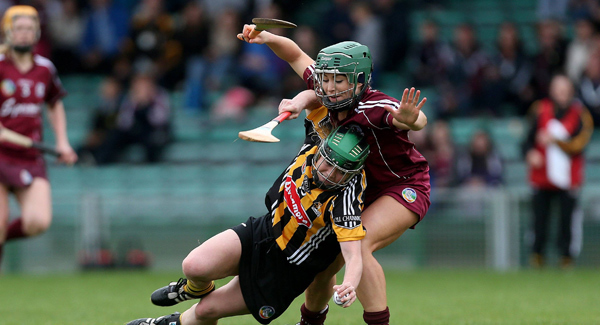

It has brought to light the topic of women and where exactly they fit into the world of sports. Rather than try to sift through the various opinions, I decided to do what I always do when I’m trying to understand a topic, I made a list of points I believe should be considered in the women’s sport discussion.
There is an inextricable link between how a sportswoman looks and how marketable she is. It’s a far bigger factor than in men’s sports. Just being an all around world-beater isn’t enough to make the big bucks, there’s a necessity for women to also look appealing. Like it or not, skill isn’t the only valuable asset to a sportswoman.
Despite image clearly being a big factor in women’s sports, there is often a hypocritical condemnation of women who use this to their advantage. Anna Kournikova was a massive name in women’s tennis and she used her looks — along with her skills — to leverage major sponsorship deals. Kournikova didn’t create this world that fawned over her sex appeal she merely worked it in a way that made her very rich. Yet she was slated for her lack of tennis court success. Image is a double-edged sword, it’s important in terms of making money yet many women get criticised for using it.
There are very few sports that offer professional contracts to women the way men’s sports do. The money floating around for women’s soccer, basketball and rugby is pitiful in comparison to that of their male counterparts. One of the few sports that does offer a good opportunity is tennis. Undoubtedly Serena Williams is one of the superstars of the game and is a massive global sports star. Yet on a Sports Illustrated list of the highest earning American sports stars in 2013 she came in at a modest 39th. She was the only woman on the list.
I’ve read a lot recently about how women’s sports are simply not as interesting as men’s and how it’s really more of a minority area. This notion makes me mad. Women are not some exotic creatures, we are half the population. How can women competing in sport be treated as if it is tiddlywinks? If it wasn’t treated as a niche area it would be far more helpful for growth and development.
The people who float the idea that women’s sports is simply too small an area to cover are the same folk who are happy to “honestly” admit that they feel women’s sports are simply far inferior to men’s sports. Well, here’s an admission, I know Usain Bolt is faster than me. Women are aware that they are not as fast or strong as men but saying that their sport is not worthy of attention for this reason is, in my opinion, completely missing the point. Women’s sports can be watched, analysed and critiqued on their own merits.
Twenty years ago there was no packed out stadiums and live television coverage for men’s interprovincial rugby clashes but now the interest is massive. The sport of rugby hashugely expanded its fanbase in two decades and with this has come increased revenue and publicity. Where we are now with women’s sports is certainly not where we have to be in 20 years. There is room for growth if given the opportunity.
I’ve recently read a book called “Lean In” by Sheryl Sandberg, Facebook chief operating officer. It’s about the challenges women face in trying to get ahead in business. One of the interesting points is the idea of sitting at the table. This concept basically means putting yourself in a position where you are at the table where decisions are made rather than in a corner making little impact. I believe in sport it’s important that women are at the table, but unfortunately that’s not an easy task. A recent report revealed that representation of women on international sports boards was 14.9%. If you take a closer look at Ireland and try to find women in the top positions in sporting bodies it’s difficult, there are very few. I want to see more women on that side of the sport.
The San Antonio Spurs have recently appointed Becky Hammon as a full-time assistant coach to their NBA team. This is relevant as it is the first time this position has been given to a woman. It comes shortly after Clermont 63 appointing Helena Costa and her quitting after 49 days saying she was merely the face of the club and was being frozen out of key decisions. Sport will be in a better place with more women appointed to big coaching jobs, but they need to make a success of them for this to be sustainable and grow. Positions need to be filled on merit, not as marketing spin.
The cornerstone for promoting women’s sports is increased coverage. If people find it difficult to see matches or competitions, then unfortunately they probably won’t. Generally studies have suggested less than 5% of sports articles and photographs feature women. This means stories on women’s sport are generally outnumbered by about 20 to one.
There are some people who will just never engage with women’s sport, but I wish they would give it a chance. Outside of my belief that women deserve equality of opportunity, the benefits of women’s sport being more prominent are massive. Last year a study across senior female management in Europe showed that 90% of those women played competitive sport in secondary school level, with 67% of the women competing as adults. Sport is empowering and gives people incredible transferable skills. More women in sport can only be a good thing.