For politicians we can truly trust we need to reform the system first
The blow of retirement to Ahern will be softened by an extraordinary redundancy and pension package that means he will be substantially better off financially out of politics than continuing to sit as an opposition TD.
The departing Fianna Fáil minister, once spoken of as a potential party leadership candidate once Brian Cowen departs, will get almost €320,000 in the first 12 months after he retires from the Dáil and more than €177,000 of that will be tax free. A year after retirement, he will be entitled to a combined annual ministerial and TD’s pension of €128,300, compared to the €98,400 he would get as a TD. If he had decided to stay in Dáil Eireann, had he been re-elected as he probably would, he would have been allowed to claim only half of his pension entitlement. Ahern, who has served as a minister since 1997, is just 55 years old. Amid coverage of details such as this Ahern’s ill-health — which is a genuine problem — and the picketing of his family home by protesters did not gather much attention or sympathy, though they should have.
His ministerial colleague John Gormley, leader of the Green Party, is facing an uphill battle on ice to retain his own seat in Dublin South-East. He knows that his party will not be in the next government; he must fear that it will not have a single representative in the next Dáil, which would threaten the party’s very existence. His personal pay-off will be nowhere near as generous as the one Ahern is getting but he is unlikely to be on the breadline either. I doubt though if he is thinking too much about that. He is clearly hurting at present.
In case you missed it Gormley this week compared being in government to being in an asylum. Building on his theme he told Eamon Gilmore that the Labour leader would be placed in a “straitjacket” in government because he would have to endure a “no-win” situation, constant criticism and damn all choice but to sit there, take it and respond that this is “the only way”.
The Greens are into creating their legacy these days which is understandable because they must be shattered by the disappointment of coming into government at exactly the wrong time, their optimism that they could institute real change pulverised as they got just a few new laws of real benefit introduced.
Gormley, perhaps accurately but running the severe risk of being seen as a whinger, especially as he had never been slow to put in the boot on governments while in opposition, declared that “it takes courage to stay in, to put through the toughest budget that this country has ever seen. I don’t relish it... I think it is the right thing to do.”
You can make up your own mind about whether the Greens should ever have gone into government or have pulled the plug a lot earlier — and as to whether doing it while the government was in active negotiation with the IMF and ECB was the right time to finally act. And Labour would be entitled to retort that if it is going to find itself in a straitjacket — which it won’t because the voters would then ask what the point of Irish politics is, even if that is a good question now — it is because of the reckless behaviour of the outgoing administration.
But amid the anger at the financial cushion Ahern will enjoy and at the comments made by Gormley, some important points may have been missed. We may not be impressed with the politicians we have had but are those who will follow likely to be any better? And if we mock politicians for their idealism and then ridicule them for trying to be pragmatic then who of any real worth is going to say that is an occupation they want to try? And if we do find some good ones, what real power to introduce change will they have when shackled by the International Monetary Fund and European Central Bank?
We are set to lose a slew of TDs at the forthcoming election, some of whom will retire, others who will fail to be re-elected. It would come as no surprise if other ministers took advantage of the amazing financial package on offer rather than suffer the humiliation of being rejected by the voters. Some are going on the grounds of age, others early because the demands of the job — and much of what some voters want them as glorified social workers and fixers is ridiculous — are too much. There is an element of unwarranted abuse too (much of it, I admit, from the media) although some of them, even if elected by the people they represent, deserve even more of it. And there is the depressing realisation that for many of them they have no real power, that they are no more than mere lobby fodder at Dáil votes and media entertainers if they are articulate.
So will want to replace them? There will be no shortage of candidates at most parties but it is quality rather than quantity that should worry us.
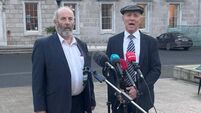
Recently I interviewed Pearse Doherty of Sinn Féin after he won the Donegal South-West by-election. Doherty is articulate, clearly intelligent and ideologically motivated which, even if you don’t agree with his politics, are good assets to have. But one thing that he said stuck with me. He refuses to attend funerals. This may seem like a small thing but it is indicative of what needs to change in this country. We need politicians who think nationally, with the bigger picture in mind, who don’t run from the Dáil to be seen at events in their constituency, whose whole motivation from the day they are elected is to do what it takes to be re-elected next time out.
Many of the new TDs we will get after the next election will prosper because they have worked the conventional system at local level, not because they have expertise or experience that is likely to be of use in law-making and administration.
The single transferable vote, multi-seat constituency system does not serve us well, despite its claimed fairness arising from excellent proportionality. It encourages votes for individuals rather than parties.
Other countries operate list systems whereby some politicians are elected directly and others are nominated to parliament to parties depending on what entitlement is given to them by the proportion of the overall vote the party has obtained. This can be decried as elitist but given the evident failure of our system I would love to see it be given a chance.
I would also love to see a system where by the new ruling government must bring in at least one-third of the 15 person cabinet from outside of directly elected politics entirely (having been named on the lists prior to the election so that the voters can know how the parties are likely to appoint to cabinet once given the chance). These should be people from business, administration, arts and academia, people with brains, experience and drive who are willing to dedicate themselves to public service for a maximum of two terms of four years (after which they must depart politics). Indeed, it might be no harm, judging by the drained demeanour of our long-serving ministers, if this time limit was applied to all politicians. And in addition, I would suggest that ministers — appointed in areas where they have proven skills and not to suit geographic considerations or their re-election chances — would not be required or allowed to do constituency duties.
This may not be the right solution but we need the debate about reforming the system or else we will continue to elect batches of people to run the country who you shouldn’t really trust to run the local fair, while the best opt to stay in the private sector.
The Last Word with Matt Cooper is broadcast on 100-102 Today FM, Monday to Friday, 4.30pm to 7pm.


CONNECT WITH US TODAY



Be the first to know the latest news and updates