City will have to shout much louder if it wants to be the Irish Barcelona
Surprising because, after all, an ambassador is somebody you send to a foreign country to represent your interests. Whatever you may believe about Cork being an independent People’s Republic, it does not exist in isolation from the rest of the Republic of Ireland.
So why did Dr Murphy fly that particular kite? Perhaps it was designed to shake an audience of the city’s business leaders out of any complacency about the future.
Dr Murphy, who has continued the policy of making UCC’s relevance to the local economy one of its key drivers, is not alone in worrying that Cork, especially when it is doing well, can be forgotten about by the powers who make decisions in Dublin. This is especially so when it comes to the location of foreign investment in the city and its environs. Cork is worryingly dependent on foreign direct investment for its jobs. That is often routed through Dublin.
Cork has a minister at the cabinet table of course and one who is in a central position to mind the city’s interests.
As Minister for Trade, Enterprise and Employment, Micheál Martin is excellently positioned to be aware of multinational interest in the country. However, through no fault of his own, he was not able to persuade Amgen to complete its planned €1 billion investment for the county. Similar investments are becoming increasingly hard to secure against the backdrop of international economic uncertainty and fears that Ireland is losing its competitiveness against alternative locations.
Cork also depends on centrally provided funds for its infrastructure requirements. The benefits of the road-building programme at the end of the last century are beginning to dissipate. The funding debacle for the Cork airport terminal does not inspire confidence that the Government will do Cork any favours.
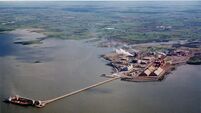
This is worrying given that Cork will need significant State support for the wonderful plans to regenerate the city through development of the docklands area. This is a project that would make Cork an international regional centre, a second city as significant in an Irish context as Barcelona is in Spain, for example. But it won’t happen without serious State investment and the fear is that, without people lobbying hard on Cork’s behalf, enough people in positions of importance in Dublin neither know nor care about it. But Belfast is getting more than a look-in when it comes to securing government interest. The second city of the island is a big threat to the second city of the State because so much of our Government’s attention is focused that way for political reasons. And this Government, as well as politicians of all varieties on the Northern Executive, reckon that significant economic progress in the North is crucial to securing the political advances that have been made in recent years.
Public spending by the British government accounts for nearly two-thirds of the North’s gross domestic product and one in every three people there has a public sector job. Belfast desperately needs bigger investment from the private sector. It’s starting to happen.
For example, the number of hotel rooms has tripled in Northern Ireland in the past 10 years from 900 to about 3,000 and, in the next three years, will increase by a further 40-45%. Eleven new hotels are planned for the city. That’s not just a huge boost for tourism in the area — it is happening because investors think the city is going to become a more substantial business base.
Aer Lingus isn’t going there either just to benefit from lower costs. If it believes there is substantial profitable traffic to sustain a new Belfast-Heathrow route, it is because it anticipates increased economic activity.
Belfast already has advantages compared with Cork. It has about twice the population within its city limits and about twice the number in its hinterland as well. The infrastructure is well in place: there are two airports and the train service to Dublin is regular and cheaply priced, even if Cork is now better served by the hourly service. The motorway system linking Belfast to Dublin puts the Dublin-to-Cork route to shame, notwithstanding the big improvements on the latter. There is a more natural, and shorter, corridor for economic trade between Dublin and Belfast that many on both sides of the border would like to exploit.
The first phase of a wonderful docklands development has been completed at Laganside — with the sort of state funding the Cork docklands could only dream of getting — and another is being started at the old Harland and Wolff shipyard to capitalise on the Titanic legacy.
Belfast and the rest of the North suffers from one big disadvantage when it comes to attracting outside investment: the 30% tax rate. Many companies opt to locate in the south because of our 12.5% rate. In one of his last acts as British chancellor, Gordon Brown asked David Varney to carry out a review examining how tax policy can support economic growth in Northern Ireland.
His report is overdue, but fortunately for the south it is unlikely to recommend changes to equalise the corporate tax rates. EU rules may not allow variation of tax rates within a jurisdiction (and the North remains very much part of the UK).
In addition, a rate cut might encourage transfer pricing, a practice whereby foreign-owned companies based in Britain would register an office in the North just to record their profits without actually making an economic contribution to the area. But Brown, now that he is prime minister, may divert further economic aid to the North to compensate for any decision not to adjust tax rates.
WHILE the decision of Seagate this week to announce the closure of its plant in Derry — with the loss of 900 jobs — is a devastating blow for those affected, it will assist the local politicians in a perverse way as they seek additional support for efforts to improve the local economy.
Our Government, despite the need to bolster our own economy, will not object. Bertie Ahern is playing the long game here. I suspect he believes that economic convergence is essential not just to the maintenance of peace, but to the possibility of some future form of political reunification on this island. Peace in the North is his big political achievement, but imagine his place in history if the implementation of the Good Friday agreement leads to national unity? In the event of a united Ireland, then Belfast — not Cork — will be the second city.
Cork can still prosper in those circumstances, though. But it has to fight for its share of the national pie. This Government has been negligent in allowing the excessive development of Dublin at the expense of all of the other regions of the country. The failure of the decentralisation programme of public servants and of non-implementation of the national spatial strategy has affected the entire country.
People in the mid-west rightly hollered at the economic impact of Aer Lingus abandoning the Shannon-Heathrow route. People in Cork need to speak up for themselves more or, as Dr Murphy suggests, get more people to do it on Cork’s behalf. One of the priorities should be financial support for the docklands project that could reverse the worrying population flow out of the city.


CONNECT WITH US TODAY



Be the first to know the latest news and updates