Ireland pays heavy price for septic politics

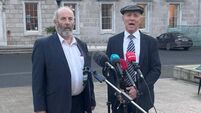
The pantomime on show includes such diverse characters as Big Phil, the strongman who made a perfect u-turn; Mattie McGrath, the King Canute of Rural Ireland; and our old friend, Cllr Maurice Hickey, a creation of Pat Shortt, who actually resemble some specimens of the real thing; It’s a tale about chickens coming home to roost at precisely the time when there’s precious little room in the coup.
Back around 30 years ago, bungalow blitz hit out across the land. These single storey dwellings were popping up everywhere, as some people opted for a bigger house out in the country.
It was a lifestyle choice for most of these new rural dwellers as they didn’t work on the land. Who could blame anybody for wanting a nice house in the country, with a bit of privacy, and often considerable surrounding acreage?
A few dissonant voices raised concerns about imposition on the natural environment. These objections were largely seen as begrudgery emanating from untidy types who wore sandals with no socks. Time’s long march would eventually fall into step with the concerns raised, but 30 years ago nobody really wanted to know.
Once the gap opened up, thousands poured through. You only have to look at the most scenic corners of counties like Kerry, Galway or Donegal to see how a beautiful landscape has been blotted by a proliferation of dwellings. Nobody can be blamed for wanting a piece of this action. The greater good should have dictated that it was both detrimental to the environment and would impact negatively on the tourist product that is one of the country’s main industries.
Somewhere along the way, the reality seeped into official circles. Planning guidelines were slowly formulated to put a brake on the madness. And that was where our buffoon of a county councillor, modelled on Mr Hickey, came into his own.
Circumventing the planning laws on one-off housing became one of the main pre-occupations of councillors throughout the country, but particularly in the more rural counties. Section 4s, where exemptions for planning were given, occupied copious realms of council business. Some were a lot worse than others.
Some of them saw it as one of their basic functions to undermine guidelines and regulations. Long-term considerations didn’t even register on these people’s radars. For these individuals, the common good was like the bore at a party, best given a wide berth.
The madness accelerated during the bubble years. With more money sloshing around, there was a greater thirst for the house in the country. Now, up to 40% of the housing stock is one-off dwellings. There are over 470,000 one-off houses in the State which require a septic tank. Just one in ten of those householders can claim to be full-time farmers, and therefore have a valid reason for living on the land.
The proliferation of this type of housing has resulted in one septic tank being required for every nine citizens. The figure in Northern Ireland is around one in every 27, while in the UK it’s one in every 67.
Over there, they value the countryside, and concentrate instead on building sustainable, and often very often attractive, villages, which are thriving hubs for rural life.
The results in this country are plain to see. In 2007, a crisis developed in the Galway area with an outbreak of cryptosporidium in the water supply. It caused huge inconvenience, and hardship, particularly for elderly and vulnerable people. The outbreak was to a large extent blamed on the proliferation of septic tanks required to service the huge increase in one-off housing.
In 2009, Kerry County Council senior engineer Paul Stack remarked in a local authority publication that half of the permanent population in the county now lives in rural areas.
“It is clearly evidence from travelling around the county that significant damage has already been done to the landscape,” he said.
He noted that tourists, who saw the Kerry countryside as spectacular, were quick to remark on the damage caused.
That is the background against which septic tanks have become an issue in this country. Now, an inspection regime is to be put on place on foot of a 2009 ruling by the European Court of Justice. It found that Ireland’s septic tank regime was not complying with basic anti-pollution measures.
Enter Phil Hogan with a cack-handed attempt to comply with Europe. He didn’t make clear what would be required for those affected. He didn’t even clarify the cost, which lurched from €50 per annum, to fifty every five years, to a one off charge of fifty, and finally, the great u-turn. Just €5 for those who registered in the first three months of the new regime.
It is impossible to see how a rigorous inspection system will now take place without huge funding from central government at a time when the cupboard is bare.
Step forward the great defender of Rural Ireland, Mattie McGrath. Mattie, a likeable sort, can now claim to have forced Big Phil into his turnaround. In 2010, Mattie defined rural Ireland as the freedom to drink a few pints and drive, and the continuing pleasures of a hunt in Co Meath to chase down and kill deer.
At the time, he suggested that having a couple of pints would relax a driver. He also put forward the proposition that the Green party was intent on ultimately banning fishing. There is a constituency out there which laps up this sort of stuff.
Now Mattie has seen off Big Phil and Brussels, as if he was defending the integrity of rural Ireland against marauding outsiders. His seat is thus as safe as houses.
Unfortunately, the real issues of rural Ireland get buried in the pantomime.
Issues like transport, and the development of a sustainable economy to tackle depopulation, are not given to dramatic gesture. Invoking the ghost of Cromwell in arguing for universal broadband provision doesn’t exactly ring true.
These matters require a modicum of patience and are concerned with the greater good of rural Ireland.
How, for example, can the success in agriculture be sustained? Is it inevitable that a move to collective farming is necessary if world markets are to be properly exploited? How can the tourism product be better tailored to sustain in the long run? Tourists are no longer willing to come just to admire the scenery, which is just as well, because much of the scenery has been blighted by one-off housing.
Is there sufficient encouragement and support for the type of small manufacturing businesses which could easily locate in rural areas?
Anybody concerned with rural Ireland would be making a song and dance about these issues. Unfortunately, most of these matters are about the long term, and the future beyond the next election is a strange and hostile country to anybody engaged in the Irish political culture.


CONNECT WITH US TODAY



Be the first to know the latest news and updates