Decline of European Kingfisher
We gathered beside the busy bridge in the town and I explained to them that because we were quite a large group and I was using an amplified microphone we wouldn’t actually see much of the wildlife that lived along the river, so I would give a little talk about the treasures that might be encountered on a quieter stroll.
I was standing with my back to the river and the group was in front of me. I began by telling them that the lovely linear park we would be walking through was a kingfisher territory. I was half way through explaining the significance of having such beautiful and relatively uncommon birds in the town when suddenly the group sprang to attention and started pointing, Someone shouted: ‘There’s one!’ I spun round just in time to catch sight of an electric blue flash flying through one of the bridge arches. It was a good way to begin.
The International Union for the Conservation of Nature publishes conservation data on all wild species and it evaluates our species of kingfisher as being of ‘Least Concern’. But this gives a slightly false picture because the kingfisher has a very large global range which includes most of Europe and Asia, and a bit of Africa.
Globally they are not endangered but in western Europe they have declined dramatically over the past 50 years, mainly as a result of water pollution, and the EU affords them special conservation status. So it is significant that they’re living in Newbridge.
They usually manage to have two broods a year and at this stage the young of the first brood, hatched a few weeks ago in a dark and dirty chamber at the end of a metre long burrow in the river bank, are fledged and learning how to fish.
This is a tricky business and mistakes can be fatal. Their prey is mainly very small fish and large aquatic insects.
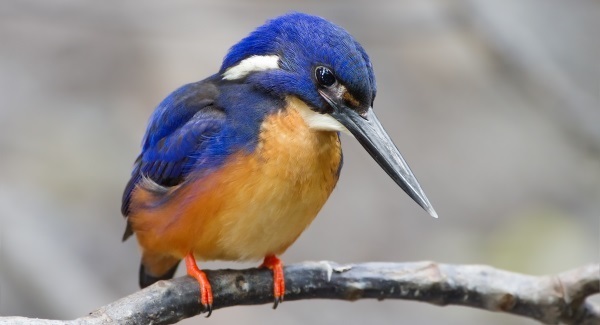
Occasionally they hover and dive but, unlike many of their tropical cousins, their preferred method is to perch on a branch hanging over the water and wait for something edible to come in range.
They can dive up to a metre below the surface and their eyes are adapted to allow them to see underwater.
If a young bird catches a fish the first thing it must do is to kill it, or stun it at least, by banging its head off the perch. If they attempt to swallow a live stickleback it will raise its spines in their throat and they will probably choke to death.
The second vital thing they must learn is to meticulously dry and re-oil their feathers after every dive. Many young birds neglect this, become waterlogged and drown.
CONNECT WITH US TODAY



Be the first to know the latest news and updates