In sickness and in death
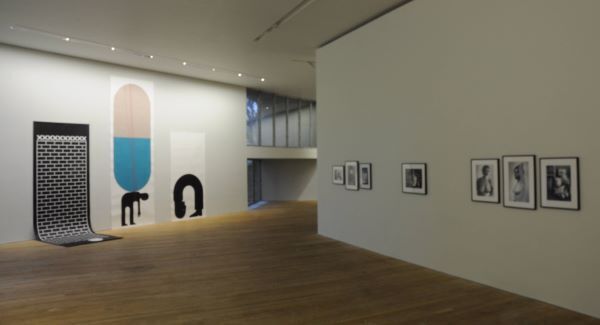
Her work is part of a group exhibition, Living/Loss: The Experience of Illness in Art, at the Lewis Glucksman Gallery in UCC, which chronicles illness from onset to outcome. Glucksman director Fiona Kearney has curated the show in association with Prof Fergus Shanahan of the APC.
Kearney wanted the show to be empathetic. “While there have been a number of exhibitions which have used a diagnostic eye, there have been very few, if any, which have looked at it from a patient’s perspective,” says Kearney. “We felt that to really honour that, it was important to structure the show in that way.”
Living/Loss is chronologically staged. Each phase of illness is addressed: feeling sick; doctor doctor; waiting room; hospital stays; medical care; recovery, rehabilitation and loss.
The work by Turner Prize winner Martin Creed draws attention to hypochondria. “The Martin Creed work is wonderful in that way. It reminds us of the little sticky plaster that we’ve all had on our finger or our knee,” says Kearney. “But also, in the way that Creed works, which is quiet obsessive compulsive, there is this idea of ‘How many squares can I cut out of this exact stack?’. It’s hinting at a little bit of hypochondria, or that kind of obsession with illness which is very prevalent in contemporary society.”
Cork-based duo James and Michael Fitzgerald, who work under the name the Project Twins, were commissioned to make site-specific work for the ‘doctor doctor’ phase of Living/Loss.
Impressed by their graphics, Kearney asked them to respond to illness and its relationship to self-esteem and depression. “They made three paintings and they’re all acrylic-on-canvas,” says Kearney. “You can see how they were made for the fantastic height of the gallery space. The reason I was interested in working with the Project Twins is that they’re mostly known as illustrators, so they’re very graphic. That communication of illness often happens through posters, or if you go into a doctor’s waiting room, that barrage of information you get: emotional ads for different drugs.
“We were interested in how they would take that language, and approach it from the experience of the patients themselves. They came up with something much more beautiful than we could have imagined, which is the gift of the artist, always to take the brief and go that bit further.
“They started to think about ideas of stigma and society, but also turned it into this idea of the weight of medication for depression, or how the individual really labours under that experience of being ill.”
Jo Spence’s stricken face is the image fronting this exhibition. Her photographic work is a raw and personal account of her lumpectomy and leukaemia. “I had been looking at the works of Jo Spence and I wasn’t really sure how our colleagues would respond to them,” says Kearney.
“I was talking Fergus Shanahan through the show, and he said, ‘Where’s the anger? Where’s the rage? You don’t have illness without some people feeling extremely cross about what’s happened to them, or being very upset with the world of their circumstances. This is something we have to incorporate into the exhibition.’
“So, that was the moment I brought out the Jo Spences. She is doing a number of things, but in all of the photographs there is a real sense of defiance and resistance, both to the way in which her illness might be seen and how she’s being seen herself with her illness. And also the way it’s affected her body, there is a kind of a sadness there. And there’s humour in it.”
Video footage from the Wellcome Collection takes us back in time via hospital documentaries and TV adverts. These are fun, but have core messages that are struggling to be heard today.
German photographer Thomas Struth has a large presence on the upper floor. Struth was privately commissioned to make work for a Swiss hospital’s wards. In each room he made two types of photographs. One type was of wide-open landscapes for the patient to look at, to help them dream and hope. The other, at the head of each bed, was a close-up image for the visitors and staff to remember the dignity and individuality of the patient.
Damien Hirst has become synonymous with medical representation in art. Living/Loss features the full series of his work, Last Supper. These 13, large screenprints depict pharmaceutical packaging. Hirst has replaced the drug names with the names of food.
“The reference is to the religious last supper and the 13 who were present there. Hirst, as ever, is being a little provocative around ideas of art and religion. This work was made in 1999, so it’s early enough in terms of Hirst’s own practice. He is now probably one of the most recognisable artists working today.
“Hirst was one of those artists who was always trying to build his name as a brand. When he was making these works, he wouldn’t have been as well-known. One of the things he’s done is, where the brand name of the drug would have been, he’s taken it out and put in the words ‘Damien Hirst’ and very cleverly created all these different little logos for himself, so he is as present as the drug.
“He has fulfilled it in a sense because his brand is as powerful now, probably, as Procter & Gamble and any of those other ones. He is looking at the way we might now consume drugs as readily and easily as we would everyday foodstuffs. The references to the food here is very normal and everyday.”
* Living/Loss: The Experience of Illness in Art will run until Mar 10. Cecily Brennan, the Project Twins and Thomas Struth will each deliver an artist’s talk in early 2013.
* Public Symposium, The Experience of Illness: Learning from the arts, takes place Friday and Saturday in UCC. Booking required.
CONNECT WITH US TODAY



Be the first to know the latest news and updates









