Pregnancy over 40 - Not in the plan
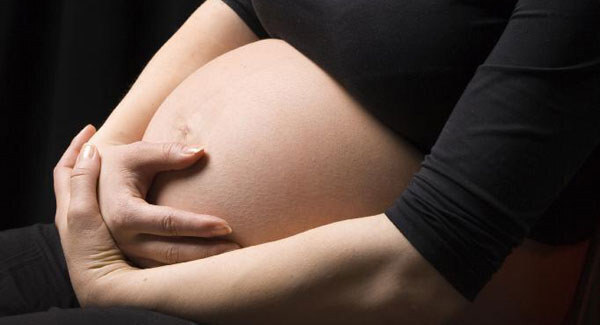
It happens. A recent survey of more than 3,000 mothers, by Netmums, found women over 40 have the same chance of conceiving within six months as younger women. Twice as many women over 40 have surprise pregnancies as women in their teens and 20s.
There are no Irish figures for how many women in their 40s, and older, become unexpectedly pregnancy, but, across all ages, half of all pregnancies are unplanned, says spokesperson for the Institute of Obstetricians and Gynaecologists, Professor Fionnuala McAuliffe. She recalls a 50-year-old woman, whose youngest child was 22, getting pregnant unexpectedly.
“It was a pretty dramatic event,” she says.
In 2013, according to the CSO, 3,989 women aged 40 and over were registered as giving gave birth in Ireland. More than 900 of these women already had between three and 10 children (five had 10 children), suggesting many of these pregnancies were unplanned.
British Department of Health figures confirm that 256 women, aged 40 and over, from the Republic of Ireland, accessed abortion services in England and Wales last year.
The Irish Family Planning Association (IFPA) says these numbers are an underestimation — not all women resident in Ireland provide their Irish address, for reasons of confidentiality. And some Irish women give British addresses at which they aren’t resident, so as to obtain NHS-covered abortion care.
A woman facing unplanned pregnancy in later life will be hit with a gamut of emotions, ranging from shock and distress to anger and confusion.
“No woman wants to be in the situation, at any age, where her response to pregnancy is to feel devastated. But, at 40-plus, the idea of starting again when your youngest child is 15 or 17, can be daunting, shocking and feel impossible,” says Sherie de Burgh, director of counselling services at One Family.
A 40-something’s career may be more manageable, now that her children are older. She might be planning to return to work or education. “She may be just regaining some sense of herself after 20 years parenting and, suddenly, everything changes. Her family’s almost grown and now [she has] to start again — the next baby she’d ‘planned’ was a grandchild. Putting your life on hold at 40-plus can feel a lot more daunting than it would at 20-plus,” says de Burgh.
She recalls one woman saying: ‘I had my family young, this was meant to be my time. Instead, I’ll be starting all over again, pushing a buggy this time next year’.
“Her whole image of her life going forward had stalled. Whatever way she looked at it, it wasn’t the future she’d planned.”
Turbulent emotional reaction to an unplanned late pregnancy can pack an extra punch if a woman’s separated or single, says counsellor and administrator of Life Pregnancy Care, Julia Heffernan. “The married woman in a stable relationship, who feels her family’s complete and that she’s in a new phase of life, feels panic and disbelief that this is happening now. There’s apprehension about going back to nappy-changing and broken nights’ sleep.”
But the separated or single older woman feels a special embarrassment. “There’s a sense of ‘as a mature woman, I should have known how to control my fertility’. She feels more exposed,”Heffernan says.
For the woman who has older children, embarrassment centres on ‘how will I tell my teenager’. “It’s almost a reversal of teenage pregnancy, where the dilemma is ‘how will I tell my parents’?” says Heffernan.
De Burgh says adolescent and early teen children may feel displaced. Parents can find it an extra struggle coping with the emotional demands of the teenager plus a new baby. “There may be embarrassment at evidence that your parent is still having sex. Late teens and 20s take it more in their stride. They’re already immersed in their own lives — so there may not be much practical help at hand.”
In the mid-recession years, counsellors at One Family saw a slight rise in the numbers of pregnant women in their 40s, often married, who considered termination simply because of extreme financial pressure. They’d lost their home and were renting in the private sector, dealing with rent allowance. Or the main breadwinner’s job was gone, the family home under threat. Or they were supporting young, unemployed adults at home.
“Women were considering a termination who never would have before. About two-thirds would have gone ahead with the pregnancy in the end,” says de Burgh.
Evelyn Geraghty, IFPA director of counselling, cites typical questions posed by 40-something, unexpectedly pregnant women: Am I too old? Am I physically and psychologically able for this? Will I be supported? Who do I tell? Do I need to go through with this? The big fear is having a baby with a disability. At age 30, risk of having a baby with Down syndrome is one in 1,000; at 40, it’s one in 100; at 45, one in 30.
Pregnancy also poses risks to the older mother’s health. “Pregnancy increases a woman’s blood volume by about 40%, putting pressure on heart and other organs. This can set off conditions like high blood pressure and diabetes,” says Dr Shirley McQuade, director of Dublin Well Woman Centre.
In 2007, more than 3,000 over-40s women gave birth. This rose to 3,631 in 2010, and, last year, to 4,000. At the National Maternity Hospital, in 1984, 40-something mums comprised 2% of women giving birth — today,they comprise 6% of the population having babies there. There are two causative factors at play, says Professor McAuliffe. “The role played by assisted technologies, plus the average age of childbirth has gone up.” (For women seeking fertility treatment, clinics generally have a cut-off age of 42 or 43, because chances of conceiving with one’s own eggs are considered so low at this stage).
Given that miscarriage risk rises to 50% once you’re over 40 — 90% for women aged 45 to 48 — many more women than we realise are getting pregnant in their 40s.
In her counselling room Geraghty has met women who say: ‘I can’t believe I’m sitting here in front of you. I thought it would be my daughter, but it’s me’. “An amazing number of women are ill-educated about contraception and about their fertility. They think they’re going through menopause and they’re not.”
Because you only know, in retrospect, that a particular menstrual period was your last, there are definite rules for contraception in the menopause — under age 50, you continue using contraception for a full two years after your last period; if aged 50 or over, continue using contraception for one year after the last menstrual period.
Pregnancy in one’s 40s or over doesn’t precipitate menopause, but, chances are, late pregnancy will be followed soon after by peri-menopause. This can leave a woman floored by low energy and hormonal fluctuations, says McQuade. “Many women, immediately post-partum, will feel significant mood swings. They’ll feel blue and low and they’re maybe not sleeping. Menopause will also make women feel depressed, possibly anxious and low. It’s a double whammy.”
Yet going ahead with the pregnancy, and embracing parenthood, is the most likely outcome for a 40-something unplanned pregnancy, says de Burgh. “While unplanned pregnancy is often shocking at first, after working through the decision-making process, many go ahead to be successful and joyful. Women can [later] feel guilty at their initial reaction of despair, forgetting it was valid at the time, but that it changed through the hard work of processing the decision.”
Happy outcomes aside, there’s more good news for women who give birth later. New US researchshows that women who have their last child after the age of 33 are twice as likely to reach their 95th birthday, compared to those who had their last child by age 29 — apparently because if the reproductive system is ageing slowly, so is the rest of their body.
* Visit www.onefamily.ie ; access askonefamily helpline: 1890 662212; suppprt@onefamily.ie
CONNECT WITH US TODAY



Be the first to know the latest news and updates









