This Dublin mum shows how food can be your medicine
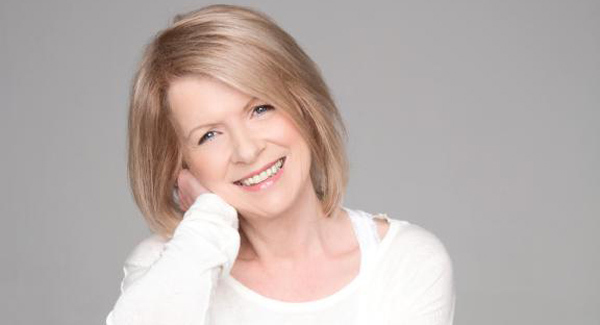
When she was diagnosed with cancer for a second time in 2000, she embarked on a life-changing journey that has led her to think of food as medicine.
She started juicing fruit and vegetables and adding raw food to her diet more than a decade ago and now she is cancer-free. She also looks wonderful: she’s so slim that she shares jeans with her 20-year-old daughter, and looks much younger than her 60 years.
“You should see me first thing in the morning,” she laughs.
But Bohan is deadly serious when she says she saw real results after switching to a plant-based, living-food diet.
“My health improved greatly, my painful arthritis disappeared, I gave up wearing my reading glasses and, as an added bonus, my spare tyre melted away.”
The secret to her health and vitality is contained in her fifth book, a beautifully illustrated collection of recipes called Raw.
In it, Bohan gently sets out her case for raw food. “Think of it in terms of ‘live foods’ and ‘dead foods,” she says, explaining that cooking destroys 50% of food’s mineral content, 75% of vitamins and all of its health-giving enzymes.
She also warns against what she calls “food for profit”, the packaged convenience foods that are often labelled with dubious health claims, such as ‘healthy option’ or ‘low in salt’.
At least with raw and living foods, there is no need to check hidden ingredients.
“We have to address what is going into our mouths,” she says. “You can’t just shovel in muck and expect to be well. If you did that to your car, it would break down.”
Her own health ‘break down’ in 2000 was the jolt she needed to take radical action. She’d recovered from lymphoma in 1988 but was rocked to her core when diagnosed with breast cancer in 2000.
“Common sense told me that food must play an important role in health and healing. Food can be so powerful.”
She did exhaustive research and, after meeting Dr Brian Clement from the Hippocrates Institute in Florida at a seminar, decided to adopt the Hippocrates programme.
The programme is based on eating a nutrient-dense, plant-based diet which claims to lower the risk of chronic diseases — such as heart disease, diabetes and cancer — and promote vitality and energy.
She has certainly made it work for her and has gone on to share her experience with thousands through her helpline, seminars and her bestselling books.
Ask her what she eats in an average day and she’ll talk about green juices, wheatgrass, quinoa and salad.
It you are one of those people who are still wondering how to even pronounce quinoa (keenwah, by the way), then this might sound like too radical a departure.
It’s not, she insists.
“This is not a punishment, or about living on lettuce leaves and carrot sticks. Here’s the deal: we won’t focus on what you can’t or shouldn’t eat. Instead, we’ll focus on what you can and should.”
And she makes an utterly convincing case for going raw in the pages of her book. There are recipes for spaghetti (made with courgette) and sweet-pepper sauce, a roasted garlic cottage pie (one of the few that is cooked), a slightly cooked vegetable lasagne – even a pizza. There are lots of wholesome snacks too (sweet-potato crisps, cumin crackers) and a stunning array of desserts.
In among the fresh salads and sides, there’s an unexpected quote from Miss Piggy, of the Muppet Show fame, who offers this dietary advice: ‘Never eat more than you can lift’. It just goes to show that alfalfa sprouts will not rob you of your sense of humour or, indeed, your sweet treats.
For instance, who would have thought you could make a healthy but decadent tiramisu and a cheesecake without cheese or sugar?
“And,” she promises, “it’s all a lot easier than you think.”
To illustrate her point, she says she had friends around to lunch the other day and had a meal on the table in 15 minutes.
But what about all those cravings – for coffee, sugar, carbs.
“I am just an ordinary mammy and if I can do it, anyone can. You can take control of your own health. Wean yourself away from the bad stuff,” she says.
The payoff is definitely worth it, she adds.
“Eating raw, living foods will inject vitality into your life. It has certainly brought my health to a different level.”
What is your bathroom scales routine? Do you empty your pockets, take off your boots, strip down to your bare skin?
Whatever you do, stop now. A new survey by Ipsos MRBI, on behalf of Motivation Weight Management, found that people get up to all kinds of tricks to lighten the load.
However, the best place for a bathroom scales is in the bin, says senior weight management adviser Claire Jackson.
“People torture themselves with false readings, which can be incorrect three out of four times. If you want to lose weight, stay away from the scales or just weigh yourself weekly and ensure key variables are the same (such as time of day, clothing and food intake),” she says.
What’s pink, fizzy and delicious, yet has only 59 calories per bottle, no artificial colours or additives and is said to aid digestion?
SynerChi, a craft-brewed soft drink that is made in Ireland’s first Kombucha brewery in Gweedore, Co Donegal. In 2012, Laura Murphy started making kombucha in her kitchen and delivering it by bicycle.
Now, she has four staff and produces four flavours — original sencha tea, ginger and lemongrass, raspberry and rosehip, and oranges and lemon — which have gone on sale in health food stores, cafes and restaurants for €2.69.
Springclean your cupboard and your diet with nutritionist Heather Leeson of Glenville Nutrition. During an evening session at Donnybrook Fair Cookery School, Dublin, on April 16 from 7pm to 8.30pm, she’ll show you recipes that are easy to prepare and, better still, good for your health and waistline.
There’ll be lots of tips on how to shift that stubborn spare type, too, as well as some healthy spring recipes. The evening costs €60.
To book: www.donnybrookfair.ie
Young athletes must make sure to get their five a day — not fruit and veg, but five daily servings from the ‘milk, yoghurt and cheese’ group.
That was the advice from sports nutritionist Noreen Roche, who said calcium was vital for those in the nine to 18 age group.
At a seminar on sports nutrition in Wexford, the Kilkenny senior hurling team dietician also said research showed skimmed milk was very good at rehydrating after sports.
Milk and milk-based products, she added, had an important role to play in recovery from exercise-induced muscle damage.