How to make delicious cheese
It’s impossible to buy a gallon of fresh milk from a farmer in West Cork.
I live, surrounded by cattle and yet I buy all my milk, homogenised in 2 litre plastic bottles. We buy eggs from the farmer next door and once a year we buy a lamb from further down the road and up the other end we buy sacks of muddy potatoes.
Not a carbon hoof print in sight. But trying to buy milk is a game changer. The farmer shakes his head with a ‘well, if it was up to me’ but the risk is too great. Up to a few years ago it was illegal to sell raw milk and many farmers continue to believe that to be the case.
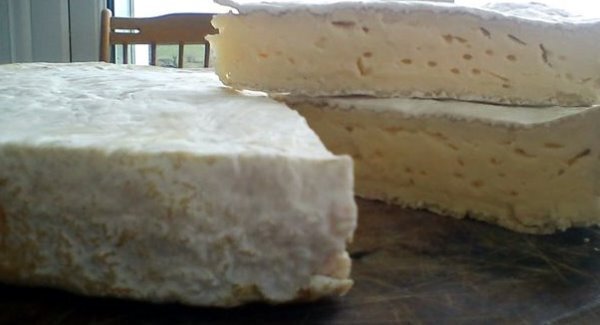
In fact it’s not. I like to make cheese. A few times a year I will make a Camembert, less often I will make a cheddar type cheese and if I am feeling really adventurous I will make a blue. The processes are all broadly similar and the results (mostly) are phenomenal but you need the main ingredient to be top quality and in my mind you need unpasteurised milk.
I have found a farmer further west who has a herd of Jerseys and he is happy to sell me a few gallons of raw milk. Its a 90km round trip but I don’t really care. Making cheese is easy and like all recipes, if you can read you can make it.
So here is what you need:
2 gallons unpasteurised milk 1 Litre Buttermilk A few drops of rennet 1/8 teaspoon penicillium candidum 2 tablespoon Salt Equipment is a large pot, a long knife, a thermometer; a ladle and a Camembert mould, draining mats and cheese cloth. All are available from Irish companies like www.oldmcdonald.ie or www.homebrewwest.ie
: Warm the two gallons of milk up slowly. When it gets to 31C add a litre of pretty ripe buttermilk (I leave it overnight in a warm room with the top off). Also add penicillium candidum. Leave for an hour. Mix a few drops of rennet with a couple of tablespoons of water and add to the milk; leave for another hour.
Test for a “clean break” by sliding your knife into the curd at an angle and lifting some on the side of the blade. If the curd breaks cleanly around the knife and whey runs into the crack, you have a “clean break”.
Cut the curds into 2cm cubes. You want a long knife for this and a bit of patience — you need to make lots of deep parallel cuts 2cm apart, then turn the pot 90 degrees and make cuts at right angles to the original, again 2cm apart. Allow to stand for 30 minutes to set. Turn all the curds over gently for 3 minutes and after the final rest, the curds mass will sink in the whey.
Using a glass or ladle, scoop out 40% – 60% of the whey and discard. After the whey has been removed, give the curds a gentle stir to keep them from setting. This will make it easier to scoop them into the moulds - these are bottomless rings of plastic with holes drilled in them so any remaining whey should drain away.
Filling is best done on the kitchen sink and using your slotted spoon, scoop a small amount of curds into each mould and fill to just short of the top. Leave to drain for 20 minutes. You must turn it every hour for the next 8 hours and you will notice it getting smaller and smaller each time.
The following morning you will have young cheese that will have pulled away slightly from the moulds – you can now pop them out and cover both sides with sea salt.
It’s a waiting game from now on really. Turn the cheese on a daily basis and after about 10 days there will be a lovely white bloom that you will recognise from Brie and Camembert. Keep an eye on it every day and if any other colour bloom develops then scrape it gently but firmly off.
Once the cheeses are fully covered in white mould, they are ready to wrap. Using sheets of cheese paper, seal and age for a further 2 – 4 weeks at 11 – 15°C.
You can tell quite easily by the feel of the cheese if it is ready to eat. If you feel it is getting ripe too quickly, then just put it in the fridge until you need it. Now the real fun begins —in about 6 weeks’ time when you get to open your cheese.
I like cider with Camembert but on this occasion it might even merit a cold bottle of Champagne. Choose a warm afternoon to sit outside and enjoy. And remember to put aside a decent wedge for the farmer who sold you the milk.