Why does Prosperity feel like a dirty word?
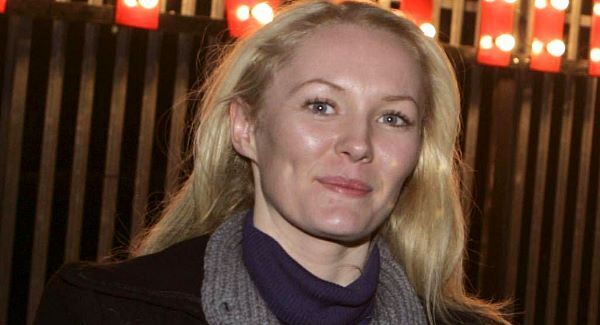
Jesse Jones says our response to the Celtic Tiger has made prosperity “feel like a dirty word now.”

Why does Prosperity feel like a dirty word?

The Convention Centre Dublin (CCD) stands proudly on Spencer Dock, on the banks of the River Liffey, a shiny, reclining glass tube basking in the heart of the city centre.

As the country was sinking into austerity, the CCD was opening for business — it has hosted 700 events since 2010.


Commissioned to create an ambitious art project at the CCD, under the Per Cent for Art Scheme, the Dublin artist, Jesse Jones, noted the trestle appearance of the stairways within the centre’s curved glass frame, and thus the seeds were sown for The Prosperity Project.

“The central, trestle stairway is really kind of iconic and it made me think of prosperity trestles in ancient design,” Jones says. “So that idea of prosperity really stuck with me, in relation to the space in the project.”

Jones’ concept is in contrast to the form of prosperity that defined this country in the last decade.

For her, the trestle stairway echoed the Chinese symbol of prosperity.

“It is two plants that are wrapped around each other,” she says.

“The entwined branches symbolise interconnectedness and a kind of prosperity that is not material, but is a relational social fabric.”

“I guess I was trying to find a word that could sum up a way to think about the post-Celtic Tiger period in a more expansive and possible way, and also a word that makes you feel a little bit uncomfortable.

“How do we talk outside of the constant narrative of austerity, to try and imagine a different way of looking at prosperity? It feels like we got that moment of prosperity so wrong. It feels like a dirty word now.”

Jones says Catholic guilt accounts for our catatonic discourse about prosperity, the jumble of cliché responses, such as ‘we lost the run of ourselves,’ and ‘we were never meant to be rich’, arising out of shame.

“The idea that we gorged ourselves, or we lived in some kind of prodigality, that now we have to endure austerity, I feel it’s really a Catholic relationship to the economy.”

The Prosperity Project is based around six thematic conferences and culminates in a permanent artwork, and Jones will collaborate with thinkers, artists and activists, and engage with residents in the surrounding Docklands, and with the broader urban community, to interrogate the meanings of prosperity and scarcity and the historical parallels and resonances of Irish deprivation.

Jones says the structure of the project is “a moment in the city between people”.

Social historian Ian Boal, whom Jones has engaged on the project, has been on a ‘bicycle and oral history research’ tour of the Docklands.

For WANT, the opening event of the project, at Smock Alley Theatre, Boal will talk on ‘Feasts and Famines’, discussing austerity and the role of the common.

The evening will include a musical collaboration between Korean gayageum artis Kyungso Park and leading Irish harpist Cormac De Barra, which will be performed as a call-and-response between Ireland and Korea.

“It’s really about how there’s a global connection between people, through music and through cultural experience, that can articulate what we can’t readily say to hand within our political discourse,” says Jones.

* The Prosperity Project: Jesse Jones. Further information: www.create-ireland.ie

— Don O’Mahony

x

More in this section

Cookie Policy Privacy Policy Brand Safety FAQ Help Contact Us Terms and Conditions

© Examiner Echo Group Limited