Time for the sweet smell of growth again
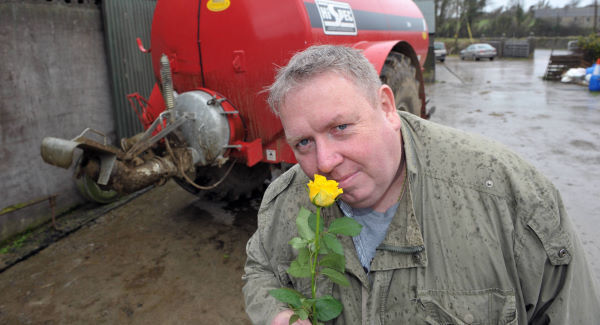
Before frogspawn, daffodils, or the red buds of elder, the smell of slurry heralds the start of growth — and I love it
We had an au-pair last year from Madrid, called Julia. Her English was poor and it was clear that she had rarely, if ever, left Madrid. She lived in a small apartment with her parents and her sense of personal space was limited.
She was completely freaked out by where we lived. Not that we are very remote (just a few miles outside Kinsale in Co Cork) but, comparatively speaking, we may as well have been on the moon.
We have a neighbour who keeps chickens and turkeys. There are a few roosters there that do their thing at daybreak — to me, I no longer hear them but to Julia it was like a Claxon call. The first morning she came downstairs she really was quite shaken.
The cows freaked her out too, or the ‘cattles’ as she called them. Being used to people coming with feed, the cows would come to the gate as she walked past. She told me she had nightmares about the ‘cattles’.
But nothing disturbed Julia like the first time the neighbour spread slurry in the fields around the house. She innocently went outside to get something and came in holding her face and saying: “We have a beeeg problem outside with toilet”. I started to explain but I could see that this was the last straw for Julia. She truly was living amongst savages.
Slurry is spread at different times of the year but the first spread in January really is the start of the growing season. The slurry spread now gives the greatest impact and the land fed with these nutrients at this time provides the lush pastures of the summer, gives us the creamy milk, the golden butter and the crumbly farmhouse cheese. Cattle and sheep grazed on this land give us the best beef and lamb in the world.
Slurry is so valuable because when pigs and cattle digest their food a number of key plant nutrients pass through undigested, nutrients that the farmer would otherwise have to pay for in fertiliser costs. The economic benefit to the farmer is great and environmentally there is a reduction in the need to manufacture chemical fertilisers.
Slurry spreading is now the first sign of spring for me. Before the frogspawn, the daffodils or the dark red buds of elder, the smell of slurry heralds the start of growth. And now I love it.
But our relationship with slurry is not all rosy. There is a darker side. We all remember the death of Nevin Spence who, with his dad and brother, died in a slurry pit in Hillsborough. Just before Christmas a man died in a slurry pit in Drumeague, Co Cavan. A few months ago a woman in Limerick was swept off the road and into a field as a tsunami of slurry hit her car when a container collapsed and 80,000 gallons flowed onto the road.
Now, what a lot of people don’t know is that it is not normally the slurry that kills you but the gasses that the slurry gives off. These can be toxic fumes of really sinister proportions. One is particular (hydrogen sulphide) is one you would easily recognise.
At a low level it gives of a really pungent rotten egg smell but at higher levels it can be completely odourless. Even in the open air this gas is lethal, it shuts down the nervous system, causing collapse, unconsciousness and ultimately death.
And, apart at all from the lethal dangers associated with slurry storage, there are the environmental aspects the farmer must consider.
He can’t spread when rain is forecast (think January, February in Ireland), can’t spread on frozen ground, can’t spread near lakes, near rivers, near wells, can’t spread on waterlogged fields. He really shouldn’t do it when the wind is blowing towards the town. He should avoid doing it at weekends.
Farming by calendar is not an easy task. And if that wasn’t enough, the farmer must keep records of all his slurry movements (stop laughing in the cheap seats) for five years. He needs to calculate the percentage of solids in his slurry, he needs to find the amount of nitrogen, phosphorus and potassium in the slurry.
He needs to have tanks that will hold up to 18 weeks’ worth. Many farms are dependent for their survival on grants that are given to maintain certain standards and these are some of the standards. To ignore these rules the farmer would risk losing these grants and worse, possibly face conviction.
Farming is a difficult job at the best of times. It requires an enormous range of skills and knowledge just to spread a little lovin’. And if farming can be a microcosm of the greater society, then maybe there is a nice metaphor hidden there too. We have all taken a lot of shit recently but at last the green shoots are appearing.
CONNECT WITH US TODAY



Be the first to know the latest news and updates









