This gin is made from wild food found around Wicklow
IT’S a fresh Thursday morning, and I am on a quiet country road, and knee-deep in what looks like a tangle of overgrown grass and weeds. I am in Wicklow, foraging for ingredients to make Glendalough Gin, and those ingredients are all around me.
“There are a lot of flavours that you think you’d find only in India and China,” says our guide, Geraldine Kavanagh. “But these spicy or exotic flavours are actually all made up of chemicals and I think those same chemicals exist everywhere. So I can find something here that tastes like clove or coriander or almond. I just have to look for it.”
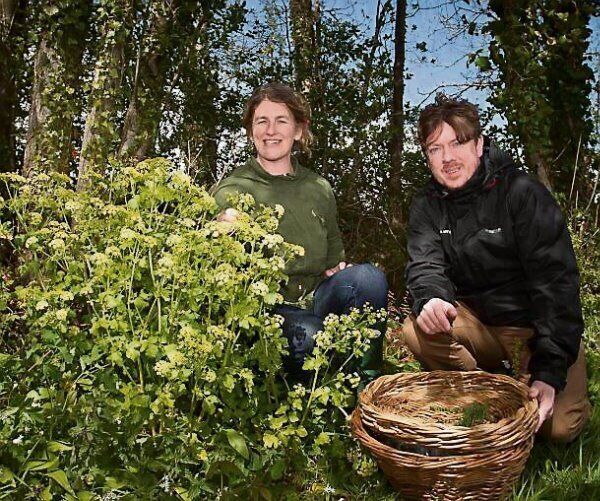
Geraldine plucks dainty, white flowers from a plant and holds them aloft. “These are Hawthorn flowers,” she says. “They’re just coming out and these will have a really strong, almond flavour, when they flower properly.”
I take one from Geraldine’s hand and bite. It takes a minute, but a hint of almond comes through in the taste. I’m impressed.
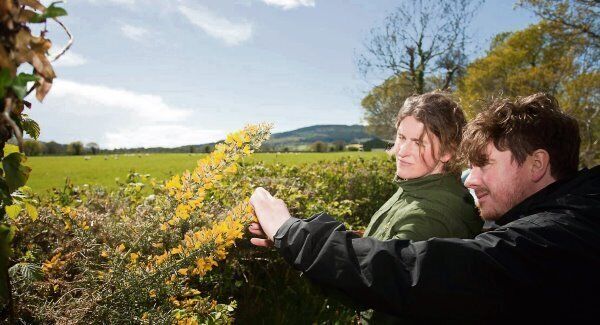
But not as impressed as when she suggests I take a good whiff from a bunch of beautiful, yellow gorse flowers. The smell of coconut is astounding, and though the taste has faded, because they blossomed some time ago, there is still quite a flavour off them.
DISCOVER MORE CONTENT LIKE THIS
“I’ve been foraging a little bit all my life,” says Geraldine. “I started out with nettles and berries, and the like, and then, when I was 20, I started working in organic farming and working with artisan food.
“Then, I had babies and was at home a lot and really got into foraging then. When my youngest child was born, we were snowed in for six weeks and it made me realise how utterly dependent we are on imported food and shopping. I began to wonder why we do that, when there is so much wild food out there. It’s everywhere you look and, for the best part of human existence, this is what we lived on.”
Geraldine says that because foraging is seasonal, she is on the watch on any given day.
“If I see elderflower is blossoming, I have to drop everything,” she says.
“You have to get the flowers at their freshest. If it rains, all the flavours get washed away. They don’t last very long, so you have to be ready.”
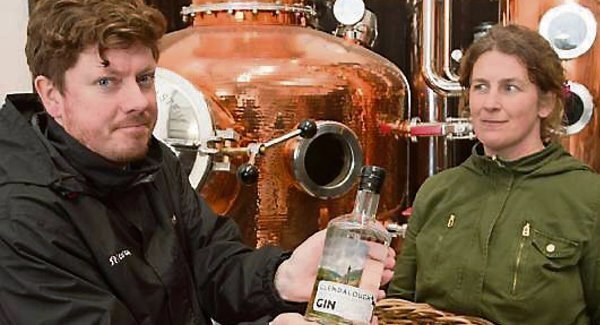
When the owners of Glendalough Distillery expanded from their award-winning whiskey and poitin into gin, they wanted to pay homage to the virtues of Wicklow and its abundant, fresh flora.
“We pick and distil on the same day,” says marketing manager, Gary McLoughlin.
Fruits of our day's foraging. Now for some Spring Gin distilling #irelandsfirstcraftdistillery #botanicalgin pic.twitter.com/SbqRxzlbaU
— Glendalough Distillery (@GlendaloughDist) April 22, 2015
“We’ll see what’s in season and see what Geraldine has picked that day. Everything we gather is blended with the five, basic ingredients of the gin — juniper, coriander, angelica root, orange peel, bitter almond and orris root — and we’ll see what works. For example, in the last batch we upped the amount of gorse flower, because we thought it was really great. “We leave it to settle for two weeks and then we cut it down with Wicklow mountain water. We bottle it and label it by hand, saying when the ingredients were foraged and when it was distilled. It’s about as organic as can be.”
It also means that although there is a familiar taste profile to the gin, there are subtle differences, depending on the season.
For Glendalough Distillery, that’s a selling point.
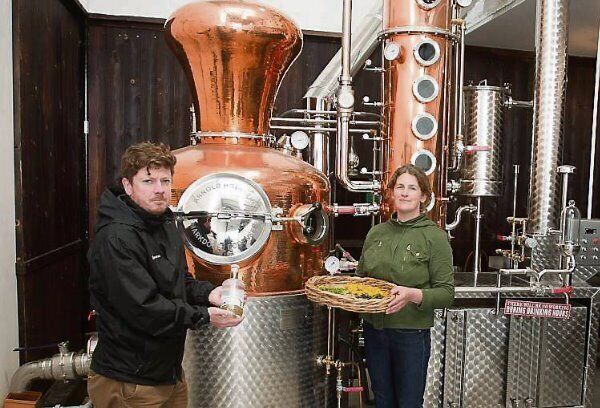
“A lot of gins are mass-produced,” says Gary. “This is artisan, small batches, everything is natural and it’s all a bit different. I don’t think anyone else is doing seasonal gins. In some cases, producers aim to have the same, but our focus on seasonality turns that on its head. It’s quite unique to be able to say our product will change every few months.”
Batch 1, bottle 1 #springgin #irelandsfirstcraftdistillery #botanicalgin pic.twitter.com/0Xky7NHoRd
— Glendalough Distillery (@GlendaloughDist) April 23, 2015
‘Nature’, ‘plants’, ‘organic’, ‘fresh’ and ‘seasonal’ are not terms that have always been associated with gin, a drink that once had such a bad reputation it was known as ‘mother’s ruin’. It has become the drink of the golfing and tennis-playing classes.
Is Glendalough about to give it a new and more wholesome image?
“Gin is pretty popular now in the bar trade,” says Gary. “There’s a lot of interest in the UK, as well as here. The range is huge and there are a few others who are foraging, but not many, so I suppose that already puts Glendalough into a totally different category from contract gins.
“But, again, it’s the seasonality and the fact that it comes from such a beautiful, and clean, natural place that makes this a bit special, I think. It’s essentially the Garden of Ireland in a bottle.”
With a slice of lemon, two cubes of ice and a nice measure of tonic water, I later discover that it makes for a most tasty garden indeed.
DISCOVER MORE CONTENT LIKE THIS
CONNECT WITH US TODAY



Be the first to know the latest news and updates