The superstitious minds of the Irish - looking into our weird and wonderful beliefs
LAST yearâs Mayo football team set such store by curses that they called on a priest for help. He blessed them to counter the curse to prevent them winning an All Ireland while any member of the 1951 team remains alive. Unfortunately, the team lost to Kerry in the semi-final replay and the power of the curse lives on.
Iâm not superstitious. If a ladder blocks my way on the footpath, I will always walk underneath it. Yet I cross my fingers while I do so.

Iâm not particularly spiritual either. I donât believe in curses or ghosts and, as for fairy folk, didnât we lose our faith in them the last time we voted for de Valera?
Despite this scepticism, I would never disturb a fairy fort and when I found a horseshoe in my garden, I hung it above my front door. We modern Irish are a contradictory lot. We may no longer believe in leprechauns but many of us cling to superstitions.
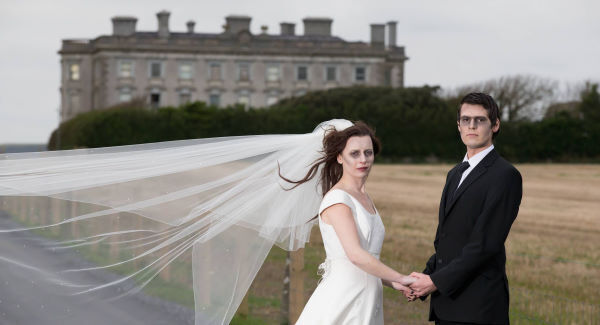
Some of our superstitions date to Pagan times. Rural folklore still has it burying an egg on someoneâs land allows you to steal their luck. Other beliefs involve the Christian religion. Loftus Manor in Wexford is thought to be haunted by Lady Ann Loftus, who is said to have fallen in love with the devil hundreds of years ago. Only last month, the makers of American television show The Ghost Adventures carried out a paranormal investigation there.
Irish medium Tom Colton steadfastly believes in a spiritual realm. âThe spiritual element in us lives on,â he insists. âSome see it. Others hear or feel it. There are also people who smell and taste things â such as the smell of a particular cigarette in a place where nobody has been smoking â that makes them realise a spirit is present. I hear and feel spirits.â
Tom was always aware of his ability but only developed it after his uncle died in 2001.
He toured Ireland in 2008. âPeople turned up wherever I went,â he says. âThey wanted to connect with loved ones and I could show them how to do it.â
These days, Tom gives one-to-one readings and does what he calls ârescue workâ. âThis is work with earthbound spirits who turn things on and off and bang things to get attention,â he explains.
Tom has never been frightened by these spirits. âThere are troubled spirits who are not sure what has happened to them but Iâve never met one that would cause any harm.â
The Catholic Church has its own practices to deal with such spirits. According to the Irish Catholic Bishops Conference, church law requires every diocese to have a trained exorcist â defined as âsomeone who knows how to distinguish between the signs of demonic possession and those of mental or physical illnessâ.
Here in Ireland, a Vincentian priest in Dublin, a Capuchin friar in Carlow and a Jesuit priest in Galway are known to perform exorcisms. âWeâve spoken to some dioceses about how they respond to the issue of exorcism and they have said they get requests for help in this area, maybe two in the course of a year,â says the bishopsâ conference.
Author Christina McKenna once witnessed an exorcism. âI was 11 when my great-aunt died in Derry,â she remembers. âWe heard tapping under the bed where she had been. An exorcist came from England to free us from her spirit.â
Reading her description of this experience in her memoir prompted a publisher to commission her to write The Dark Sacrament, a book about exorcisms. Christina and her husband spent two years researching it.
âWe examined many cases in modern Ireland and whittled them down to 10. We were assisted by two clergymen, one Catholic and one Protestant, who gave us cases they believed were genuine.â
These included the case of a little girl haunting a newly-built house. âShe had gone missing decades earlier and it was thought the house was built on the site of her abduction,â says Christina.
Her experiences have changed Christina. âI see the world differently now,â she says. âThe spiritual world is just as real as the physical one. Just because we canât see it, doesnât mean it doesnât exist.â
Many of us still hold strong spiritual beliefs. Thousands of us visit holy wells to make wishes. Most of us never speak ill of the dead.
However, we may be no different in this to anyone else. People from Turkey to Hawaii believe in the power of the evil eye. All over the world, people are wary of flying over the Bermuda Triangle.
It seems to be a question of personality. Sceptics shun the likes of lucky shamrocks and deny the existence of anything beyond the physical world.
Others do the exact opposite and constantly throw salt over their shoulders and avoid black cats in an attempt to ensure their good luck. Most of us, though, are probably like me: subversively walking under ladders while anxiously crossing our fingers.
Weâll have to wait and see if the Mayo team break their curse next season.
âAre you a witch? Or are you a fairy? Or are you the wife of Michael Cleary?â This once-popular nursery rhyme refers to the gruesome killing of Tipperary woman, Bridget Cleary, in 1895. Her burnt corpse was discovered in a shallow grave near her home and the murder investigation was news all over the world.
Bridget and her husband, Michael, had been married for eight years. Unusually for the time, Bridget was a professional woman.
Her sewing machine allowed her to make money as a dressmaker and milliner. She became ill in March of that year. A doctor visited, and a priest followed to administer last rites.
But Michael believed there were otherworldly reasons for Bridgetâs illness. He thought she had been abducted by fairies and a changeling left in her place.
Witnesses reported that he dragged his wife to the fire to cast out the changeling. When Bridgetâs clothes caught fire, he kept everyone back from her body as it burned, insisting it was the only way to retrieve his wife from the fairies.
Michael was found guilty of manslaughter and imprisoned.
Internationally, he was believed to have genuinely acted on his beliefs and the case was used as an example of the superstitious Irish.
But who can be sure of Michaelâs real motivations? Perhaps he resented Bridget for not giving him children after years of marriage? Maybe he felt threatened by her earnings?
Or it could be that something led him to believe she had been visited by fairies.
Whatever the case, Bridget Cleary is the last known person in Ireland to have been killed for superstition.












