The Big Book of Happiness is here

The pursuit of happiness has preoccupied everyone from philosophers to your average wage-slave wondering how a better way of life can be achieved. Is more money the answer or more free time to focus on family, friends and hobbies?
How can we improve our lives so that happiness is tangible? Chris Croft, an international freelance speaker and author of The Big Book of Happiness: 87 Practical Ideas, studied engineering at Cambridge and worked in management only to realise that it didn’t make him happy.
He discovered his “life’s vocation” as a university lecturer and then as a freelance trainer. While teaching and researching time management and assertiveness, he realised the importance of these subjects. He also discovered earning more money didn’t make him any happier. This led to a fascination with happiness.
Croft says “human beings are probably the least happy animals even though we’re in charge of the world. We manage to have all this unhappiness from traffic jams to being pressurised by bosses. You just think, what are we doing?”
Croft is critical of much of the literature dealing with achieving success. “It has been shown that money beyond a certain point won’t make you any happier. I think we have forgotten that.

One of the reasons I wrote my book is because while there’s books out there on happiness, they’re either very intellectual, trying to define happiness exactly. I just can’t be bothered to think that hard.
Then, there are the facile books, the ones that tell you to smile at the world and the world will smile at you. I’m a time-management person. So I was thinking what you can do in terms of how you use your time every day. You can take time to review your day by sitting back and reflecting on the good things that happened. That gives you a bit of extra happiness.”
A father of two grown-up children, he says having children brings happiness “because you love them. But they give you minus 40% for the grief they bring. Not having kids means you have extra time to yourself and extra money. Your body won’t be so worn out. Having kids is surprisingly happiness neutral whereas having pets is happiness positive.”
Children are naturally happy, says Croft. But he says “we reduce their happiness by the things we do to them. School, for example, is designed to break the spirit and make people ready for work and do what they’re told.”
Croft also looks at parenting.
“Parents aren’t trained. They just make it up as they go along. Quite often, we make mistakes bringing up kids and that’s one of the reasons why people end up less happy.”
He points to ‘personality drivers.’
“I’ve got one called ‘be perfect’. It means I’m really fussy about things, focusing on the one thing that isn’t right. I got that from my parents. I’ve also got the ‘hurry-up driver’ from my parents which I’ve passed on to my kids. When my daughter was little and wanted me to read a story to her, I used to go: ‘I’ve got five minutes to read very quickly.’
“So I was telling my kids that while time is important, I ended up not spending enough time on telling them bedtime stories.”
Passing on habits to children, good and bad, is inevitable. Croft warns against focusing on money rather than time well spent.
“We tell our kids they’ve got to get well-paid jobs. We don’t say that you’ve got to have a job where you’re happy. My daughter, Louise (aged 25) is working in Thailand because she wants to be there. She’s not earning very much money but she’s out in the sunshine on the beach a lot. She’s a digital nomad.
"But my mum keeps asking, when is she going to get a proper career? It’s really difficult. There’s a balance to be struck between the present and the future. Some people live completely for the present. In five or ten years, they can find themselves in a bit of difficulty.
"But people who are always planning for the future forget to have fun. The thing is to find something sustainable and not to plan excessively for the future. Some people’s plan is to continue in a job they hate because they’re going to retire from it eventually. But what about their lives?”
Many people play out their lives on social media, but it’s often a fake version of reality.
“It’s still early days with social media. It will evolve and people will become better at it. I don’t really want to see constant pictures of my friends having a good time. I try to put up pictures of my life being fairly crap such as pictures of traffic jams I’m sitting in. It’s not about making your life look perfect. People haven’t realised this yet. This ‘look at me I’m so great’ isn’t interesting.”
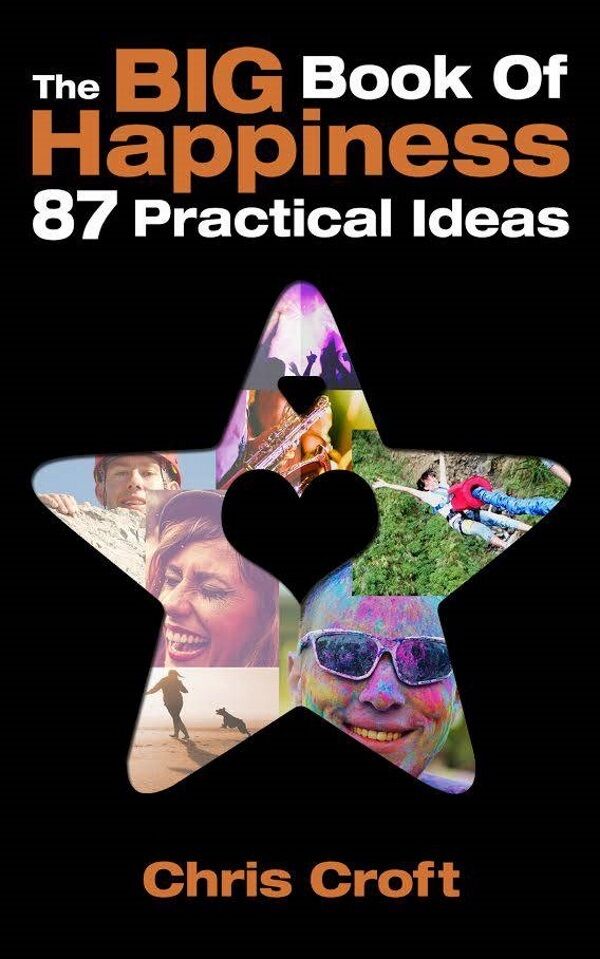
Christ Croft’s top happiness tips
- Focus on time rather than money. Money won’t make you happy. Well, it will to some extent but the price you pay to get more of it outweighs the benefits of the extra money. Time is more important and more precious and how you use your time has more effect on how happy you are.
- Find a job you enjoy even if it’s low paid and keep searching for the job you love. There’s one out there for you.
- Take control of your thoughts. Get your self-talk right. Get that voice in your head saying positive things about the past, present and future. Out with negative emotions, such as guilt, with their false payoffs. You won’t gain what you expect from them. They don’t do any good so don’t give any negative emotions any room in your world.
- Creativity is important. Get into the present by doing something creative such as music, art, a blog, photography or whatever you like doing, regardless of whether you have any talent. Just do it. You’ll experience happiness while being creative and you’ll sometimes have something to be proud of at the end.
- Practise end-of-day gratitude. Take a few minutes at the end of each day to think of the good things that happened. Don’t take your health, family, and friends for granted.


CONNECT WITH US TODAY



Be the first to know the latest news and updates