Teens looking for mental health advice are bypassing family and going straight to Google
It would strike on the train — a really sharp feeling in his heart, a feeling like his stomach was crushing in on itself.
Now a 17-year-old about to go into Leaving Cert in a large co-ed school in Donabate, James* recalls the anxious years, from when he was 14 to 16.
“I usually got anxiety before and during meeting people, especially new people. It was worst on the train — I take the train everywhere — I’d be back and forth to the toilet. I used to go to games and comics conventions — there’d be a lot of people I didn’t know.” His anxiety got worse in transition year. “Fourth year isn’t as heavily structured. There’s more of a social aspect. It was something I wasn’t comfortable with. I’m quite introverted — even that, I thought, must mean there was something wrong with me. It led to more anxiety.”
When it got to where he was “spending entire days in my bedroom, not eating, and crying in the night”, he knew something wasn’t right. Accompanied by his parents, he sought help from a Dublin hospital, only to be told it was a teenage thing. “I was just a moody teenager!” It was at this point he found ReachOut.com, Ireland’s online youth mental health service. “There was so much easy-to-read, easy-to-understand information in the one place. And it was positive. It made me want to look for help.” Through ReachOut.com, he found out about CAMHS (Child and Adolescent Mental Health Services). He saw a clinical psychologist for the best part of two years and has put anxiety behind him.
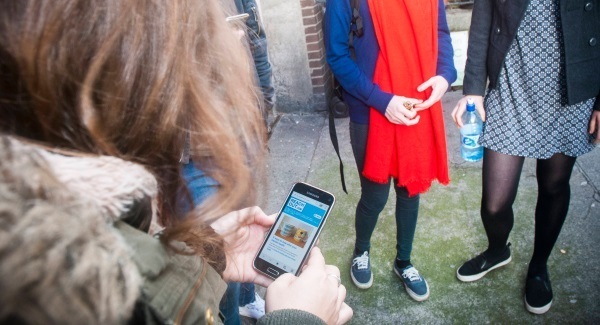
The Dublin teen is part of a trend that sees increasing numbers of young people seeking mental health support online, rather than over the phone or face-to-face. ReachOut’s five year review (2011-2015) finds 62% of young people would visit a website for support when going through a tough time. They favour online support as highly as speaking to a friend. And it’s first port of call over talking to a health professional (38%), calling a helpline (14%) or speaking to a parent/guardian (28%).

Carmel*, a 24-year-old Dublin-based barista, went online for help after a friend texted to say she was suffering from anorexia and depression. “I was shocked. This was someone I believed I was close to and I hadn’t guessed. I wasn’t entirely sure what to think of the two concepts, [anorexia and depression]. I went to Google, to figure out a starting point, how can someone get over this? I went to the Internet because I wanted to maintain my friend’s privacy and I didn’t know who I could ask without being told she should ‘just get over it’.” On ReachOut.com, Carmel found a specific section on helping a friend with a mental health problem. “There was information and articles about others who’d been through similar. I was able to tell my friend it’s ok, it’s something that happens, ‘you can come out the other side’.” While she understands the pull to seek help online — “you can settle your mind and figure things out before talking to someone” — Carmel also believes it doesn’t compare with confiding in friends or family in real time. “I’d go to family or close friends, as well as consult the Internet.” But child and adolescent psychiatrist Colman Noctor isn’t surprised young people are bypassing traditional first ports of call — GP, parents, friends — and going straight to Google. “Everyone’s help-seeking behaviour has changed with the amount of information online. And young people don’t distinguish the disconnect between the digital and non-digital space. They’ve grown up with it, whereas adults might see more problems with it.” Despite all the work done to challenge stigma, a taboo still exists when it comes to talking about mental health issues. “So there’s great anonymity about seeking help online. One of the great pluses of online communities is confidentiality, though it may not be as confidential as you think — the Internet knows,” says Noctor.
In looking for psychological/emotional help, the “human piece” is incredibly important, he says. “Diagnosis and clinical assessment is such a relational and human interaction. You might not even make an assessment on the first day [you meet the person]. And it’s a very skilful attribute to be able to deliver news that people don’t want to hear in a way they can digest and take in.” But, says Noctor, the merit of sites like ReachOut.com is they give basic, valid information, as well as case studies to help people feel less isolated.
ReachOut hosts their fourth annual Technology for Wellbeing conference on Wednesday, September 14, in Dublin’s Marker Hotel. The event is a forum for exploring/discussing technology and the growing role it plays in mental health. Register at http://ie.reachout.com/about/register-for-technology-for-wellbeing-2016/. Tickets cost €95 (student rate: €45). For more info on conference themes/speakers, visit http://ie.reachout.com/about/programme-2016/.
*Only first names used to protect identity.

CONNECT WITH US TODAY



Be the first to know the latest news and updates






