Mother courage
IT’S loved for its funny sombreros and industrial strength tequila and known for the playboy playgrounds of Acapulco, Tijuana and Monterrey — and the honeymoon honeypot of Cancun — but there is something utterly rotten down Mexico way.
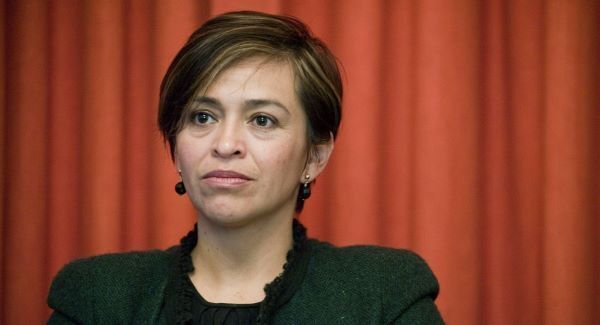
There can be few people as perilously familiar with the darkness at the heart of the Mexican state as the 41-year-old year-old journalist — and mother of two — who has chronicled the blood-drenched history of her country’s narcotics industry in gruesomely forensic detail.
Published first in Mexico in 2010 — when it was an instant bestseller — Narcoland: The Mexican Drug Lords and Their Godfathers won for Anabel Hernández the World Association of Newspapers and News Publishers’ 2012 Golden Pen of Freedom award.
“Mexico has become one of the most dangerous countries in the world for journalists,” the citation read, “with violence and impunity remaining major challenges in terms of press freedom. In making this award, we recognise the strong stance Ms. Hernández has taken, at great personal risk, against drug cartels.”
The book’s global, English-language publication this month exposes to a vast readership the entrails of a profoundly compromised political, judicial and corporate elite that has not only tolerated but also connived with the barons of the multi-billion dollar trade in illegal drug trafficking. This toxic alliance, she says, has transformed Mexico into one of the most violent countries — and not only for investigative journalists — on the planet.
It is not a book — to reprise the warnings with which television channels prefixed plays and movies featuring naughty scenes or language — for those of a nervous disposition.
There’s the story of Joaquin “El Chapo” Guzmán. The son of a marijuana farmer, he left school when he was seven but found his illiteracy no bar to becoming the leader of the Sinaloa cartel, one of the country’s biggest and most powerful. Guzmán’s short stay in prison — a mistake soon rectified by government security forces which aided his “escape” — was hardly a life of hard labour.
He was given all of the fine food and drink he wanted, plus supplies of Viagra, prostitutes and female inmates, one of whom — Zulema Hernández (no relation) — had cause to regret being in the wrong maximum security penitentiary at the wrong time. After her release, her body was found in a car boot. The letter Z had been cut into her back and breasts.
Z is the mark of one of the Sinaloa cartel’s principal turf war rivals, Los Zetas, the armed wing of the Gulf cartel. Its leader — now reportedly dead — was Heriberto Lazcano, a man, says Anabel Hernández, who placed “his own idea of honour above even the interests of the drug business”.
In 2008, his accountant — a woman — was arrested in Acapulco and subsequently assaulted by eight Mexican soldiers. Lazcano found out who they were. Their severed heads were found in a shopping mall, and their bodies on roadsides.
What makes a middle-class mother — someone who could have looked forward to a comfortable life minding her own business — take on not only the Guzmáns and the Lazcanos, people she says are “animals, not humans“, but also the powerful figures who shield them?
“I knew it would be dangerous,” she told me when we met in Bristol. “The drug producers and traffickers — the cartels — are protected by businessmen, congressmen, judges, police and security chiefs, functionaries, and prison governors. They are more dangerous than the cartel leaders because they pretend to be honest, they pretend to live in the legal world.”
She knows that some of these people — none of whom have troubled to deny the allegations she’s made about their involvement in the drug industry — have talked about arranging an “accident” for her. Boxes of headless animals have been left at her door. At home in Mexico City, she has 24-hour bodyguard protection.
Violence arising from drug trafficking has made Mexico one of the most dangerous countries in the world for the press, according to US-based International Committee to Protect Journalists. More than 50 Mexican journalists and other newspaper workers have been killed or have disappeared since 2007.
The turning point in her life came in 2000, when her father was kidnapped and murdered, a crime she believes was unrelated to the narcotics trade.
“My father was an ordinary businessman, in the information technology industry. The normal method in Mexico is to do the kidnap and then ask for ransom money. But my father was killed before they demanded the money. When they made their demand, they didn’t know that we’d already found his body.
“The police came to us. They explained that investigating these cases was very expensive. If we paid them, they would investigate the crime, so it was clear that if we didn’t pay them, the crime would not be investigated. As a family we discussed this very carefully. We decided that you cannot — you should not — pay for justice. And, anyway, if we gave the police the money they asked for, they’d just take somebody, someone innocent, off the street and frame them and get them convicted. That’s not justice.
“It changed my life, and my family’s. Yes, I know the risk is there, not just for me and my children, but for all investigative reporters. We are between two gangs, the cartels and the government, but I try not to think about it too much.”
Her personal encounter with Mexican justice honed her focus on corruption and hypocrisy. Before tackling the drug cartels, she uncovered the hypocrisy of president Fox who had used public money to spruce up his presidential beach cabins while calling for cuts in public spending, and went on to expose the slave labour regimes endured by Mexican girls in work camps in California.
The roots of what she calls Mexico’s mafia state can be traced back to the 1960s and 70s, when the country’s narcotics industry comprised small and medium-size marijuana growers and distributors. Their operations were condoned by the governments of both Mexico and the US.
The Mexican government “taxed” the farmers — cash for police chiefs and other officials was carted around the country in suitcases — and expected the growers to ensure that no violence was associated with the industry, and that the marijuana was for export only, the chief export market being the US. The Mexican army supervised the industry, and government officials, says Ms Hernández, organised the loading of shipments to airports in Arkansas — president Clinton’s home state — and Florida. The US government, accordingly to one of her highly-placed informers, wanted drugs for troops in Vietnam and addicted veterans.
In a textbook example of the law of unintended consequences, these cosy arrangements changed during the Reagan administration: the CIA conspired with Mexico’s drug SMEs to fund rebels trying to bring down Nicaragua’s Communist regime, and the US successfully dismantled the Columbian drug gangs. The result was the rapid growth in wealth, power, ambition, and ruthlessness of the Mexican drug producers and distributors. The small gangs became untouchable and colossal cartels which in the mid-1990s generated a catastrophic and seemingly uncontrollable crime wave.
The response in 2006 of the then president, Felipe Calderón, was an alleged crackdown on the drug traffickers, a crackdown which by any measure has failed. Estimates of the number of people murdered in drug-related violence since then vary from 60,000 to 90,000, including more than 3,000 soldiers and police. Ms Hernández says the death toll between January and July this year was 10,000.
Turf wars have raged, cartel leaders are killed and replaced, others are jailed and are later released or helped to escape by prison authorities, and alongside the deaths of gang members, security forces and innocents caught in the crossfire, there are disappearances — 27,000, more than 1,000 of them children, in seven years.
“Here are some numbers,” she says. “In 2006 there were five drug cartels; now there are eight. Mexico is now the world’s second largest producer of marijuana and opium. It is one of the largest producers of methamphetamine [also known as crystal meth]. What kind of war against drugs is it that leads to the growth of the drugs business? They don’t want to stop it because it drives the economy.”
It’s estimated by the Brooking Institute in Washington DC that the captains of the drug industry provide direct or indirect employment for 40 to 50% of Mexico’s working population, with narcotics trade contributing 3 to 4 % of the country’s $1.5 trillion (€1.12trn) GDP.
The war on drugs, says Ms Hernández, is a lie. “Mexico is exhausted. People are tired and full of fear. They just stand and watch. They will pay anything to live in peace. And that is the government’s strategy, to sponsor the Sinaloa cartel, making the so-called war on drugs one massive lie.”
Her words echo those of the then senator John Kerr when in 1988 he chaired a Capitol Hill committee investigating links between the CIA and drug traffickers in the context of an earlier war on drugs declared by president Reagan: “From what we have heard, our declaration of the war on words seems to have produced a war of words, not action. Our borders are inundated with more narcotics than at any time before.” Kerr might well have reversed the sentiments of Porfirio Diaz, Mexican president from 1876 to 1880 and 1884 to 1911: “Poor Mexico — so far from God and so close to the United States.”
Ms Hernández is sceptical about the arguments for decriminalising drug use, which its advocates think would break the power of the cartels. A conservative on drug use, she believes that liberalising drug possession laws would not help.
“Just as legalising gambling allowed casinos to be used for prostitution and money-laundering, decriminalising drugs would simply fuel the drug economy, and the producers would come up with new, illegal drugs. It’s a mafia, it corrupts everything.”
She also dismisses the police low-pay case. “I don’t believe low pay has anything to do with it,” she says. “Senior police are paid very well by Mexican standards. There is corruption because these people have impunity. They know they can get away with anything. They know they will never be caught and punished.”
Drug users around the world should know, she says, that not only are they harming their own bodies, they are also sending money to Mexico, where it’s being used to kill people, and to kidnap people.”
She wants banks to stop taking the proceeds of drug production and trafficking, and to be punished severely when they do. She says the $1.9bn (€1.42bn) fine paid in the US by Britain’s HSBC bank for failing to prevent the laundering of $881m in Mexican drug money was derisory.
The one institution in Mexico that escapes arraignment in her 360-page narrative is the Catholic church. She’s surprised when I ask her about it.
“No one has asked me that, but yes, the cartels use the banks to launder their money, and the church to wash their faces, to clean their consciences. Of course, just as not all Catholics are paedophiles, not all Catholics in Mexico are tied up with the cartels, but some top figures in the church are. One huge church was built with money given by a cartel boss, and a plaque thanking him was put on the church wall. Priests officiate at their weddings, their rituals, and the clergy knows what these people do.”
Her account — five years in the making — of Mexico’s endemic, top-down corruption is the result of hundreds of interviews with police and army officers, US government officials, drug dealers and many other informants, some of whom have paid with their lives for talking to her. She has uncovered and studied CIA and US Drug Enforcement Agency documents.
Having accused two living former presidents — Felipe Calderón and Vicente Fox — and an ex-boss of the country’ security police, Garía Luna, now living in the US, of colluding with their favoured cartels, she is left with the continuing problem of her own security.
“I find myself in a fight for my life and the life of my relatives, for justice and for the ability to continue practising journalism freely. This is the angst with which I live.
Living in silence is not living, in any corner of the planet. Living and remaining silent about how corruption, crime and impunity continue to take hold of my country is also to die. This is the angst with which I live. I continue to denounce the decomposition of Mexico and the collusion of politicians and public servants.”
Funding for the two bodyguards she has now is to be re-assessed at the end of this year by Mexico’s city government, which provided it reluctantly. “It will decide if I still need it. I have asked about the criteria on which the decision will be based, but I’ve had no answer; I haven’t been told. I can’t afford to pay for protection; we are not wealthy. Would we have to leave Mexico? I don’t know.”
There would be many in Mexico would be far from sorry to see her go.

CONNECT WITH US TODAY



Be the first to know the latest news and updates

















