Living with HIV in Ireland
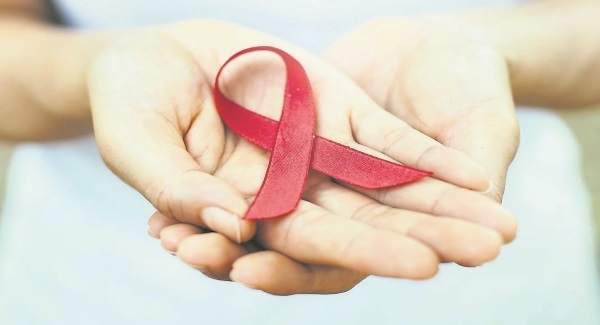
At its national conference in Dublin today, HIV Ireland launched a major study on HIV stigma.
The findings were grim, with 17% of those living with the virus reporting suicidal feelings last year.
More than 4,000 people are knowingly living with HIV in this country, with data published by the Health Protection Surveillance Centre confirming 365 new diagnoses between January 1 and September 16 this year.
The study showcased the level of HIV-related stigma and perceived stigma, with 88% of those polled agreeing that ‘some people believe that having HIV is shameful’.
Describing some of the ways in which the stigma manifests, Niall Mulligan, executive director at HIV Ireland, lists disclosure, shaming, rejection, offensive language, being outed by others and being stigmatised by immediate family, health professionals and friends.
“Negative judgements, cruelty and denial of care and support can also be factors,” he says.
But there’s support for those impacted, and one who spends much of his time providing just that is Sandy Preston, chair of Positive Now, a volunteer run organisation for those living with HIV.
Through his work, Mr Preston has met people who cannot tell their partners and children they have the virus.
Others say their medical professionals don’t want to treat them and tell them to go back to their STD or HIV clinics.

This has echoes of the past: a time when an overt culture of stigmatising HIV-positive people in Ireland resulted in the compilation of a ‘list of friendly dentists’ as in practitioners not adverse to treating clients with the virus.
Those days are gone. But Sandy Preston is aware of incidences in which HIV-positive individuals were fired from their jobs and left with the feeling that their health condition was behind the dismissal. “This is always hard to prove,” he says.
Given how tough it can sometimes be to live with the HIV, it’s hard to imagine anyone deliberately contracting it, but a minority do.
“When I ask why they did that, some don’t have an answer,” says Mr Preston.
“Others say it’s better to have the virus than to live in fear of getting it.”
One of the central worries on being diagnosed HIV positive is the fear of accidentally passing it on to someone else.
This was the experience of 26-year-old Robbie Lawlor.
“Initially when I found out, I thought: That’s my sex life over, I’m never going to have a relationship again,” he says.
Recalling how he learned he had the virus he says: “I was 21 and I’d been sexually active since the age of 18. I’d gone to a hospital for sexual health check-ups when I was 19 and 20.
“Each time I was allocated ticket number 31 or 32. But as only the first 30 ticket-holders were seen I wasn’t tested. The third time I went I was seen, and I learned I was HIV positive.”

Describing how the risk of contracting the virus was ‘never on his radar’ he says: “During my college years the talk was all about chlamydia and gonorrhoea, so HIV was never on his mind.”
He believes his generation were failed as young people.
“We were never educated about the risks of contracting HIV.”
The wealth of information online made little difference, he says: “It’s online, but young people don’t go looking for it because contracting HIV is not on their radar. They feel invincible.
“They don’t know the risks, don’t think about HIV, don’t think they will get it.
“At Pride, Leo Varadkar pledged to push for the implementation of the sexual health strategy, among other things.
“We need action not words. As for Simon Harris, he talked about HIV when we put in a parliamentary question. He says so little on the topic I think of him as Silent Harris.
“Why is that the Minister for Health is so silent about HIV at a time when we need most action?”
As for the fact that PrEP (Pre-exposure prophylaxis is HIV medication which when taken daily lowers the chances of getting infected) is not subsidised by the HSE and costs €400 per month on prescription, he is outraged.
“The Ministers for Health and Finance have the power to push this through quickly.
“We need affordable access to PrEP now, not in a year or two. People with power are dragging their feet.
“This is unacceptable. The HIV community is at high risk. Transmissions that can be prevented should be prevented.
“The prohibitive cost of PrEP is causing distress and health risks in the community.
“Few can afford the €400. They go looking for generic versions online and buy from Asian vendors offering it for €60 or €70 per month.
“The health system is failing us. Our government is failing us. PrEP should be affordable and obtainable from reputable suppliers. Those taking it need support and proper medical advice as to how to take it properly.
“Ireland today is like a modern day Dallas Buyers Club.”

On the topic of STI testing in Ireland, Mr Lawlor believes we’re ‘notoriously bad’ at that in Ireland because here, getting it done ‘feels like a punishment’. “The nurses, doctors and consultants are phenomenal in Ireland. They work so hard. But often the public STI testing clinics are like kips.
“So, there’s a feeling of negativity around going for testing, and this shouldn’t be the case.
“In London, when you go to clinics there’s a feeling of being respected as you get your health check. There’s no shame or judgement, just support.
“Too little is being done by the HSE to battle the stigma. Too little is being done to educate people.
“Too many are living with HIV who do not know they’re not at risk of spreading HIV to others if they take their meds every day and the virus is undetectable.”
Mr Lawlor is refreshingly vocal, but he’s not all talk.
He campaigns on the HIV education front, and to stamp out stigma, quash negative practices, promote regular testing and demand a more positive testing environment for HIV and other STIs.
Along with Maurice, his partner of four years, he took part in a study to show that he, being HIV positive, is not a transmission risk to Maurice, who is not.
According to the Health Protection Surveillance Centre (HPSC), HIV diagnosis rates in Ireland increased by 30% between 2014 and 2015. In 2015, there were 485 HIV diagnoses, representing a rate of 10.6 per 100,000 population.
This compares unfavourably with the 6.3 per 100,000 rate for the 31 countries of the EU/EEA that year. The Irish figure was higher again last year, with the HPSC reporting 512 new cases of HIV being diagnosed.
Late diagnosis of HIV is an important public health issue in Ireland, with 45% of all diagnoses in 2015 classified as late.
The equivalent figure for 2016 is not yet available.
Confirming that early HIV detection is key, Dr Martin Davoren executive director at the Sexual Health Centre in Cork says: “It is vital that everyone knows their HIV status.
“We provide a free HIV testing service, with results delivered in one minute.”

CONNECT WITH US TODAY



Be the first to know the latest news and updates






