Don’t forget to lock up: The first lines of defence in home security
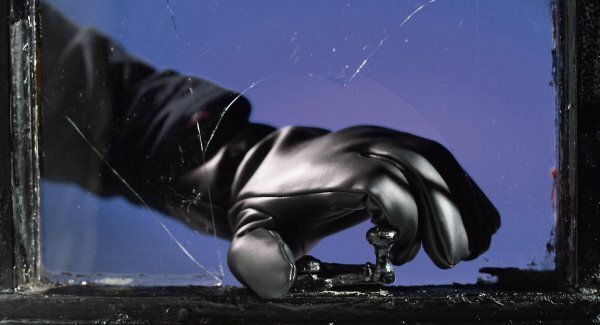
BURGLAR alarms matched to CCTV are the domestic darlings of the security industry. The time and expense spent swinging around on a ladder or chasing through masonry to fit a system, are a thing of the past. Wireless alarms allow discreet installation of a system in a standard four bedroom house in one afternoon. With a monitored, wireless or wired system networked to your mobile phone, the cosy addition of a keyholder and 24/7 vigil by a gallant receiving centre, surely we are as safe as our houses? However a survey by Liberty Insurance, revealed 65% of us don’t bother to turn our alarms on when we go out?
Locks or alarms?
The presence of a working alarm (rather than an easily rumbled ‘dummy box’) will in theory deter would-be intruders. Screeching, flashing and hysterically texting the neighbours, it will certainly cut down on their browsing time if they do get in. Cathal Daly of Secure Your Home (secureyourhome.ie) is adamant that locks must come first in any home security plan. “In North America, mainland Europe, Africa, and Australia, the first thing they look at in securing the home is the hardware and secondly the alarm.
“In Ireland and the UK for some reason the alarm and CCTV are seen to be more important. If the proper security is installed correctly on windows and doors it makes it extremely difficult for burglars to gain entry without breaking glass, something they don’t like to do.”
READ MORE: Everything you need to know about access and security around the home .
The Gardaí, who have no commercial interest in promoting alarms over locks, suggest an alarm system where financially possible, again as a back up to the physical protection of properly secured windows and doors to keep rogues out in the first place.
Doors and locks
Sturdy exterior doors and frames, with strong, anti-bump, anti-snap cylinder locks matched to deadbolts are the first point of defence. In the case of a flimsy aluminium or older uPVC door (rear and utility room doors were in the past often second class) entry may be as easy as a swift kick to the lower panels. Thick 44mm, solid wood and steel re- enforced doors are highly secure, as once locked into a quality surrounding frame they are almost impossible to dislodge by physical ramming.
Discover a wide range of great features in our Life & Style section.
Most of us are familiar with a multipoint locking system, with a pull up handle used to secure a metal, composite or PVC door into the frame with hooks and shoot bolts. However, what many homeowners don’t’ realise is that a locking system is only as secure as the cylinder itself.
Several lock suppliers we spoke to had experience of the poor performance of the standard euro-cylinder, frail external hinges (that allow the door to be lifted off) and weak door construction. A sub-standard euro-cylinder can be damaged and the cam of the lock disabled. Shielded by the body of the intruder, snapping is a discreet event of as little as 20 seconds. Multi-point locks then surrender by just pressing the handle.
Locksmith Michael Cunneen of Michael Cunneen & Sons in Cork, advises, “a handsome €2,000 door without an anti-snap cylinder (where the cam cannot be broken), is left vulnerable to intruders. Timber doors and windows are generally easier to adapt with added locks compared to uPVC, but uPVC doors with steel frames and integrated locking systems have improved enormously in recent years.”
Sergeant Tony Davis, head of the Crime Prevention Unit in Cork says, “When home owners are upgrading doors or considering any redevelopment, they should consult with a locksmith and change the locks on all doors including the patio door to anti-snap locks.” Any cheap euro-cylinders should be replaced with restricted style cylinder locks which are anti-bump/anti-snap, drill resistant and which carry an EN1303-05 Security Classification. Prices start around €80, (including VAT installed). Keep any keys available inside to use the door to exit quickly in an emergency. If you have a glass panel that’s large enough to reach through, two locks on the door will make it more difficult for someone to locate and ‘fish’ a key through a broken pane and get in. Consider new laminated glass of 6.4mm thickness. Put any shoot bolt out of reach and at least 5mm into the door frame.
Standard wooden front doors without multi-point systems should carry a five-lever mortise with EU standard EN12209, and an automatic deadlocking latch rim. The Gardaí suggest the addition of hinge bolts to protect the hinge side of the front door too. Treat any internal door leading from the garage or any outbuilding as an exterior door — integrating two quality locks. If you are buying a new door, the latest and highest standard is the EU Burglary Resistance Security Standard for entrance doors: IS EN1627:2011.
Discover a wide range of great features in our Life & Style section.
Window Locks
Smashing glass creates noise. With the exception of a sylvan situation with no-one for miles, the burglar would prefer to just let himself in. Many windows are open to ingress because of the way they were installed. If your window has the bead holding the glazed unit in place on the outside (look for a batten of wood or PVC), they are what is termed ‘externally beaded. This can allow the glazed unit to be lifted out from the outside without the addition of safety clips. There are pivot locks and hinge guards for all window designs and visibility is part of their power — so show them off.
If the handle is the only means of keeping the moving part of the window closed you may well need additional security — get professional advice. Most modern double and triple glazed units have security detailed into the frames as multipoint locks at manufacture. Putting extra detailing on uPVC and aluminium can be tricky and for newer units can void your warranty. Sash fasteners fitted in pairs are ideal for older sash windows and a specialist supplier will talk you through the issues surrounding materials, sliding secondary glazing, casements and other oddities. Always keep keys for window locks where you can find them. New locks for windows, for safety reasons, do not include keys.
Patio Doors and French doors
Sliding doors ride on a rail, and can be lifted up and out of the runners completely. French doors like enormous windows can be jimmied open at their weak central point where the doors meet, an ideal leverage point for a crow-bar. Without a multi-locking system, the fix for the patio sliders starts with a sash jammer and/or an inexpensive Ivess lock, made famous on Dragon’s Den. A key-less, screw type lock, the Ivess keeps the doors on the rails, and can be released with a simple pull and turn knob to exit the house swiftly. It also works as a limiter to leave doors open enough for a dog or cat to come in. €34.99 each from ivesslock.net. A pair of dedicated surface mounted bolts, top and bottom for the patio door is the next step. If you are unsure about mucking around with self-tapping screws and large panes of glass, pay the extra to have all these professionally fitting.
French doors can carry rack bolts and mortise sash locks top and bottom. One of the easiest instant additions is a cuff style keyless lock that drops over twin handles, making it impossible to pull them apart from outside and keeping levers and shoot-bolts in place. Several designs are now available, with the popular Patlock starting at around €60, supply only. Cathal Daly adds when replacing a cylinder lock on any door that’s part of a pair, replace the locks on both doors.
Proper installation of even small security detailing is crucial and a firm dealing in locks and home security will have their favoured products. Consider a security audit of your whole house, setting a budget for improvements and cover the major recommendations of the report.
To find a reputable locksmith who is qualified, tax and insurance compliant, contact The Associated Locksmiths of Ireland by logging on to aloi.ie. Crime prevention advice can be obtained at www.garda.ie with a pathway through the Community Relations and Crime Prevention tab.
One fifth of burglars gain entry through an unlocked door or window, exploiting home-owner complacency
Despite the increase in household alarms in Ireland, the number of burglaries increased by 1,272 between 2004 and 2013, to 26,185 (CSO).
Thankfully, nine out of ten of these offences were committed when the home-owners were out.
According to the Gardaí, the most common point of entry for burglars is the front door (in 29% of cases). Rear windows account for 26% of intrusions and a rear door 22%. An astonishing 20% of burglaries take place through an unlocked door or window.
A survey by Liberty Insurance, in July, 2014, on the behaviour of Irish households, revealed that one in six of us does not lock the front door when going out. Between the ages of 17-24, this spikes to one in three merrily departing with an open invitation to idle trespass.Twelve percent of these hapless youngsters also left a window or patio door open.
Could those 20% (or 5,237) of ‘stroll-ins’ in 2013 have been prevented simply by locking up?
Age appears to gift wisdom, as 93% of people over the age of 60 locked their front door when going out.
To top off these sloppy security habits, according to the Liberty Insurance survey, 65% of us are thrilled by the purchase of a home-alarm system, but quickly grow complacent and don’t bother to turn it on when we go out. This flies in the face of the advice from crime-prevention units, that we should use alarms both when we are out and when we are in.
Alarms both deter an intrusion and interfere with its progress. What should you look for when buying a system? Do you even need one? Sergeant Tony Davis of An Garda Síochána’s Crime Prevention Unit in Cork says, “every house should have an alarm — and with a key fob and a mobile phone, they are now very user-friendly. In a rural situation it is better to have a monitored alarm. Monitoring companies have specific instructions to carry out in the event of alarm activation.”
Motion sensors are standard, but what do you want to happen when your alarms goes off? A siren and flashing lights, a panic button, live CCTV coverage, alert of key-holders or help from a control centre? The level of protection, zoning and monitoring will determine cost.
For finished homes, wireless alarms are quick to install, remove unsightly wiring and are generally less expensive. The home’s control centre is hard wired but the sensors are battery powered. DIY installation is possible.
CCTV can help to identify culprits, recording incidents of snooping around or other bad behaviour as it happens.
A speech dialler matched to a wireless alarm will send a text alert and even images to your phone or electronic device in the event your alarm goes off. If you have trusted friends, this can provide a potential alternative to monitoring. Without third party monitoring it cannot be used to call the Gardaí.
Invest in an annual maintenance contract for your burglar alarm.
The Gardaí are not bound to attend a house solely because of a ringing alarm without verified signs of a criminal activity. If your alarm goes off three times in a three month period and the Gardaí attend the scene and the alarms are clearly false, they are allowed to withdraw response for a lengthy period.
Two 10kg cats lumping through a door flap can set off an alarm without pet-sensitive detailing. Choose an alarm to the latest EN50131 standard, and have it fitted by a registered installer, a requirement of most insurance companies if you expect a discount on your home insurance policy. A Government grant from the Department of Environment, Community and Local Government provides for free monitored panic alarms for the elderly of limited means under the Seniors Alert Scheme. Apply at www.environ.ie
Discover a wide range of great features in our Life & Style section.
CONNECT WITH US TODAY



Be the first to know the latest news and updates

















