Wilko Johnson said goodbye, now he’s saying hello
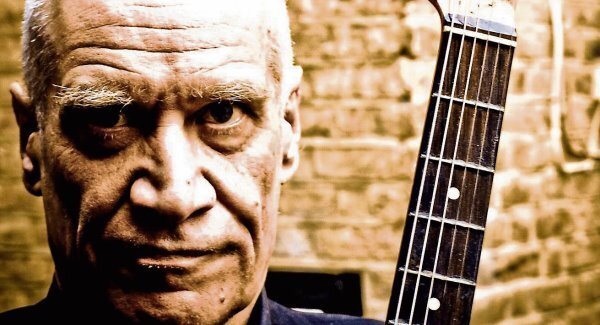
WILKO Johnson is happy to be alive. In 2013, the rock music icon was diagnosed with pancreatic cancer. Doctors gave him 18 months to live. He said his goodbyes, announced a farewell tour and waited for the inevitable.
“The last few years have been very confusing for me,” says the amiable musician, who sounds shell-shocked. “I had accepted my life was at an end and that I would have to make the best of what time was left. It sounds odd saying this: in some ways, it was the best year of my life. I was at peace.”
The cancer spread — but not as fast as had been predicted. In April of last year, shortly after he had released an album with The Who’s Roger Daltrey (entitled Going Back Home), he had radical surgery. Parts of his pancreas, spleen and intestines were removed. The operation lasted 11 hours. Afterwards, a true-to-life Dr Feelgood gave him the all-clear. His death sentence had been lifted. He is still taking it all in.
“It’s strange: you’re told your life is going to end,” he says. “And, then, you go to hospital and they take out half your insides — and, suddenly, your life isn’t coming to an end after all. The thing is, once you’ve developed that feeling of living in the moment, it’s hard to shake off. It’s difficult to look more than two or three weeks into the future. I think about recent events and it feels like a dream. I’m still finding my moorings.”
DISCOVER MORE CONTENT LIKE THIS
The recovery is as tiring as the illness, the 67-year-old says. For a year, Johnson didn’t think about picking up a guitar. He was too weak. When he had to rehearse for a new tour — that emotional curtain-call he had rescheduled so that he could undergo surgery — he had forgotten how draining rock and roll could be.
“With the first comeback show, I distinctly remember, halfway through, thinking ‘Blimey, this is bloody tiring.’ I was still recovering. Actually, I am still recovering. I find it much easier now. Every day, I feel stronger. You wonder where will it end: will I end up feeling like superman? I seem to be getting better and better. I remember one gig, after the operation, with that Irish band, The Strypes. Or least I think I remember. My recollections from that period are very confusing. So much was happening — it was hard to cling on to. It is one big swirl.”
Johnson, whose real name is John Peter Wilkinson, was born in 1947 in Essex. He was in a succession of bands as a teenager and, in the early 1970s, played with Dr Feelgood (and holding down a day job as a teacher). This rag-tag crew were regarded as spiritual leaders of pub rock, a spit-and-sawdust scene that sprang up in reaction to the artifice of glam.
With an ‘anything goes’ philosophy and an emphasis on passion over virtuosity, pub rock paved the way for punk. Most of the bands were short-lived and quickly forgotten. Dr Feelgood, however, were soon thoroughly mainstream. Success came quickly for the band, who topped the charts with their 1975 live album, Stupidity.
The group drifted apart in the early 1980s. Wilko was at that point acknowledged as one of the outstanding players of his generation. He joined Ian Dury and the Blockheads and released a series of acclaimed solo records. He was such a pivotal figure in British post-punk that director, Julien Temple, made him the subject of an acclaimed documentary, 2009’s Oil City Confidential.
In 2010, Johnson was introduced to a new audience when he was cast as royal executioner, Ilyn Payne, in fantasy soap, Game Of Thrones. It was a small part, with big moments: it is Johnson who beheads Sean Bean’s character in the pivotal episode of the first series. When it was announced that he had cancer, the show wrote Ilyn Payne out, as a gesture of respect to Johnson.

“I didn’t know much about it beforehand,” he says. “All I knew is that I was going to be some evil chap who couldn’t speak. I thought it was going to be Xena: Warrior Princess type of thing. We went to Belfast and I saw the size of the production.”
He has said that it was his ‘menacing’ demeanour that won him the gig. “They said they wanted somebody really sinister, who went around looking daggers at people before killing them,” he later said. “That made it easy. Looking daggers at people is what I do all the time; it’s like second nature to me’.”
When his illness was made public, he was moved that so many prominent musicians rallied around him. He was particularly touched by the response from Daltrey. The Who singer had previously badgered Johnson about them making a record together. Now he was on the phone again. With nothing else to detain him aside from contemplating his mortality, Johnson agreed.
“The Roger thing was curious. I found myself in a studio with this legend — and with 10 months to live. I was constantly thinking ‘Man, this is weird. I’m alive and kicking and doing an album with Roger Daltrey. And I’m going to die soon’. It was good fun and gave me some perspective. I would think, ‘well, I’ve had a pretty good life. I can’t complain’. The whole thing was very, very strange.”
Through his life Johnson, has suffered depression. He knew he was truly recovered from cancer when, several months ago, the black clouds returned. This was upsetting. It was also a source of comfort: the old Wilko was back.
“It’s funny — last night, I started to think about my wife, who passed away ten years ago. I got really upset. I said to myself ‘what is the matter with you — you ought to be happy you are still here’. But it doesn’t work like that, does it?”
DISCOVER MORE CONTENT LIKE THIS
CONNECT WITH US TODAY



Be the first to know the latest news and updates