Sobriety helped Keane's Tom Chaplin make a searingly honest solo album
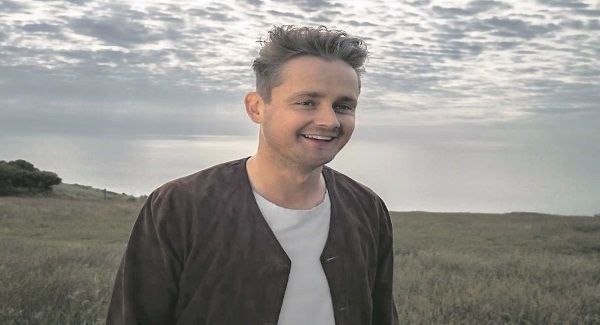
IN EARLY 2015, Tom Chaplin of the rock band Keane embarked on a three-day drugs and alcohol binge. His wife, busy caring for their baby daughter, had no idea where he was. Friends feared his body would be found washed up somewhere. In hindsight, Chaplin agrees this was a real possibility.
“My addiction has caused mayhem in my life,” he nods. “It has nearly killed me on many occasions.”
In the aftermath, Chaplin’s wife threatened to leave. If he wanted to drink and snort himself into an early grave he wasn’t going to do so on her watch. Here was the wake-up he required. The 37-year-old wasn’t simply throwing his life away. He had caused unbearable pain to those closest to him. Out of this period of soul-searching emerged his remarkable debut solo album, The Wave.
It should be acknowledged that rock stars going on the straight and narrow do not always produce the most memorable music. Bowie seemed to lose his mojo when he cleaned up, a charge that might also be levelled at the Rolling Stones, whose most fertile years were also their most debauched. Preachy sobriety is the dullest cliche in pop.
The Wave is different. It is searingly, at times almost unbearably, honest, with Chaplin inviting listeners to tour the basement of his soul. For anyone who thinks Keane are just Coldplay with better tunes, this is a revelation (you’re wrong about Keane by the way, they are far weirder and smarter than Coldplay).
“I almost feel I’m a new artist,” says Chaplin, left to his own devices since Keane went on hiatus in 2013. “It’s an unconventional thing: Keane are known for songwriting by Tim [Rice-Oxley] and singing by me. Our roles had become very clearly defined over the years. I can’t think of another example of a band where the singer isn’t the creative force. Perhaps Liam Gallagher from Oasis.”
With time on his hands Chaplin resumed songwriting (he’d stopped after Rice-Oxley’s material turned Keane into stars). However, writing honestly meant drilling deep — and the things he uncovered were dark and upsetting. Under the chirpy, middle-class exterior, Chaplin was bedevilled by self-doubt. In and out of rehab during his years with Keane, now he spiralled again.
“It’s a chicken and egg thing. It was my insecurities that drove me to be in a band. It’s no coincidence that countless number of frontmen or artists are deeply flawed as human beings. Going out on stage is the only way they have of appearing okay with the world.
“On the other hand if you have the sort of deep emotional flaws I do, being in a band can accelerate that. I’ve not been equipped until quite recently to deal with it. But I have achieved a degree of self knowledge and writing my album has been a hugely important part of me getting there.”
When Chaplin entered rehab for the first time in 2006 there was widespread shock. Keane didn’t seem the sort to spin off the rails. “People probably saw us as earnest, fairly serious ‘well brought up’ boys. That creates an image of individuals who are all OK. Underneath that, this has never really been the case. In Keane were are all quite weird. The three of us who were there originally are all strange human beings, as complex as anyone else. We were never any good of giving a true representation of ourselves in press and in public.
“We were crippled by politeness — by the idea that you better not say anything that is going to upset anyone or make you look silly or controversial. People had this impression of us being strait-laced and boring. And I have always been known for having this angelic voice and baby-face— that paints a certain picture. I wanted to unveil the darkness beneath all of that. It’s been very liberating.”
CONNECT WITH US TODAY



Be the first to know the latest news and updates

















