Michael Kiwanuka: A black man in a white world fighting back the stereotype
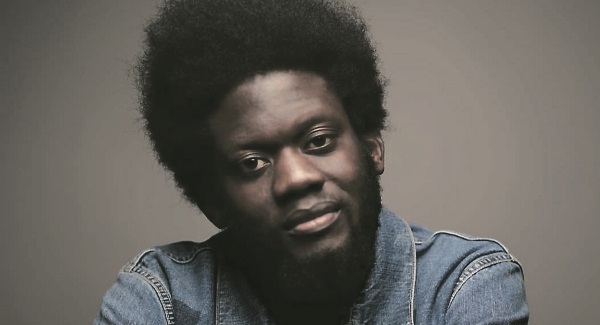
WHEN Michael Kiwanuka went to America for the first time, he was struck by the make-up of his audiences. They were universally white. Black people weren’t interested in the British-Ugandan singer’s music. They were possibly not even aware of it. This got him thinking.
“I’ve been marketed as a black soul singer, which is perhaps what I am,” says the shy yet friendly Londoner. “But I don’t feel like that. In my head, where I grew up, I was more used to middle class white England. That’s what I’ve been around all my life. The fact no black people were coming to my gigs made me realise we’re more segregated than we think. Even in the kinds of music we listen to.”
He channeled this turmoil into ‘Black Man in a White World’, the extraordinary lead single from his second album, Love and Hate.
“I guess it became a statement,” Kiwanuka says of the political-yet-personal lyrics. “All of this stuff has been going around my head since I was a teenager. The differences in culture — everything. Where I fit in European white society. Does colour really matter? It’s pretty obvious that certain kinds of records are bought by certain kinds of people without any crossover. I’m sort of in the middle of that. If you are around it your entire life it weighs on you.”
In 2012, Kiwanuka placed first in the BBC Sound Of poll of up and coming new talent, ahead of future stars A$AP Rocky and Frank Ocean. The poll is a generally reliable barometer of imminent global ubiquity; other ‘Sound Of’ picks from around that time include Sam Smith and Adele.
Yet though Kiwanuka’s debut album Home Again fared well and was adored by critics, his career never quite caught fire (it stiffed at 15 in the charts here). As he returns four years on with another solid collection, it is fair to say the world is not holding its breath. He’s okay with that. If anything, gliding just beneath the radar suits him. He is not a natural seeker of plaudits.
“I didn’t feel under huge pressure this time because the first record was so long ago,” he says. “I felt I was starting from scratch. It takes me a huge amount of time to make music I’m happy with. The first record wasn’t humongous or anything. I wasn’t writing this one with a fanbase in mind. It was quite freeing in a way.”
Love and Hate is no crowd pleaser. It is a smart, often compelling project — but one that demands you approach it on its terms, not yours. The opening track, for instance, is nearly 12 minutes long; elsewhere, Kiwanuka draws on such far-flung influences as Pink Floyd, Scritti Politti and Sam Cooke.
If Radiohead were beamed into the body of a conflicted black Londoner with a penchant for slightly moochy acoustic rock, they might come up with something like this. “I wanted to make a statement, “ says Kiwanuka. “With the first number, I thought it would be cool to make a statement. Why not open an album like that? “
Kiwanuka grew up in Muswell Hill, north London, the child of immigrants who had fled to the UK from Idi Amin’s despotic regime in Uganda. His was a thoroughly middle class upbringing. He studied at Fortisemere School, a well-to-do former grammar school whose alumni include advertising guru Maurice Saatchi, author Toby Young and Turner-winning artist Rachel Whiteread.
With a background such as that, it was natural that, skin colour notwithstanding, he might feel slightly out of place in London’s “urban” scene. He started out as a session player around the UK capital, guesting for grime artists Chipmunk and Bashy. In this world of beats and disses, he was in his own mind an outsider.
He’d grown up worshipping Dylan; the black musician with whom he identified most closely was another outlier, Jimi Hendrix.
The quasi fame that followed the BBC Sound Of poll a curious thing, he discovered. As with many performers Kiwanuka is a contradiction — shy but eager to do well.
“I won’t lie — it would be awesome to do something that really captured people. A lot of the people who made that list did go on to massive things. I’m interested to know what that would be like. Also, commercial success gives you tremendous freedom. You can do the things you want.”
“The problem is that you can’t think about the commercial side too deeply. It gets in the way. The best stuff comes out when you push past that and you’re purely creating. Like, with ‘Black Man In A White World’, I wasn’t thinking ‘Oh this will be the first single, how is it going to go down’. You have to leave that at the back of your mind.”
Michael Kiwanuka has added Isaac Gracie as special guest on his Irish tour this October.
— Cyprus Avenue (@CyprusAveCork) April 21, 2016
Check him out here: https://t.co/UHqgWgAdjO
Even his modest exposure placed him in some strange situations. In 2013, Kanye West invited him to guest on his Yeezus album. Kiwanuka ended up sitting in the studio not sure what to say. Kanye told him to do “his thing”. Kiwanuka was confused as to what that was exactly and, left to his own devices, slunk off.
He isn’t opposed to becoming more successful but the last thing he wants is fans chasing him down the street. He shudders at the prospect.
“I’m the opposite of a showman,” he nods. “I get up on stage and shut myself off in my own little world. Even though I’m standing in front of everyone I’m hiding. I don’t know whether that’s a good or a bad thing. I was thinking about this when Prince passed away. He was a natural showman. I could never be like that. I’m not even interested in trying. What’s the point in attempting to be something that you aren’t?”


CONNECT WITH US TODAY



Be the first to know the latest news and updates