The Diary of Mary Travers
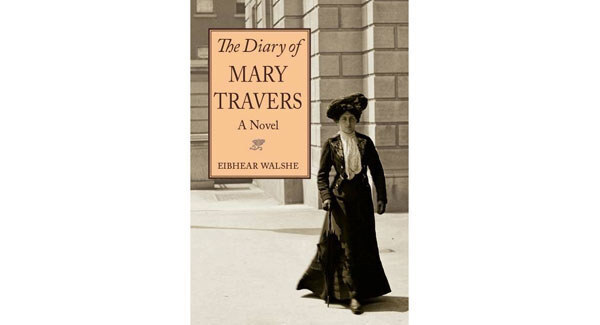
The backdrop to this engaging novel, written in diary form, is the 1895 Oscar Wilde trial at London’s Old Bailey. The trial, reported in a somewhat coy fashion in papers like the Cork Examiner, is of particular interest to Mary Travers, the narrator of Eibear Walshe’s novel.
As Walshe explains his book is a work of fiction based on the real trial involving Mary Travers and Jane Wilde, the mother of Oscar Wilde who was a famous nationalist poet known by the nom de plume, Speranza.
The Wilde and Travers families existed as Walshe has named them and there are a number of other historical characters included like barrister Isaac Butt.
The reason Mitchelstown-based Mary is so preoccupied with Wilde’s trial is her fear that her sordid connection with Wilde’s parents, William and Jane, will be rehashed in the newspapers.
Unknown to those living around her Mary, as a young woman, was the subject of ridicule and disgrace arising out of a notorious court case in Dublin in which she sued Jane for libel.
Jane had written to Mary’s father, Dr Robert Travers, about “the disreputable conduct of your daughter”.
Mary had been having an affair with the philandering William but when his ardour cooled and she learned that he and Jane had a new baby, she behaved like a mad woman scorned, disseminating “offensive verses and placards in which she makes it appear that she had an intrigue with Sir William Wilde,” as Jane wrote to Dr Travers.
Jane also said in the letter (an original document), that Mary was trying to extort money from her husband.
Mary is not a very likeable person but that doesn’t detract from this well-written artifice-free novel.
Granted, as a quiet-living outwardly respectable spinster of 57 looking back with regret on her youthful folly, Mary is a more reasonable and chastened person.
But it is her vivid account of her younger, volatile self that fascinates. She has flash-backs where she is forced to see “an inward image of my young self prowling like a panther through the streets of Dublin...”
An unconventional woman, Mary wrote to make money and later, to wreak vengeance through her poisonous pamphlets on William who dropped her when it suited him. She was naive to the extent that she was fooled not just by William but also by the theatrical and confident Jane.
Part of the reason that Mary is dislikeable is down to her dishonesty.
With plenty of money from the Dublin properties bequeathed to her and the financially canny Emily, Mary appears to be living in the almshouse on false pretences.
She lied claiming that William sexually assaulted her. But in her account of William’s seduction of her, she was more than willing to yield to him.
Later in life, she will lie on oath again when threatened with the “contradictory evidence” she gave at the libel trial which would undermine her reliability as a witness. In other words, the scandal never went away.
A flawed character, Mary is forever haunted.

CONNECT WITH US TODAY



Be the first to know the latest news and updates
















