University management a man’s world, survey reveals
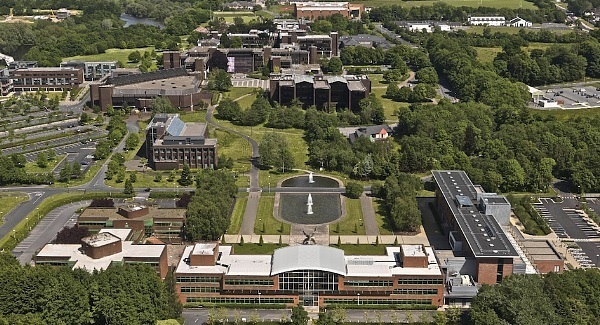
University of Limerick sociology professor Pat O’Connor surveyed 34 senior managers in Irish universities and found that the majority of them believe women are the source of this “problem” and the focus must be on “fixing the women”.
This was the view shared by both men and women who took part in the survey, the findings of which are contained in Prof O’Connor’s latest book, Management and Gender in Irish Education.
“As they saw it, women lacked career ambition; they were poor at marketing themselves, they lacked political skills, and had lifestyles that were unhelpful,” she said.
The women themselves felt their male colleagues viewed them in stereotypical fashion — as challenging, questioning, formidable, awkward, and frightening.
However, the reality was that, in most universities, the people at senior management level reflected the choice of the president, said Prof O’Connor. From this perspective, “his” leadership — there has never been a female president of an Irish public university — was key to ensuring greater gender diversity.
“If you have someone who’s sensitive to the culture of the organisation, and if he’s not sufficiently strong enough to change that, to create a culture friendly to women, the gender composition of the management team is unlikely to change,” Prof O’Connor said.
Rather than try and change the system, there was often a tendency to bury the issue by claiming that women did not want to progress, that they were more concerned with family and caring responsibilities.
In Ireland, there was a tendency to look out more for male colleagues than focusing to ensure women were well-represented, she said. “Not all men are like this, but it can be a bit too cosy in a set-up that favours men,” Prof O’Connor said.
Such a culture was detrimental both to women and the economy, she said, because diversity in management had been shown to increase economic growth and research innovation, a position supported by both the EU and the OECD.
Moreover, research funding under certain programmes, such as Horizon 20/20, the EU framework programme for research and innovation, was contingent on teams being gender balanced.
In her study, Prof O’Connor also found that academic managers who had only worked in the Irish university system were most likely to see women as “the problem”.
However, men who had worked in the private sector or in other higher educational systems were most likely to focus on “fixing the organisation”.
Prof O’Connor said while there had been some positive changes in gender diversity, things had not moved fast enough. “There was a time when women had to choose between marriage or a career,” she said. “In the 21st century, are we seriously saying that this is still the type of world we live in? Other countries find a solution. It’s not rocket science.”
Prof O’Connor said it would be helpful if universities were forced to include gender staffing targets as one of the key performance indicators in their service agreements with the Higher Education Authority.
* Management and Gender in Irish Education will be jointly launched today in the Royal Irish Academy.
In Irish public universities, women make up:
*0% of those at presidential level;
*14% of those at deputy presidential level;
*19% of those at professor level;
*49% of those at lecturer level.