Taoiseach: Babies born out of wedlock seen as ‘inferior sub-species’
It is thought about 35,000 unmarried mothers spent time in 10 homes run by religious orders in Ireland.
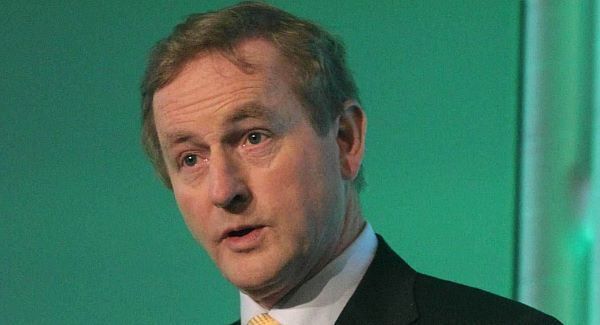
Mr Kenny said the inquiry will probe the shameful past of society rather than apportion blame to any particular quarter.
“This was Ireland of the ’20s to the ’60s — an Ireland that might be portrayed as a glorious and brilliant past, but in its shadows contained all of these personal cases, where people felt ashamed, felt different, were suppressed, dominated, and obviously the question of the treatment in the mother-and-babies homes is a central part of that,” he said.
Mr Kenny said there was a broader question to be answered about the kind of society Ireland was from the foundation of the Free State until the early 1960s.
“This essentially is about the kind of country Ireland was, the kind of country where women in particular were the focus of shame and suppression,” he said.
Mr Kenny said babies born out of wedlock “were deemed to be an inferior sub-species”.
The Minister for Children, Charlie Flanagan, has been charged with determining the scope of the inquiry, in consultation with survivors, campaigners, organisations involved, and parliamentarians.
The setting-up of the inquiry follows the exposure of horrific levels of clerical abuse in dioceses around Ireland by priests; the abuse over several decades of children in institutions, orphanages, and industrial schools; and the use of State-sanctioned, Church-run Magdalene laundries for destitute women.
“I believe that Tuam should not be looked at in isolation because, over the last century, we have had mother-and-baby homes right up and down the country,” Mr Flanagan said.
“It’s absolutely essential that we establish the facts and in this regard it’s a time for sensitivity rather than sensationalism, a time for seeking the truth rather than indulging in speculation.”
Outside of Tuam, three mother-and-baby homes have Little Angels plots believed to hold the remains of another 3,200 babies and infants. They are Sean Ross Abbey, Co Tipperary — where the story of Philomena Lee began — Bessborough, Co Cork, and Castlepollard, Co Westmeath.
Infant mortality rates ranged from 30%-50% in some of the homes in the 1930s and 1940s.
As part of the inquiry, Catholic and Protestant organisations that had any involvement with the homes, or links to religious orders which ran them, are to be asked to open all their records.
Opposition leaders have demanded counselling services be set up for the survivors of the homes and other traumatised by them.
Ashley Balbirnie, chief executive of the Irish Society for the Prevention of Cruelty to Children, said it feared the Tuam revelations are just the tip of the iceberg.
“We as a society are judged by how we treat children,” he said.
“We need to learn from the past and treat our children with the respect anddignity that is their right.”
Tanya Ward, chief executive of the Children’s Rights Alliance, said the inquiryis a first step in establishing the truth about the homes.
“Uncovering the dark history of how we treated unmarried mothers and their children is vital for us to truly acknowledge and understand our past,” shesaid.
“This is the missing piece of the jigsaw.”

CONNECT WITH US TODAY



Be the first to know the latest news and updates