Special report: Nationwide look shows slow progress on ghost estates
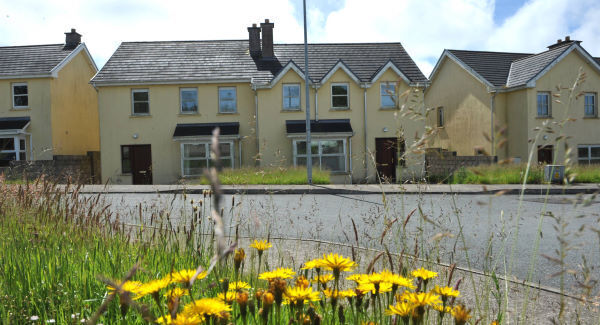
A GOVERNMENT TD who has been trying to resolve problems in one of Irelandâs worst ghost estates has called for an overhaul of the planning process.
âWe must learn lessons from this situation,â Fine Gaelâs Michael Creed said.
âWe should look at the priority of planning conditions when it comes to the construction of estates. I would suggest we should make it a condition of planning that developers put in roads, footpaths, sewers, pipes, public lighting and public green areas first, then lodge a bond, before any house building takes place.â
This would ensure that when houses are being sold, the basic infrastructure would already be in place, he said.
It would also ensure that if development companies collapse, the state and local authorities wouldnât have to foot the bill to bring unfinished estates up to standard, he added.
Mr Creed was speaking as work finally begins to end the six-year nightmare for the residents of Carrigrua Estate, near Ballinagree in Co Cork.
The Government has sanctioned a âŹ160,000 grant to help fund remedial works in the unfinished estate near Macroom. Some minor health and safety works have been undertaken in recent weeks.
But residentsâ spokesman, Michael Cummins, said it is vital that the momentum which has built in recent weeks continues, to ensure that the major work is done, bringing this sorry tale to an end.
âThey put a lip of tarmacadam around the manholes to stop them damaging the suspension on our cars,â he said.
âThey also gave us a lip of tar up to the driveways of the occupied houses, and they cleared the overgrown area. But weâre still waiting for the clearance of overgrowth in the large green area, and for street lights.
âWhile weâve seen some action on the ground, negotiations are ongoing on an overall site resolution plan for the estate.
âSo while we wait for that, weâre still effectively in no manâs land. Weâre just hoping and waiting to see when theyâll do the major stuff.â
The 22-house estate was developed from 2008 on by Old Friary Developments. Of the six houses bought initially at the height of the boom, four are privately owned by owner occupiers.
The ownership of four more is understood to be linked to individuals associated with the development company.
Cork County Council bought four of the houses, but withheld the payment of up to âŹ70,000 pending completion of the estate.
But the development company collapsed during the crash and the estate was left unfinished, with the remaining eight houses left unoccupied.
The collapse of the firm triggered a litany of serious issues with the unfinished estate.
The street lights were stolen about three years ago. The unoccupied properties were burgled for copper piping.
Earlier this year, the residents commissioned chartered engineer, Kevin McDonnell, to conduct a preliminary engineering report on the estate.
He found a litany of chronic structural issues with the unoccupied houses, including subsidence and cracked gables â and deemed the houses unviable and said they should be demolished.
Some cold water storage tanks collapsed the underlying bearing joists, which suggested that inadequate floor joists were used.
External plaster-work was found to be âwholly under specification or that pyrite was present, or a combination of both existsâ.
He found trip hazards from elevated manholes, trip hazards at all driveway entrances, open excavations, exposed live electrical wiring, electricity pole support-stays bolted directly to the centre of footpaths, unprotected electricity transformer stations, no street lighting, vermin infestation, and retaining walls at risk of collapse.
He also found incorrect and faulty wiring on the electrical installation and heating systems, a 225mm diameter foul sewer not working correctly, and driveways built at too steep an incline.
A receiver has been appointed to work with AIB to resolve the issues.
It is hoped that through negotiation, the estate will be brought up to a standard that would allow the county council take it in charge.
Mr Creed, who has been working to resolve issues in the Carrigrua Estate for some time, and who is working to resolve similar issues in another ghost estate in Tarelton said no two ghost estates present with the same difficulties.
âThe challenge is to find a way through in each case and prepare a site resolution plan. It has taken time in these two cases, but we are no getting there,â he said.
A vast dump in the centre of one of Cork cityâs worst ghost estates, the Meadows in Hollyhill, which was highlighted by the Irish Examiner last year, has been cleared.
But residents said while there has been some progress, it has been painfully slow, and a lot more needs to be done.
âCanât fault houses but place is an eyesoreâ

LONGFIELD Park in Boherlahan is a fine example of 40 or so well-built houses, nicely designed and placed in a peaceful village setting.
However, only seven of those homes are occupied.
Last year, the few residents there are in this picturesque corner of western Tipperary, a few kilometres from the heritage town of Cashel, were angry about the prospect of having to pay the Governmentâs new household charge when theyâve been left in a development of mostly empty houses, replete with rubble, unfinished roads, and without street lighting.
âA year on, nothing has changed, except that the initial property tax of âŹ100 was waived,â says Marcella Kennedy who moved into a lovely three-bedroomed home in Longfield Park back in 2009.
âGoing forward, we have to pay every other tax.â
Along with the 40-odd houses which were constructed in this estate by a builder who has since died, there are four sets of foundations laid which are unlikely to ever see a concrete block.
Four of the houses here are owner-occupied while another three are rented but with so few tenants in all, they donât have sufficient people to form a decent residentsâ association to try and improve things themselves and club together to pay for some services.
âWe havenât even got the grass cut. Thereâs not enough of us to form a committee or anything.â
According to Marcella, those few like she and her husband SeĂĄn who bought houses in 2009 were assured there was a bond in place from the development company responsible for Longfield Park.
However, thereâs been no sign of that bond being released by the council to allow some completion work to be carried out. The houses consist of three-bedroom semi-detached, three-bedroom semi-detached with sunroom, and four-bedroom detached properties.
âWe moved in five years ago and itâs the same now as it was when we moved in. The same amount of houses. The work had just stopped.â
Like many in similar unfinished estates around the country, where site works stopped in late 2008 or sometime in 2009 following the collapse of the economy, the residents here have been in limbo ever since.
âUntil itâs handed over to the council, they canât work on it and as far as we know the property company havenât handed it over.â
She says that, with the development basically being allowed go to seed since 2009, âitâs got to the stage where itâs dangerousâ by now.
âI donât have children, but if I did I couldnât leave them out. Thereâs rubble, concrete blocks, rocks, the grass is overgrown. They donât even know where theyâre walking. Itâs very dark at night. Itâs OK now in the summer but in winter, you could be coming home at five oâclock in the evening and itâs totally dark because we donât have street lighting. I canât fault the building of the houses themselves, itâs fantastic, but the place is an eyesore.â

THE flurry of excitement and joy when residents moved into The Mills in Lismore, Co Waterford, in the latter years of the Noughties turned to a near-nightmare in the subsequent months â and now, in mid-2014, dashed hopes and broken promises are all they have to show for plans to complete their development.
A year ago, residents spoke of their despair at the dangers of their unfinished estate as a result of uneven roads, rubble, the possibility of vermin, antisocial behaviour and even fires started at empty houses.
In the meantime, thereâs been little more than a âfalse dawnâ, according to Ray Murphy who has lived at The Mills, just a few minutes walk from the centre of the famously attractive town of Lismore, for four and a half years. âI came in at the top end of the market, like everybody else, and was screwed. Screwed a number of times.â
A tender was put out by Waterford County Council to finish the estate but, as far as the residents could see, little if anything resulted from that process and theyâre still no better than they were a year ago.
âApparently thereâs a bit of movement now with the properties, they think. Nama are considering this as an asset so theyâre going to try and finish the estate. Thatâs what we hear. But things havenât changed on-site since last year. We purchased a ride-on lawnmower to keep the place tidy â thatâs about it.â
About 30 of the estateâs 40-odd houses are occupied and the residentsâ association is âpretty goodâ, but thereâs only so much they can do.
Because there is space in the middle of the development which was originally earmarked for houses, but has remained empty, the residents are likely to end up with a bigger green area than they ever expected.
An unexpected bonus, perhaps, if things ever get moving again.
âItâs going to be massive. Itâs never going to be built on. Thereâs two houses down the back of the estate and theyâre going to be finished. At least they think theyâre going to be finished. But after that, the whole thing is going to be a big green area. Maybe we can have the grassy area and set up a little bit of a park on it?â
For now, however, the residents consider The Mills to be in âlethalâ condition, Ray says. âItâs still dangerous. Thereâs potholes there and young kids going around on bikes. Iâm surprised one of the kids hasnât come off a bike yet⊠The main problems are the road surface, the potholes, craters all over the place [and] thereâs a possibility of vermin and rodents in and around the unfinished areas because thereâs a big waste area.â All it needs to turn The Mills into a completed development is âa bit of a kickâ, according to Ray Murphy but while thereâs been much talk lately about the council or Nama making a move after more than four years of waiting, nobody is holding their breath.
âWeâve heard it before.â
A LARGE amount of work still remains to be done in unfinished estates throughout Kerry, where more than 50 such locations were listed, in 2013.
While there have been calls for âtough and firm actionâ in relation to completing work on estates, Kerry County Council says getting money released from bonds lodged by developers now in liquidation is a slow and difficult process.
Forty bonds have been paid up and all estates have been surveyed on more than one occasion by the councilâs estates unit.
âWe know what needs to be done, but in some cases getting money from financial institutions can be painstaking and incremental at times,â said council spokesman Padraig Corkery.
Clearing up the mess left behind by developers involves, primarily, work to make estates safe and includes road repairs and surfacing, footpaths, drains and sewers, public lighting and general tidying up. Sewage treatment plants have to be provided, or replaced, in some cases.
The distressed estates can be found in towns and villages and, sometimes, in rural areas. The council hopes to have a lot of the work carried out by the end of this year.
At the height of the boom, people paid up to âŹ230,000 for semi-detached houses in these estates, but some of these houses have been resold for a fraction of that price due to the condition of the estates.
One of the stand-out eyesores is just outside Castlemaine, on the main tourist route from Killarney to Dingle, and 14 houses there were sold at an auction of distressed property in Dublin, in 2012, for âŹ235,000.
The property is on a 1.22 hectare site at Annagh Banks, Castlemaine, and planning permission had been previously granted for a 12-bedroom hotel, apartments and a restaurant on the site.
Ongoing problems in the Killarney area are being highlighted by county councillors in response to complaints from residents frustrated with the lack of progress.
Estates in the Castleisland, Kilcummin and Firies areas are being singled out, amid concerns about inadequate sewers and sewage treatment systems, especially, and delays in getting work finished to the standards required under planning conditions.
The small village of Firies, in the heart of the county, saw huge housing development during the boom, but local services are inadequate to meet the demands of the resultant population increase, according to local councillor Brendan Cronin. âIâm looking for tough and firm action by the council to resolve these matters,â he said.
He is dissatisfied with a âŹ185,000 offer to the council to complete work at Greenfields, in Firies, which, he pointed out, was considerably less than âŹ300,000 bond lodged by the developer.
The council is involved in protracted negotiations with banks, receivers and Nama in relation to several estates.

RESIDENTS of an unfinished housing estate near Tralee, Co Kerry, have vowed to continue their seven-year battle with a local authority to have works completed.
Though Kerry County Council maintains it has carried out âsignificant worksâ, including the replacement of a sewage treatment unit and pumping station, the residents of Radharc na hEaglaise in Ardfert are not fully satisfied.
Conditions at the neatly planned, seven-house estate, 1km outside Ardfert village, were highlighted in the Irish Examiner a year ago and, since then, the council has done work to resolve storm water drainage and finished the access road to a high standard.
The estate, made up of detached houses on spacious sites, looks much better, but is still without public lighting â though poles have been erected â and residents also want a proper boundary fence. The stone-faced houses were purchased for prices ranging from âŹ350,000 to âŹ430,000 during the boom, but are now worth substantially less.
Residentsâ Association chairman Aidan Walsh said they were happy with work on the access road. From their point of view, there should be no obstacles to completing work and they had signed over the estate to the council.
âBut, weâre finding it very difficult to make further progress with the council. We regard public lighting as a security and a health-and-safety issue. Weâre left in pitch darkness at night and itâs terrible during the winter months,â he added. âWe were told some time ago that whatever money was left after work on the road and drains was done would go towards lighting and the boundary fence, which was never put in properly.
âAn old drain which poses a danger to children also needs to be filled in.â
Mr Walsh, who said they were now âtotally frustratedâ in their efforts to maintain contact with the council and were finding it difficult to reach officials, commended local Ardfert councillor Toireasa Ferris for her ongoing efforts on their behalf.
According to the council, the developer left significant works outstanding in Radharc na hEaglaise, including the sewer network and sewage treatment unit.
After long negotiations with a financial institution, the bond was finally released and significant works carried out, which included replacement of the treatment unit and pumping station.
âThis has now resolved a very significant health issue,â said a spokesman.
He said the process had been extremely slow, with the councilâs housing estates unit pressurising AIB over a number of years to try and release the bond to allow the council bring the estate up to an acceptable standard for the residents.
âIn some instances financial institutions have been exploring the possibility of carrying out the works themselves, but this did not happen in this case,â he said.
Crucially, the issue of public lighting does not apply as the estate is in a rural area, he went on.
As it was the councilâs policy not to install public lighting in rural, cluster estates such as Radharc na hEaglaise, the council was not in a position to maintain public lighting in such rural estates.
The spokesman also said that, in relation to the fencing, what remained of the bond after carrying out the significant works already mentioned would not allow for new boundary fencing.
âWeâre hoping to move in next Septemberâ
RESIDENTS of one former Co Clare ghost estate are looking forward to moving into their homes in September.
Michele Burke and William Buck, along with the owners of two other homes at the Ard na Deirge estate in Killaloe, have endured an eight-year-long nightmare that prevented them from moving into their homes.
The builder constructing the estate went into receivership. AIB took possession of the estate through the receiver, but with no electricity, water services nor street lighting, the residents were unable to move in.
However, after Limerick building firm, Cherryfox Developments purchased the homes from the receiver for a knock-down price earlier this year, services to the houses are now being connected.
âWe never wanted to live in a ghost estate. At the moment with the work done by the developer, John Walsh, the estate is looking amazing,â said Ms Burke.
She revealed that all of the built homes that were recently put up for sale in the estate have sold.
âThe 14 were sold in a week-and-a-half, so we are delighted that we are going to have lots of neighbours and there is a very good mix of people as well.â
Ms Burke said the homes sold rapidly âbecause the developer wasnât greedyâ.
She said that the three-bed semi-detached sold for âŹ145,000 with the four-bed detached selling for âŹ160,000.
âWork is ahead of schedule so we are looking to move into our home in September and the rest of the residents will be able to move in a month later.â
She said Clare County Council had played a very prominent role in resolving issues around the bond that has allowed Cherryfox Developments complete the estate.
The couple had been in a legal limbo concerning the home they purchased in September 2006 when both were aged 27.
However, in spite of being unable to move into their home, the couple had to maintain mortgage repayments and Ms Burke confirmed that since 2007, they have spent âŹ273,000 on their mortgage, along with âŹ46,000 on renting a nearby apartment. Ms Burke said they have paid âŹ1,400 per month between mortgage payments and rent all that time giving a total spend of âŹ319,000.
âThe whole thing has been horrendous, but it has made us very tough and very strong and it has also made our marriage stronger. Also, the support from the community has made our lives much more positive.
In April of last year, 80 supporters joined residents at the site to protest at their plight where the protesters heard Ms Burke say that âwe have been to hell and backâ over the home.
This troublesome ghost has been banished

THE ghost which lurked over the Glenduff estate in Kilfinane, Co Limerick, has been banished. Tony Clancy, one of the residents, says he and his wife were lucky in that they bought their detached house for âŹ200,000 in 2009.
âIt was priced at âŹ360,000 when it was built,â he says.
But they were left with unfinished roads and footpaths.
A year on, all has changed and for the better.
âWe have gone from the Third World to the First World. Everything has been sorted out. We have got a new road in the estate, the footpaths have been repaired, and all four houses in the estate are occupied.â
Problems in the estate, he says, mainly centred on the roadway which was not properly laid. âIt was in the same rough condition as when the estate was being built. The footpaths were not fully finished.â
Tony says the residents took steps to improve the place. âMyself and neighbours did our own work to clean up the place. We also cut the grass and this was the best we could do and put an effort to keep the place.â
Local postman Peter OâSullivan was the first resident to move into the estate in 2008. âTwo of my children are very young and I couldnât allow them out because there was rubble. We tried to maintain the road ourselves with a load of gravel we bought,â he says.
But now the estate has been sorted out and residents are happy that outstanding issues have been resolved.
WHILE things have not changed very much in the Cluain Dara estate on Limerickâs Ennis Rd, residents are confident that ongoing dialogue with Limerick City and County Council will yield results.
The estate has a temporary sewerage system, although the homeowners were guaranteed a full gravity-fed arrangement was contained in planning permission. All houses have been completed.
The residents are hoping the council will take the estate in charge and resolve issues such as inadequate public lighting and poor fencing of an open area which adjoins a main road, and where children play.
A builderâs bond has been handed over to the council and discussions are ongoing about how much work can be done with this insurance cover.
Pat OâNeill, who works in the engineering department at Analog in Raheen Industrial Estate, bought a detached house in Cluain Dara six years ago for almost âŹ500,000. Continuing efforts to replace the temporary sewerage system have failed and he says it is now unlikely they will get the system specified in the planning. Mr OâNeill said the relocation of the sewage pump house to a more secluded location would be of great help and he is confident that things are moving in the right direction.
âThe council have been very positive in their dealings with us and have been very forthcoming with information as to where things stand. I understand they are in talks with the insurers on the bond and how much work can be done with this.
âOver the past year things have moved on and dealing with the council is not like dragging teeth. They are very open and we are keeping pushing. If the estate was taken in charge we have a list on sewerage, signage, lighting, and proper fencing of an open area.â
Mr OâNeill said they are not very confident that they will get the sewerage system as set out in planning, but if the estate is taken in charge they will have an agency, the council, to turn to.
âWe need clarity on who to go to if a problem arises and things have moved on due to the better communication between the residents and the council.
âThings have slowed down, and we need to keep pushing, but we are very encouraged by the approach of the officials we have been dealing with. Things are moving in the right direction in getting the estate taken in charge by the council and we expect to get results.â