Shatter must answer questions over Dáil omissions
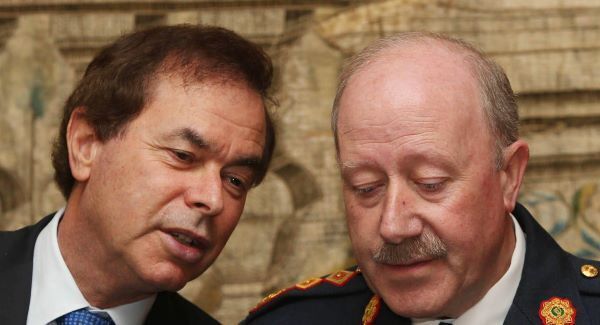
“I was told the story that I told the Dáil.”
Alan Shatter’s latest attempt to end the controversy over surveillance at the garda watchdog is based on his claim that the information he gave to the Dáil on Tuesday was the same as what he was told by the Ombudsman the day before.
“I set out in the Dáil the information furnished to me,” he told RTÉ’s Prime Time on Thursday night, arguing that a written brief, provided to him by the Ombudsman, backed that up.
Furthermore, he said the evidence given by the Commissioner Simon O’Brien to the Oireachtas Oversight Committee on Wednesday was “a little confused”.
And for that reason, he said, he was writing to the Garda Síochána Ombudsman Commission “requesting that these matters be clarified”.
The minister also provided that document, on a strictly confidential basis, to the chair of the committee, Sinn Féin’s Pádraig Mac Lochlainn.
His reading of it, though, left him with “heightened concerns” as he told RTÉ’s Morning Ireland yesterday.
So just how close was the account given to Mr Shatter by the Ombudsman on Monday to that which he in turn gave to the Dáil the following evening?
This is a question on which the Justice Minister has staked a lot of credibility. And the answer says a lot about how the Government has handled the issue.
Firstly, it’s important to note that the document did conclude that “no definitive evidence of unauthorised technical or electronic surveillance was found”. This point was one the minister did tell the Dáil.
The commission’s written submission to the minister also failed to directly state that they suspected they were under surveillance — something that Mr O’Brien did tell the committee.
But there are other relevant details in the document that Mr Shatter completely omitted from his Dáil statement.
(1) The first of these relates to the test for bugging on the boardroom telephone which found two possibilities. Either (a) By pure co-incidence, a wrong-number call was being made to it at that moment — at 1am — when the test signal was put down the phone line, or (b) there was some interference with the line.
The report furnished to Shatter said while GSOC “could not rule out the possibility that an innocent call was made”, the chance of this was “so small to be virtually zero”.
This piece of information was left out of the minister’s speech when he told the Dáil that “there is no evidence of any phone call made or received being compromised”.
(2) The second point of information from the Ombudsman, omitted from the minister’s speech, was that the level of technology involved in simulating a UK 3G network is “only available to government agencies”.
This forces a phone to “disable call encryption making the phone data vulnerable to interception and recording”, it explains.
The document did say, however, that it could not rule out that the device was being “lawfully used” somewhere else in the vicinity of its offices on Dublin’s Capel St, for example in efforts to counter subversion or organised crime.
(3) The third, most significant omission, was that GSOC, on October 8, invoked section 104 (2) of the Garda Síochána Act. This allows it to investigate any matter that “appears to it to indicate” that any member of the force “may have committed an offence or behaved in a manner that would justify disciplinary hearings”.
This decision was made after the assessment of two threats by the specialist firm. “The acting director of investigations was of the opinion that, to the extent that these threats could be proven .. such surveillance may have originated in An Garda Síochána.”
The minister has not satisfactorily explained why he did not give this information to the Dáil, and instead said the force had been the subject of “completely baseless innuendo”.
He referred to an “investigation” but failed to mention that this section of the act was being used when he said there was “no specific concern” that led to the initial sweep which was “routine” and “of the nature that had occurred previously”.
Mr Shatter has since pointed out that, under the legislation, the office should have informed him that they were beginning such a public-interest investigation.
But if he accepts the legitimacy of this section of the Act being used — even if it does not find any conclusive evidence — then he should not think that its use amounts to innuendo.
The minister told Prime Time: “My objective and my only objective was to tell the Dáil the truth of what I knew about these matters.
“What I knew about these matters was based on the brief I got from the chairman of GSOC and also from the written submission that they made to me.”
The cabinet, too, was briefed on Tuesday based on what was in this document, but a spokesperson was unable to confirm whether or not ministers were given a copy.
It would be a stretch to say that Mr Shatter mislead the Dáil. But he was certainly selective in the information he imparted. The fact that he made three major omissions can only add to questions being asked as to why the Government has done all it can to play down the significance of surveillance concerns.
It is now more important — in the interest of our democracy — that the minister explain whether he had good reason for these omissions — rather than asking GSOC to come out and explain its “little confusion”.

CONNECT WITH US TODAY



Be the first to know the latest news and updates