Poor communication between crew blamed for Aer Lingus incident
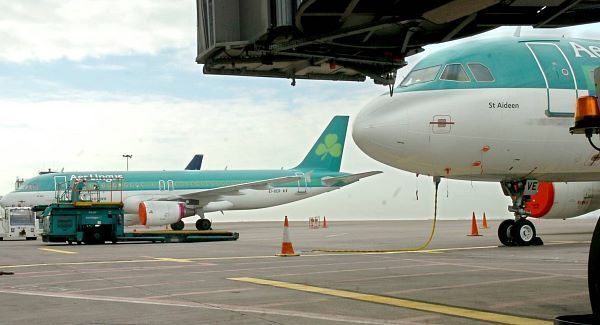
The crew member who broke her ankle said she had “a feeling of being lifted off her feet and then pushed down to the floor of the cabin” when the Airbus 320 pitched suddenly during a flight from Milan in 2012. There were some 62 passengers on board. No one was injured.
Another crew member told investigators she was working in the forward galley with a catering cart when the aircraft pitched. She described experiencing “an enormous pressure, with a feeling of being held down with symptoms such as ringing ears, numb limbs, and seeing black spots”.
She then saw other crew members were on the floor. She immediately contacted the cockpit, where the first officer initially expressed disbelief at her account.
However, a passenger announcement was made seeking a doctor and the injured cabin crew member had her ankle put in a splint. A PAN (urgent) call was made to air traffic control seeking priority landing.
After landing, the injured cabin crew member and three colleagues were taken to hospital. Tests showed her ankle was broken. The other three were later discharged.
The pilot actions that led to the plane pitching on the flight on September 7, 2012, were as a result of poor communication between the flight crew, according to investigators.
Essentially, the aircraft was cleared to descend to 34,000ft (flight level 340), but the pilot inadvertently entered a flight level of 24,000ft in the flight control unit altitude window. The first officer had read the correct level to the pilot but this was not immediately recorded. It then transpired that the first officer logged the incorrect level based on what he saw in the altitude window. When the error dawned on him, he checked back with air traffic control and the pilot then became aware of the mistake.
The pilot said he tried to take corrective action and level off the plane, but when that did not work, he disconnected the autopilot and tried to level off manually, during which the aircraft pitched significantly.
Investigators said the “probable cause” of the incident was “an abrupt manual pitch input” which resulted in higher than usual G-forces being experienced by cabin crew members and a “contributory cause” was “unclear communication between the flight crew when confusion arose over the cleared flight level”.
They recommended that Aer Lingus review training programmes and procedures “to ensure that its flight crew are familiar with the use of levelling off procedures and the risks associated with manual flight control input during high altitude operations”.
CONNECT WITH US TODAY



Be the first to know the latest news and updates