Paying 135 years of respect to Knock
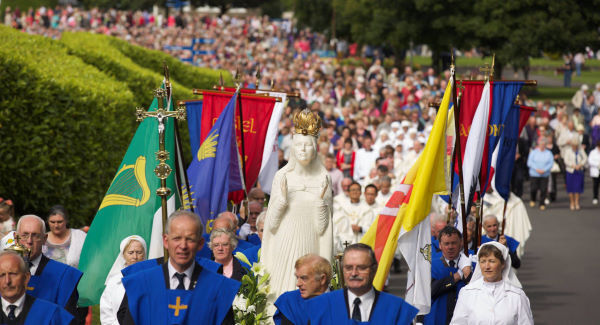
AS Knock Shrine celebrates 135 years since 15 local people reported seeing a vision of the Blessed Virgin Mary, the popularity of the Mayo shrine shows no signs of waning, despite a significant shift in Irish religious habits.
Upwards of 150,000 pilgrims â some of them from overseas â will descend on the small village to celebrate the annual Knock Novena. Annually, the shrine welcomes more than 1m visitors. Itâs a curious thing about Knock that even those who donât attend Mass regularly find something there.

The shrine occupies a very special place in the heart of Irish Catholicism. When now-saint Pope John Paul II visited Ireland on his historic 1979 trip, he described Knock as âthe goal of my pilgrimageâ.
People come to Knock for a variety of reasons. Some donât even know why theyâve made the journey. Speaking to pilgrims this week, under the shadow of the towering basilica, some of the words that spontaneously come to their lips are âspiritualâ, âpeacefulâ, and âspecialâ.
One woman tells me that she has come in thanksgiving after successful treatment for cancer. Another man is here for thanksgiving too, but heâs a bit more cryptic. âOur Lady helped me out of a hole recently,â he says. âSheâs never let me down.â Another young woman says itâs simply âa special intentionâ.
The diversity that immigration has brought to the Church in Ireland is evident, with Catholics from Central Europe, Africa, and the Philippines mingling with the native Irish.
In a certain sense, Knock is not like any parish church in the country. Thereâs a great anonymity here. As people wander around â some saying the Rosary, others just contemplating â no one is taking their names or asking them any questions. Knock is a place where people can follow the traditional pilgrim route or walk to the beat of their own drum.
An elderly priest tells me that he has been coming to Knock to hear confessions for many years. Near the basilica is the chapel of reconciliation, where priests are on hand to hear confessions and work closely with an on-site counselling service for pilgrims who need more than the consolation of the Sacrament.
For many, Knock is a place of healing: Reports of physical healings are rare, but the same elderly priest tells me story after story of people who have come to Knock burdened and despairing and find rest for their weary souls at the shrine. He tells me one story of a woman who has felt alienated from the Church for almost 40 years after a bad experience with a priest. âSomething brought her to Knock,â he says. âAnd here, years of hurt and pain flowed out. Thatâs the thing about Knock â it takes everything â you can leave all the pain, disappointment, and self-doubt here.â
Knock is fairly unique in sites where visions of the Mother of God have been reported. At Lourdes and Fatima, for example, there were clear messages. At Knock, there was silence, the witnesses record that Our Lady appeared with St Joseph and St John the Evangelist. At their side was an altar with a lamb (in Christian tradition, Jesus is often depicted as the Lamb of God).
So, 135 years and a thriving airport later, Knock still has an appeal and, despite a changed spiritual landscape, I suspect always will. Of course there will always be sceptics, but, perhaps, both doubters and believers have something in common after all: For the doubter, no explanation is possible, while for the believer, no explanation is possible.
*
- On the evening of August 21, 1879, 15 local people in the village reported seeing a vision at the gable wall of the tiny parish church at Knock;
- Church leaders originally expressed scepticism, but a commission of inquiry later accepted the witnessesâ testimony as âtrustworthy and satisfactoryâ;
- During his visit in 1979, Pope John Paul II presented the shrine with a golden rose, traditionally a symbol of papal approval;
- One of the best-known figures associated with Knock was the ebullient Msgr James Horan, who built the airport in a bid to attract more international pilgrims to the shrine.