NTA: Laws to regulate rickshaws are unworkable
The organisation does not believe it would be able to legally enforce regulations introduced under the wording of the new law.
Section 31 of the Road Traffic Act, 2016 gave the NTA the legal powers to make regulations governing the use of “non-motorised passenger transporters in towns and cities.” The section was introduced to the legislation as an amendment proposed by Sinn Féin.
In a briefing document prepared for Dublin City Council, the NTA said it reviewed the wording of the legislation and believes it “doubtful that robust, and legally defensible, regulations governing rickshaws can be made” under Section 31.
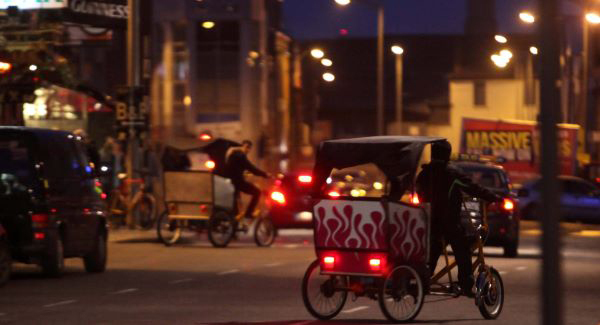
Several hundred rickshaws operate in Dublin city centre on weekend nights, despite growing concern by the local authorities that the sector is unregulated.
The NTA said the wording of the act does not allow for the regulation of rickshaws with an electric motor.
“This type of rickshaw would be outside the definition provided and would, therefore, remain unregulated, negating the objective of the amendment,” the NTA said.
The commencement of Section 31 could render other existing bylaws, governing such things as jaunting cars and horse-drawn hackneys, invalid. An NTA spokesman said that the new legislation does not define “towns and cities” and that this is a problem.
Crucially, the NTA said there was no stipulation in the new law that a breach of any regulation would be an offence.
“Without such a provision, the NTA may be able to make regulations, but would have no means of enforcing them,” the spokesman said.
He added: “No fine could be issued, and no prosecutions taken for any non-conformity with those regulations. Such an approach would be ineffective.”
The NTA acknowledged that there were difficulties in developing “robust, effective, and legally defensible” regulation of the rickshaw sector.
A spokesman for Transport Minister Shane Ross said the minister needs to take further legal advice on the implications of Section 31, as it has not been drafted by the office of the parliamentary counsel, or approved by the office of the Attorney General. “It is not the minister’s intention to commence Section 31, before the legal position is clarified and consideration is given to the NTA’s proposals,” the spokesman said.
One option is that all rickshaw drivers could be required to be licensed, insured, and to undergo background security checks.
Speaking in the Oireachtas transport committee last month, Mr Ross admitted there has been “untoward delay” in regulating the sector.
CONNECT WITH US TODAY



Be the first to know the latest news and updates