‘Lobbying is a way of life’
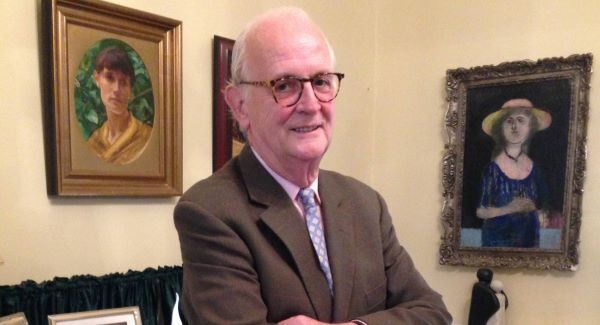
After all, this is the doyen of spin, an ex-government press secretary who was Charles Haughey’s ‘enforcer’ and managed to get Bertie Ahern elected taoiseach three times. What could one journalist emit from such an experienced spin doctor who has crossed the Rubicon, so to speak, gone on to work as a lobbyist and now travels the world as a director for a telecoms firm.
Sharply dressed and welcoming, Mara leads us into his drawing room adorned with portraits and photographs of himself with politicians such as Bill Clinton.
Next week, he’ll fly off to Papua New Guinea and he regularly jets out to the Caribbean for work for Denis O’Brien’s Digicel. Such is the life of a retired septuagenarian who recently became a father again after a young lawyer he was seeing gave birth to a baby girl.
Over a two-hour interview, where he smokes throughout, Mara discusses the future of Fianna Fáil, the party he brought to election victory three times during the boom years; the prospect of his former political bosses being grilled by a banking inquiry; his opposition to the Government’s planned lobbyist legislation and how, as a public affairs consultant, he gained access to the very heart of governments.
As a lobbyist, Mara worked with John Magnier and Coolmore Stud, and Ryanair. In 2003, he helped Coolmore successfully lobby against an incinerator in Tipperary but was less successful with Ryanair’s bid to have its own terminal in Dublin.
“They should have been allowed do it, it would have saved the State millions [of euro].”
The Coalition intends to publish legislation regulating the lobbying of politicians and civil servants by the autumn. It wants a register and code of conduct for lobbyists, the monitoring of politicians and fines and jail time for those ignoring the regulations.
Mara points out, and rightly so, that trade unions, farmers, sports groups, NGOs and even TDs act as lobbyists. It is a skill practised in all parts of society, including for commercial groups, he argues.
“I don’t see any problem with businesses, whether they be bankers or manufacturers, lobbying... to have legislation done in the best way. Politicians and bureaucracies don’t always get it right.
“I knew people and had access to them and could talk to them. Some said I could just go into the members’ bar and park my car in the Dáil, that’s all rubbish. On behalf of a client, you go in and state your position and make the arguments.”
He says the value of the big PR firms today is limited. Many are useless, he argues, adding: “They issue press releases, which get thrown in the bin. You must know people. Unless you have a standing, a reputation, a network, a track record…” Oftentimes, it was not the politicians but the chief civil servants who were best to approach when lobbying, he explains.
“If an issue propped up, you’d need to speak to an official. You’d go and see them. Sometimes you win and sometimes you don’t because usually the civil servants say ‘we’ve considered all this’. And then [you] make the case through the media.”
Public Expenditure Minister Brendan Howlin says the lobbying legislation will rebuild public trust in politics by throwing light on its interaction with those who seek to influence policy across society.
There will be a regulator of lobbyists, a register, a code and former politicians will be barred from lobbying for a year under the rules.
Irrespective of the new rules, Mara says civil servants and those at the heart of government are increasingly less likely to record information about sensitive meetings.
“Civil servants, as I understand it, are putting less and less stuff on emails. If you’re talking to a senior politician, you don’t write to him.
“I wrote very little when I was government press secretary. I think when I was leaving I got a floppy disk with about two letters on it.”
Several contemporaries of Mara’s have become major lobbyists, including Bill O’Herlihy (the tobacco industry), former TD Jim Glennon (chairman of Edelman PR) and former election strategist Frank Flannery (Insight Consultants). New rules to regulate consultants don’t impress the candid-speaking Mara.
“I think it’s probably bullshit, I don’t know. It certainly would cut out a lot of peripheral people who are going in chancing their arm.
“If that’s what they want to do, away with them [the Coalition]. But it’s still not going to stop people having quiet words in corners.
“In Europe, it’s a free for all. People are in and out of the commission every day. There are huge PR and lobbying companies.
“ Ultimately if it’s a government decision, it will be taken by them on the advice of their officials.
“If someone wants to pop something into that for their consideration, I don’t see it needs heavy-handed legislation.”
“If you have a free society and you have a parliament and an executive, the public service, local government. I don’t see anything wrong, whether they’re bankers, industrialists or whether they’re trade unions or farming groups lobbying to make their position clear.”
The bill will define lobbied individuals as ministers, TDs, senators or their staff, councillors, special advisers, ombudsmen, comptroller and auditors general as well as senior civil and public servants. Direct and indirect communication with these individuals will be subject to “registration”, says Mr Howlin.
Effective lobbying in recent years has included from the IFSC Clearing House Group, headed by the government’s chief civil servant Martin Fraser. The body, representing multinationals like KPMG and Bank of America, promotes the financial services sector and managed to secure key changes to the 2012 Finance Act for foreign executives moving here to get generous tax relief on their income, travel costs and education fees for their children.
Mara, like many others, supports firms’ rights to lobby and effect change to the tax laws.
“They want to reduce paying their taxes, just like everybody else. But they’re a huge employer. It’s a very competitive world. We’re[Ireland] in competition with other jurisdictions. I go to places like Bermuda and I go to Cayman Islands. I talk to government there and they say ‘oh we’ve lost business here re insurance or whatever it is’. And [I ask] ‘who are your competitors?’ “The reply is ‘Canada, Switzerland, Dublin’.”
As well as his brief period as a senator in the 1980s, Mara was also a political adviser to Taoiseach Charles Haughey. Their relationship — the Haughey/Mara ‘double act’ — was immortalised in the satirical radio sketches by Dermot Morgan on Scrap Saturday. Mara went on to successfully lead the party’s election campaigns in 1997, 2002 and 2007, where Bertie Ahern was taoiseach.
Despite working mainly in business now, Mara keeps in contact with senior party figures, including leader Micheál Martin, who in January will have been in charge for four years. Talk of a heave is rubbish, insists Mara, who feels Fianna Fáil has the potential to make a huge comeback despite 2011’s bruising general election.
“Fianna Fáil’s now the biggest political party in this country. Fianna Fáil has a membership in the last few months paid-up of €20 a head of 20,000 members. In the next 12 months, they’ll have 30,000 members. There is no party in this country that has that kind of activity level. Fianna Fáil can be the biggest party in this country at the next general election.”
Labour have “bedrocked” with just 8% support in a recent poll, Mara suggests, while Sinn Féin’s voters are there for the taking.
“The Shinners’ best day ever was with Martin McGuinness getting 14%. We can take a chunk of that vote and add it to our support. It’s a mixture, Republican voters, blue collars, working class areas of Dublin and around the country.
“Those jokers of Independents, the Mings [Luke Ming Flanagans] and your man below in Wexford. They’re 20 something [percent support]. But good young candidates competing with them…four or five more points there to be taking [for Fianna Fáil].
“[Micheál] Martin’s done a great job. He’s well respected, he’s a serious politician. He thinks about his politics. He’s not a knee-jerk guy or plays to the gallery. He’s serious and well educated and very likeable.”
A key factor in the party’s resurrection will be persuading voters Fianna Fáil was not solely responsible for the crash. Plans for a banking inquiry should be pushed by the party to repair its image.
“Let all the guys come in, let the chips fall where they may because Fianna Fáil weren’t in government in the United States, they had a meltdown. FF weren’t in government in Greece or Portugal or Spain or Italy, they all had meltdowns.
“Why did this happen? Let’s have the last government in, let’s have the secretary generals of the department of finance in and officials responsible for monitoring the banking procedures. Let’s have the governors of the central banks and regulatory bodies and their officials.
“Everybody with a supervisory role. Bank directors, lending officers and treasury people…I don’t believe for one minute…the government had a certain amount of culpability because they were ultimately responsible. But the advice they were getting, reports from beneath and around them from the banks, all these jokers…and let’s have it out the pressure the ECB put on [Brian] Lenihan at the time.”
Former government members should tell all, including those in power leading up to the meltdown and during it, Mara maintains.
“Brian Cowen’s problem was that he never had a narrative to explain to people what was going on in the world, in that period leading up the whole collapse.
“When Lehman’s collapsed…the Government went into its shell, it didn’t say to people, there’s a problem coming down the tracks. It didn’t communicate with them.
“The banks weren’t telling him the full story either. They were saying it is a liquidity problem, it is not a solvency problem.
“People were wandering around saying what the fuck is going on here.”
Mara says a judge should oversee the banking inquiry rather than a committee of politicians, as has been suggested by the Coalition. He adds: “Fianna Fáil are like punch drunk boxers lying back and everyone giving them a box. People are asking where did it all go wrong, who is responsible? It’s easy to blame Brian Cowen, it’s easy to blame Brian Lenihan, he’s dead.”
Mara’s predictions for the party he helped keep in power for decades will play out over the coming months, as Fianna Fáil prepare for the local and European elections next year. Is the veteran spin doctor sorry he won’t be leading any potential comeback campaign? Mara smiles and replies: “I’m too busy with work, travel. It’s a full-time job. But they’d definitely win again if I was in charge.”
* Tomorrow: PJ Mara on becoming a dad again at 71

CONNECT WITH US TODAY



Be the first to know the latest news and updates