Ireland's ‘cynical approach’ on climate change criticised
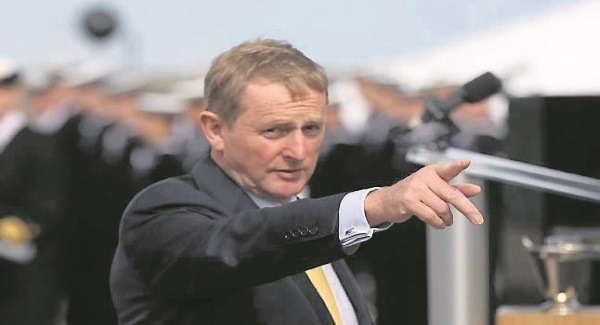
John Gibbons, a member of An Taisce’s climate change committee, said Taoiseach Enda Kenny’s admission that Ireland will miss its targets for cutting gas emissions from agriculture and blaming it on the economic crisis is not acceptable.
The country would face huge fines as a result, and the agriculture industry should have to pay a levy to offset this, he said.
The EU has warned that instead of cutting emissions by 20% from 2005-20, Ireland is likely to reduce greenhouse gases by just 3%, mainly due to agriculture and transport emissions.
As one of 135 national leaders to speak at the opening session of COP21, the biggest-ever climate change conference, Mr Kenny pleaded for special recognition of Ireland’s plight.
"There is such a thing as being too late" —@POTUS at #COP21
— White House Archived (@ObamaWhiteHouse) November 30, 2015
RT if you agree: It's time to #ActOnClimate. https://t.co/yOwtiecSjb
Mr Gibbons said: “Ireland is acting irresponsibly — we are planning to get a free ride on the basis that our neighbours have acted responsibly and will meet their targets. We want to exploit what we see as wriggle room.”
He said Ireland is attempting to be a freeloader at a time when we are being asked to show solidarity, especially with the poorest nations who are threatened with the worst effects of climate change, some facing complete devastation.
“We need to act with solidarity and instead we are showing we could not care less about the poor,” Mr Gibbons said, adding that Ireland contributes just €2m to the UN’s Green Development Fund. This amounts to about 50c per person, while the EU average is €10-€12 a person.
“We are set to become international pariahs, with further damage to our international reputation,” said Mr Gibbons.
The Government appears to believe there are no votes in dealing properly with climate change and instead has decided to side with the farm lobby, he said.
Mr Kenny said Ireland could not afford the measures needed to reach the emissions reduction targets, 45% of which come from agriculture because of the methane-emitting national herd of cattle and sheep.
Commissioner Pierre Moscovici said cutting gas emissions and increasing GDP were compatible given that between 1990 and 2012, the EU’s CO2 emissions fell 19% while GDP rose 45%.
.@npratc: How 'big data' from @NASAGISS & @NASA_NCCS is a crystal ball for climate #COP21 https://t.co/0CS1AWUck3https://t.co/X9vlTmOTX7
— NASA Goddard (@NASAGoddard) December 1, 2015
Mr Moscovici said: “This clearly proves that climate protection and economic growth can go hand in hand. It is possible to implement public policies that support both GDP growth and ambitious action against climate change.”
The Government is making the case that since Ireland is producing food it should be given more time to reach the goals — which are set for individual EU countries by the EU.
A raft of initiatives were announced at COP21 to help poorer countries that are facing a drop in food production at a time when populations are growing. About 70% more food will be needed by 2050, according to the UN.
Harold Kingston, the IFA’s environment chairman, said new initiatives are making Irish agriculture sustainable at what is produced but it must deliver an increased economic return to the farmer.