Crude alert: The facts behind Irish oil and gas exploration?
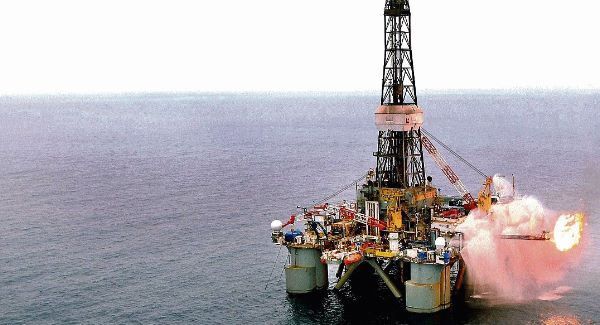
It follows on the heels of good news emerging from the Barryroe field south of Cork, and renewed efforts to strike it rich deep into the Atlantic off the Kerry coast at Dunquin.
There are other options in the crosshairs near Clare and Mayo and onshore exploration, or fracking, is under discussion for Roscommon, Fermanagh, and West Clare.
So far, the debate on the potential for finding oil off the Irish coast has been underscored by an incredulity that there is a now-lucrative seam of cash in the pipeline at a time when we most need it.
However, despite evermore confident projections from the exploration companies, and in particular Providence Resources, the prospects of imminent oil and gas finds becoming a panacea for our economic woes are slim.
Instead, the companies involved will benefit from a historic regime set up to encourage investment in exploration.
As a result, the millions of euro that are being pouredinto exploration will be used by the companies to whittle down their tax bill for the next generation if they are successful in their pursuits.
None of the finds being talked about are so great as to dwarf the exploration costs.
So far, the country is ill-prepared to capitalise on spin-off refining businesses.
Furthermore, with the prospect of much of the oil being immediately shipped overseas, it is likely our resources will boost other the security of supply of other countries, more than our own.
However, aside from the economic concerns, the latest decision to grant Providence a foreshore licence — which allows it to set up a test drill off Dalkey in 2013 — has brought a new angle to the discussion.
That is that the people of Ireland, in this case living within sight of the latest proposed rig, will have to cope will all of the risks while reaping little of the benefits.
Unsurprisingly, in the heat of the latest debate, some of the issues can get blurred.
This is a closer look at what is at stake.
What is happening?
The unexpected results of tests of the Barryroe oil field have undermined the belief that Ireland had few natural resources and what it did have were not economical to extract.
As a result, Providence Resources, an Irish listed company controlled by the O’Reilly family, has picked up drilling licences and enticed investors to return to wells that were the focus of exploration in the 1970s. This has already resulted in one significant oil find and produced promising results elsewhere.
Why were the resources not found before now?
Much of the drilling and exploration that is happening now is a return to sites that were first identified and probed in the 1970s.
At that stage, oil was found in a number of locations, but it was considered to be of too poor quality and in locations that were too inhospitable to justify the investment.
Given the abundance of resources elsewhere in the world, the cost of a punt off the Irish coast did not sit well alongside other options.
What has changed?
The cost of oil has risen and the options for alternative discoveries have dwindled.
The resources in Ireland are more likely to make for an acceptable return.
The strike in Barryroe also suggests the oil is of a better standard than the tests in the 1970s suggested.
Meanwhile, finds in areas of similar geological make up to Ireland, such as off the British coast and in east Canada, have forced a rethink as to how easy it might be to tap into some of the reservoirs below the Atlantic sea bed and on shore.
In addition, technology has improved when it comes to recovery from deeper and more dangerous waters.
In the case of Providence, it can also justify spending more on exploration, because it will be able to write off that cost against the tax that may fall due from profits at Barryroe.
What are the chances of striking oil off the latest talking point at Dublin Bay?
According to the technical surveys relied on by the prospectors, there is a 20% chance of hitting on something significant.
The area in question is sitting along a recognised fault line and there has been evidence of gases leaking from underground reservoirs.
It shares many of the characteristics of exploration sites on the opposite side of the Irish Sea. This has given credence to suggestions there are two distinct pools available to tap into.
Test drills further south have not been positive. But it is in shallow waters, so it is cheaper to explore.
What are the likely benefits to the State if oil is found?
Despite the eye-watering figures linked to the Barryroe and Corrib discoveries there will, in all likelihood, be no great windfall for the economy.
The base-level tax rate of 25% is based on future profits. It was set at this low level, compared to other European countries, in order to coax prospectors to look at Ireland because, for 30 years, they showed scant interest in our sea bed.
However, this tax is not mandatory, because each company will have spent money to find the oil or gas. This is deductible.
In the case of Barryroe, Providence, which has a half share in the field, has already said it invested €600m in searching for resources off the Irish coast.
It has expressed plans to put in another €450m as part of its latest search of sites. This is distinct from the money spent by its partners in each field.
All of these exploration costs can be written off against the taxes liable on any eventual production. The write-offs apply wherever the money is spent and not just on the well in question. This means if Providence ploughs money into Dalkey, but is ultimately unsuccessful, this can be written off against its Barryroe tax bill.
Providence is linked to 13 wells around Ireland. Some, such as Hook Head and Helevick, are not marketable at the moment.
But there will be spin offs for the economy?
The discovery of resources of the scale being spoken about will have some economic benefit.
There will be some workers based in Ireland and Providence is listed on stock markets in Ireland and London. So, the sharp rise in its share price in recent weeks will benefit Irish investors.
But Ireland does not have a refining infrastructure of the scale required. In the case of Dalkey, it has been indicated that any find would probably be shipped eastwards across the Irish Sea rather than being dealt with in Dublin.
The bulk of the jobs available for Barryroe require a master’s degree in geology and Irish universities have, understandably, not been churning out a large number of graduates in this area.
This means the experienced workers will likely be drawn from hubs for this type of activity, such as Aberdeen.
Why is Dalkey different?
Dalkey has already provoked more opposition than any of the recent discoveries or drills. There were 700 submissions and more than 4,000 petitions to a public consultation process when Providence looked for a foreshore licence.
What is proposed for the sandbank in the Kish Basin has been done at a number of other sites in recent years without much discussion.
But the Dalkey drill, 10km into the Irish Sea, is closer than any other and if a spill happened it would hit the shore within an hour.
In the case of Barryroe, the field is close to the operations in the Kinsale field, which are already tried and tested. And its bid to strike oil in Dunquin is 200km off the Kerry coast.
The exploration drill in the Irish Sea will be visible from almost anywhere along the southern Dart line.
What are the benefits of the Dalkey site to the exploration company?
The Dalkey Island, as it has been branded, is much more shallow than other locations. Recently, Providence and a clutch of different partners announced plans to hire a semi-submersible rig to drill at Dunquin. This will start its drilling at a mile below sea level.
At Dalkey Island, it can use a jacked up rig to access the much more shallow seabed off Dublin Bay, which is at 25m. The 12 other sites in which Providence have involvement are all at least three times deeper than Dalkey and much harder to reach.
Why now for Dalkey?
Providence has in recent years decided to concentrate its efforts in what it calls a “multi-basin” exploration drive around Ireland.
Dalkey is one of the sites that has shown some, although limited, potential.
The costs of exploration will be set off against its future tax bill and, due to recent good results, it has investor impetus to buy into its ambitions.
What can be expected at Dalkey next year?
The exploration company is planning to start test drilling. This will be done with a jack-up rig sitting on a sandy foundation in 25m of sea.
The drilling will last for up to 60 days, once the equipment has been rented and set up. The objective will be to test the viability of the well and confirm suspicions that there is some natural resource to be found. The second stage, if something is found, will be to return to the site and work out how hard it would be to access the find and if a drill is economical.
By Daniel Gros
THE global energy community is abuzz with excitement about hydraulic fracturing, or fracking, a newish technology that has opened formerly inaccessible reserves of gas trapped in underground shale formations. The boom in this so-called shale-gas production has allowed the United States to become almost self-sufficient in natural gas.
Europe, by contrast, is clearly lagging. Exploration is proceeding only hesitantly and shale-gas production has not even started, prompting many to lament that Europe is about to miss the next energy revolution. Should Europeans be worried?
Critics of Europe’s apparent lack of enthusiasm for fracking miss two key points. Firstly, Europe’s geology is different from that of America. There is a huge difference between potential deposits hidden somewhere in large shale formations and recoverable reserves that can actually be produced economically.
In fact, estimates by the International Energy Agency suggest the most significant recoverable reserves of shale gas are in the US and China, not Europe. Moreover, even these estimates are really not much more than educated guesses, because only in the US have shale formations been subject to intense exploration.
This process is starting in Europe only now. Poland appears to have Europe’s most favourable geology, and it might become a significant producer on a local scale in about 10 years. This is a fortunate coincidence, because shale-gas production would probably make it politically easier to phase out Poland’s economically and environmentally irrational subsidies to local coal production (and consumption).
But pro-fracking critics of the EU miss a second point: The EU has no authority over the development of shale gas in Europe. Licensing and regulation of exploration and production are decided at national level.
One must admit, however, that in Europe the “Nimby” phenomenon (not in my backyard) is a much more serious obstacle than it is in the US. While it might be true that Europeans are too sensitive to environmental concerns, incentives also play a role. In particular, whereas ownership rights over natural resources in the US typically belong to the individual owner of the land under which the resources lie, in Europe ownership belongs to the state.
As a result, Europeans, facing uncertain environmental consequences while receiving none of the revenues, tend to oppose fracking nearby. In the US, by contrast, local residents benefit handsomely from being able to sell their ownership rights to gas companies — a strong counter-balance to fears of environmental costs.
Another seldom-mentioned reason is that shale-gas development in the US has benefited from important tax incentives — a model that Europe has no reason to emulate. Governments have a role to play in supporting the development of new technologies, such as fracking, but once the technology has been developed, there is no reason why one form of gas production should be subsidised via tax breaks.
However, the most crucial — and almost always overlooked — point about fracking is that shale gas, like all hydrocarbons, can be used only once. The real issue is thus not whether shale gas should be developed in Europe, but when it should be used: Today or tomorrow.
Europe is already a heavy user of gas, but its consumption is stagnating (along with its economy). Despite the hype about the shale-gas revolution, the extraction cost of (onshore) conventional gas remains below that of shale gas.
Moreover, an existing pipeline network implies that this conventional gas can be brought to Europe at a low marginal cost. From an economic (and environmental) standpoint, fracking is thus unlikely to bring large benefits for Europe: Shale gas might simply substitute for plentiful conventional gas.
The best option for Europe might be to wait and let the market operate. Fracking is not yet a mature technology, and thus it is very likely to improve over time. Maybe Europe will become a leader in “advanced fracking” when the shale-gas deposits in the US have already been exhausted.
* Daniel Gros is director of the Center for European Policy Studies. Copyright: Project Syndicate, 2012
By Conor Ryan
If you are going hunting it helps to have a light energetic runner to rise the game and a solid reliable retriever to bring it home.
In the current scramble to sniff out oil opportunities off the Irish coast, Providence Resources is the springer spaniel darting about in front of the pack.
It has neither the capital nor the equipment to properly explore the licence options it has honed in on.
However, it has proved itself able to identify enough potential to entice the big-money international players to open their wallets to retrieve the results.
To keep itself nimble, the company recently announced it would sell €50m worth of onshore activities in England in order to pay down debts and release cash for a multi-pronged assault on locations in Ireland’s territorial area.
This approach has seen its stock price rocket after declaring that its estimates for the proportion of oil it expects to recover from Barryroe beat initial projections.
Last Wednesday, it told the world that 1.8bn barrels of oil are in Barryroe and it can access up to 43% of it.
This, undoubtedly, strengthened its hand as it continues to look for investment and equipment to drill in other Irish basins.
In the case of Dalkey, Providence has a 50% stake and has divested the rest with its partner Kinsale Energy Ltd. This company is a subsidiary of the Malaysian heavyweight Petronas, which already has successful gas operations off the Cork coast.
In Barryroe, Providence increased its equity in 2010, ahead of its planned bid to conduct a detailed test of the field. Here it has teamed up with San Leon Energy (30%) and Lansdowne Oil & Gas (20%).
The deep water escapade at Dunquin, far off the Kerry coast, involves the mighty Exxon corporation and investors from South Africa and Spain.
However, in areas were it has been unsure about the potential, such as Spanish Point, Co Clare, it has allowed its stake to be diluted to compensate for its partner Chrysaor E&P embarking on the test drilling programme.
Providence itself is controlled by the O’Reilly family, which has retained a 20% position.
The remainder is floated on satellite markets in Dublin and London with holdings spread among institut-ional and retail investors.
The O’Reilly family was formally the leading stakeholder in Independent News and Media, until it was ousted by Denis O’Brien.
Providence has a 30-year history in exploration and has claimed to have invested more than €600m looking for fossil fuels off the coast of Ireland. Its current ambitions are focused on 13 sites, these are spread from close to the north Antrim coast to the seemingly abundant resources discovered at the Barryroe field of Co Cork.
It has other interests, off Britain, and has operated on shore schemes at the South Downs National Park on-shore in England. These were recently put up for sale for €50m in order to stem losses at the company.
It has plans to invest in the region of €400m looking for oil in at least six different locations over the coming years.
Regardless of the assurances from exploration companies, oil spills can and do happen.
It is the severity and frequency of the spills that is the issue.
Providence Resources was obliged to draw up an assessment of the risks involved in the proposed drilling at Dalkey.
There are two big dangers.
The worst-case scenario is that it will lose control of the supply of oil while it is testing the well or breaking through the rock.
The second concern is that something will ram into the rig itself and the slick will be set loose.
If a rig is lost, should it be hit by a ship or freak weather event, the expectation would be that there could be up to 1,000 tonnes of diesel and 700 tonnes of oil from the reservoir lost to the Irish Sea. At such proximity to the shore, the effect would be great.
Anything in excess of 100 tonnes is likely to cause significant environmental damage for at least five years.
Experience of our neighbours, Norway and Britain, show that blowouts at oil rigs and major spills are rare. They are slightly more common in the exploration stage, but it is still a tiny fraction of a percentage point risk for every well that has been set up.
Providence used studies from Norweigian and British drilling operations to assess the dangers. Each country had in the region of 60 tests a year.
There are three exploration wells drilling in Ireland per year and, on this basis, Providence said the probability of a blowout would be expected to happen once every 354 years.
This represents a 0.2% chance of a blowout during planned exploration activities in Ireland.
If there was a disaster off Dublin Bay, Providence, as the primary operators of the Dalkey well, would have responsibility for responding to it. It would either have to seal the well off, trap the oil under the sea or tap the reservoir from a different source.
The environmental response would be orchestrated by the Irish coast guard and a stockpile of containment equipment is in storage in Blanchardstown in case of emergency. These include inshore absorption booms, offshore containment booms, suction pumps, transfer equipment, and cleanup kits if the slick hits the shore.
By Richard Boyd Barrett
THE recent announcement by Providence Resources that it has discovered up to 1.6bn barrels of oil at Barryroe, off the west coast of Cork, along with the granting of a foreshore licence to Providence to drill for gas and oil 6km from the coast in Dublin Bay, has again highlighted the need to radically alter the regime for managing Ireland’s natural resources.
A new pamphlet by the Dublin Shell-to-Sea campaign details the enormous likely reserves of gas and oil in Irish waters and how the people of Ireland will see little or no benefit from these resources.
A 2006 study claimed that in the Atlantic margin alone, off the West coast, there are potential reserves of 10bn barrels of oil/gas equivalent. At Jun 2012 prices this would have been worth €750bn. Estimates by the oil companies, suggest there are a total of 20bn barrels of oil/gas equivalent in Irish territorial waters — valued at €1.5tn.
However, under the current tax and licensing regime, the benefits of this massive wealth of natural resources will be enjoyed not by the people of Ireland but by multinational oil companies.
Ireland has an unprecedented system when it comes to taxation and revenue from oil and gas — a system put in place by Ray Burke and Bertie Ahern. In 1987 when Burke was minister for energy he changed the law, reducing the State’s share in offshore oil and gas from 50% to 0% and abolishing royalties. Later in 1992, Bertie Ahern, as finance minister, reduced the tax rate for the profits made from the sale of these valuable resources from 50% to 25%. This tax take on profits from oil or gas is by far the lowest of any country in the world. In Britain, for example, the state takes more than 50%, in Norway 78%, and in Venezuela and Iran more than 90%.
However, the story gets worse. Under the current regime, private oil companies can also write off all costs and losses going back 25 years before they pay a cent in tax. In reality, it will be years before companies such as Providence pay any tax, and the total tax take over the life of a field will be a fraction of 25%. Some estimates suggest the real figure will be closer to 7%.
Another shocking feature of Ireland’s licensing regime is that once a private oil company is ready to extract oil or gas, it is granted a lease that fully transfers ownership and control of the licensed area to that company. In other words, the State gives away the gas and oil.
In international terms Ireland has one of the worst deals in the world. In Iran, for example, they manage their natural resources with a “service agreement” pact where the state retains companies to carry out work at their own costs. The company can then off-set the costs later on as they get a share of the oil produced but they never get ownership.
Most countries operate production sharing contracts where the state works with companies but without handing over ownership. Norway is one of the best examples of this model with a 78% tax rate, 67% state ownership of Statoil, in addition to having a state-owned company participating in production with the oil companies.
Energy Minister Pat Rabbitte defends our licensing terms by arguing that Ireland cannot afford the cost of exploration and drilling, therefore we have no option but to leave it to the oil companies. This argument is ludicrous in the extreme; there are many options. Licences in future could stipulate that once a discovery is made, the state could step in and become a joint operator and take a share, on a sliding scale, depending on the size of the field.
The other defence used by the Government is that, at least Ireland will have a security of gas or oil supply and there will be employment benefits. Again, this is a false and dishonest claim. Under the current regime, oil companies are under no obligation whatsoever to supply the Irish market. The oil companies will have complete control over what they produce and to whom they sell it.
Hopes for jobs are likely to be equally illusory. Providence Resources indicated in a presentation to Dún Laoghaire-Rathdown Co Council, in relation to its plans for Dublin Bay, that employees would be flown in from abroad and brought to the rig.
In addition to giving away huge revenue to the oil companies, the State has allowed the companies to bulldoze over environmental concerns, democratic consultation, and communities such as Rossport in Mayo at a huge environmental and social cost.
* Richard Boyd Barrett TD, People Before Profit Alliance/ULA


CONNECT WITH US TODAY



Be the first to know the latest news and updates