Clare probe expected to confirm site of Armada mass grave
cThe search for the bodies of more than 900 sailors drowned off Clare at the time of the Spanish Armada took a major step forward with preliminary results from a site at Spanish Point revealing a mass of underground finds. The results will be analysed fully in the coming weeks.
They are expected to confirm a site in Spanish Point as the location of the major Spanish Armada mass grave which could lead to the large -scale excavation of the site and the exhumation of hundreds of human remains.
Efforts to uncover the graves are being spearheaded by local group the San Marcos Project, in conjunction with commercial contractor Rubicon Heritage, which has completed a non-intrusive scan of the site using a Fluxgate Magnetometer.
Archaeology firm Rubicon Heritage is involved in a number of major projects throughout Britain and Ireland.
The technical examination has also uncovered evidence of a promontory cliff fort, similar to Dún Aonghasa on the Aran Islands, which could be more then 3,000 years old.
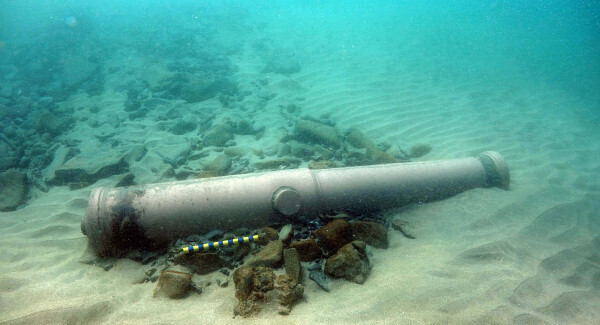
The analysis of the results will also allow the group to map the exact amount of coastal erosion in the area over the past 200 years. Efforts to find the wreckage of the Spanish galleon, the San Marco, are also expected to resume off the Clare coast if weather conditions improve later this week.
“Rubicon used a Fluxgate Magnetometer to detect if there have been disturbances in the earthen works in the area. One of the early outcomes is that there is quite a lot of archaeological material here; there is a promontory fort which could be very old,” said John Treacy of the San Marcos Project.
A local historian, Mr Treacy set up the project last year along with diver James McMahon, as a community initiative between the areas of Quilty, Miltown Malbay, and Spanish Point.
“We should have the finalised technical report from Rubicon in the next few weeks, which should shed light on the evidence from the Armada sailors,” he said.
“We won’t be able to definitively confirm the human remains from this — we will basically have to dig in order the find those — but it will indicate where earth has been disturbed, when it was disturbed and show us where to dig the test trenches,” Mr Treacy said
He added: “The archaeologists are of the opinion there is a significant amount (of archaeological interest) in the Spanish Point area and it looks like this project will continue over a much longer term, maybe over the next five or 10 years.
“We have located old land boundaries which have since fallen out of use. These will be very useful to us because these original boundaries were recorded on the old 1842 map, so this will allow us to determine how much coastal erosion has taken place since then.”
He added: “The preliminary results are showing us some interesting anomalies in the area, but we really need to crunch the numbers to see exactly what we are seeing.”
Efforts are under way in west Clare to investigate a possible mass grave associated with the Spanish Armada of 1588.https://t.co/eNxExhaGXs
— RTÉ News (@rtenews) August 2, 2015
Two ships, the San Marcos and San Esteban, both part of the Spanish Armada, sank in the area in 1588 with the lost of almost 1,000 lives.


CONNECT WITH US TODAY



Be the first to know the latest news and updates