Budget deficit doubles due to bank bailout
A massive €3 billion — the first of 10 installments — was pumped into the institutions at the end of March, bringing the budget deficit to €7bn compared to €3.9bn in the same period of 2010.
A similar sum will be paid annually this time every year for the next decade to make up the €30bn of “promissory notes” committed to the institutions in March last year. These include €25.3bn committed to Anglo and €5.3bn to Irish Nationwide.
The Exchequer figures for the first quarter of 2011, published yesterday, show spending and income is broadly in line with what had been expected at the start of the year.
The figures were revealed ahead of today’s arrival of the troika from the IMF, European Commission and European Central Bank for a 10-day visit to make sure Ireland is keeping its side of the €85bn bailout deal.
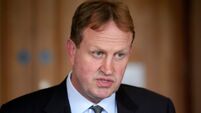
Finance Minister Michael Noonan said the figures — showing spending was €255m less than planned for this time of year — mean “we have met the targets under the joint EU/IMF programme of financial support”.
But he said it was “a concern” that income tax is €125m below what had been expected and VAT is down €179m on what had been planned for in the budget.
So far in 2011, €7.5bn has been collected in tax, up 3.7% on last year. But overall tax revenues are running 1.8% or €136m behind targets set by the department in January.
Mr Noonan said this was “not a significant shortfall” but because of the importance of income tax and VAT to the economy, the performance of those categories “will need to be closely monitored in the coming months”.
This shortfall is unlikely to cause immediate worry for the IMF and EU team.
But a department source acknowledged that if this trend continues for the second quarter of the year, they might force a mini-budget in the summer.
The EU/IMF team are expected to discuss with the Government proposals to restore the €1 cut from the minimum wage.
“They can make minor changes as long as they compensate for any loss of revenue through taking alternative action,” said a senior EU source.
Government and EU sources have also acknowledged Ireland will have to wait at least another month before getting a cut in the interest rate it pays on its EU/IMF loan.
CONNECT WITH US TODAY



Be the first to know the latest news and updates